
Blog Details

Connected cars – Data protection, privacy, and cybersecurity

CONNECTED CAR TECH SERIES PART 4: Complex regulatory landscape threatens to restrict the market’s development 

Contributed by: Waseem Haider

In the last three parts of our Connected Car Tech Series, we talked about the immense possibilities this space is offering to car manufacturers, network operators and other stakeholders. This obviously creates an impression of the grass as all green which is not the case. Connected cars have a number of challenges.

One significant roadblock facing the connected car industry relates to regulations and standards. The need for regulations governing in-vehicle data and other connected car resources is one of the most pressing issues affecting connected car stakeholders. This is partially because regulations were meant to deal with basic connectivity, e.g. emergency calling, and partially because of the expansion of the connected car ecosystem. Current regulations do not sufficiently address the challenges posed by increased connectivity and the role of different stakeholders.

Though there are multiple areas which are affected by lack of standardization and proper regulations in the connected car ecosystem, there are two significant areas which stand-out due to their impact on both the end-consumers and service providers: data protection and privacy, and cybersecurity.

Data Protection and Privacy

One of the biggest challenges faced by the connected car ecosystem is the protection of consumer data. Even though regulatory authorities have made some significant policy changes around connected cars, data access and privacy regulations have yet to be tackled adequately. For example, the EU updated its Motor Vehicle Type Approval Regulation in 2019, but the increasing vehicle connectivity is still a topic of discussion. 

One major data protection law from the EU is the General Data Protection Regulation, or GDPR. There is a lot of uncertainty between the EU and US since the introduction of GDPR. Meanwhile, numerous regional efforts around data protection have emerged, inspired by the GDPR. One such regulation is the California Consumer Privacy Act (CCPA). The CCPA directly addresses car manufacturers and automotive suppliers globally on their telematics data capture, and influences cloud service providers’ data privacy practices.

The amount of data generated not only within the car but also outside of the car, certainly poses a threat to the protection of personal data and raises serious privacy issues. According to some estimates, almost 25 gigabytes of data is produced per hour from a connected car. Most of this is driver’s personal data and that of passengers. Moreover, suddenly the data generated by connected cars have attracted the interests of multiple stakeholders – enforcement and government authorities, car insurance companies, car manufacturers and other third parties.

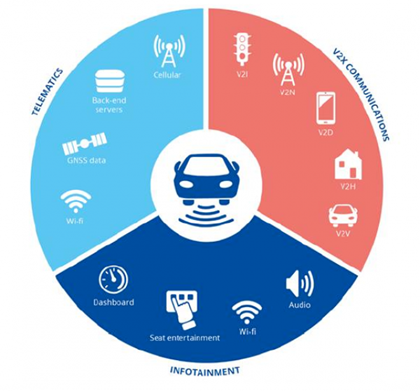
Primarily, connected cars are generating data from three different categories of functionalities: Telematics, V2X and Infotainment (see Figure 1 below).

Figure 1: Main Data Sources in Connected Cars 
Source: ENISA

The functions shown in the graphic enhance the customer experience for car owners and some of them are essential for safety and emergency services. However, the amount of personal data which the connected car systems are generating becomes a cause of worry for the protection of the data and privacy of individual car owners and/or related parties. Note that we are not talking about the fully autonomous vehicles of the future, which will generate and gather even larger amounts of data than today’s connected cars.

Hence, the question arises how to adopt data protection and privacy standards today which will stand the test of time. While there is some progress in creating standards and regulations surrounding connected cars, for instance the new Motor Vehicle Type Approval Regulation, EU GDPR, and CCPA, many issues have not been addressed comprehensively or consistently enough to support growth of this new market.

Cybersecurity

Another big challenge for the connected car ecosystem is the now-increased vulnerability of cyberattacks and hacking threats. The transformation of the automotive industry into one offering digital mobility products and services has given rise to importance of cybersecurity in the connected car ecosystem (see figure 2 below). Though the digital features in connected cars are adding great customer value, they are also exposing connected cars to multiple touchpoints for possible cyberattacks. As connected cars have more and more in-vehicle software units, hackers have access to electronic systems and data, posing potential threats to critical safety functions and data privacy.

Figure 2: Cyberattack scenarios in connected cars 
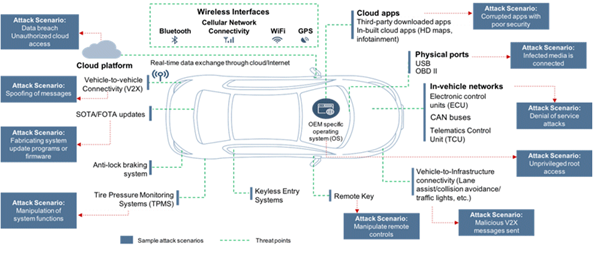
Source: Frost & Sullivan

In the past few years there have been multiple instances of cyberattacks on connected cars, where hackers have taken full control of the vehicles. The major challenge is lack of clear regulatory guidelines and standards for the connected car ecosystem. As such, the cybersecurity problem is related to data protection and privacy. Cybersecurity and data protection/privacy are two sides of the same coin: cybersecurity presents the outside-in scenario and data protection is the inside-out scenario.

One important point to highlight here is that regulators are having a tough time formulating such laws. Part of the challenge is the involvement of multiple stakeholders in the connected car ecosystem. This influences current supplier contracts with OEMs and other third-party relationships for software development, testing and managing over-the-air (OTA) updates.

Regulators face a difficult situation in adoption of standards across the entire automotive value-chain. For the last few years, however, regulators have been working on a cybersecurity framework for the automotive industry that will cover the entire value-chain. This year, the United Nations Economic Commission for Europe (UNECE) passed a law called the Vehicle Cyber-Security Management System (CSMS), to be implemented by automotive manufacturers. The law will make cybersecurity an integral part of the entire connected car ecosystem and OEMs need to implement a certified CSMS across the entire lifecycle of any given connected vehicle in near future.

Next Up: Data ownership

Among the many regulatory issues in the connected car ecosystem is, who owns the data generated by connected car ecosystem. In the next part of this series, we will take a deeper look at ownership of data in the connected car space.

*

Image credit: Erik Mclean
Blog Details

Telco NI vendor market in 2Q21 – preliminary findings

Growth returns to telco NI market; momentum shifts to cloud, away from Huawei 

Preliminary results show 2% YoY sales growth in 2Q21

Enough vendors have now reported their 2Q21 results to allow for some preliminary conclusions about the market. As of August 10, we have compiled earnings figures and analyzed customer segmentation for 72 vendors, including Huawei. These 72 account for roughly 3/4 of the market based on historic revenue trends.

Focusing on vendors’ sales to the telco vertical, what MTNC refers to as “telco network infrastructure” or telco NI, revenues climbed 2% YoY in 2Q21.

That’s slower than the 8.7% YoY growth rate recorded by this subset of vendors in 1Q21. However, the 1Q21 surge was influenced by a weak base period (1Q20), when economies were dragged down by COVID’s early spread. On a six month basis, telco NI revenues in 1H21 grew 5.1% YoY. Annualized (12 month) telco NI revenues through 2Q21 grew 2.8% over the 2Q20 figure. These growth rates may be modest in other parts of the tech sector, but for telco NI they are an improvement.

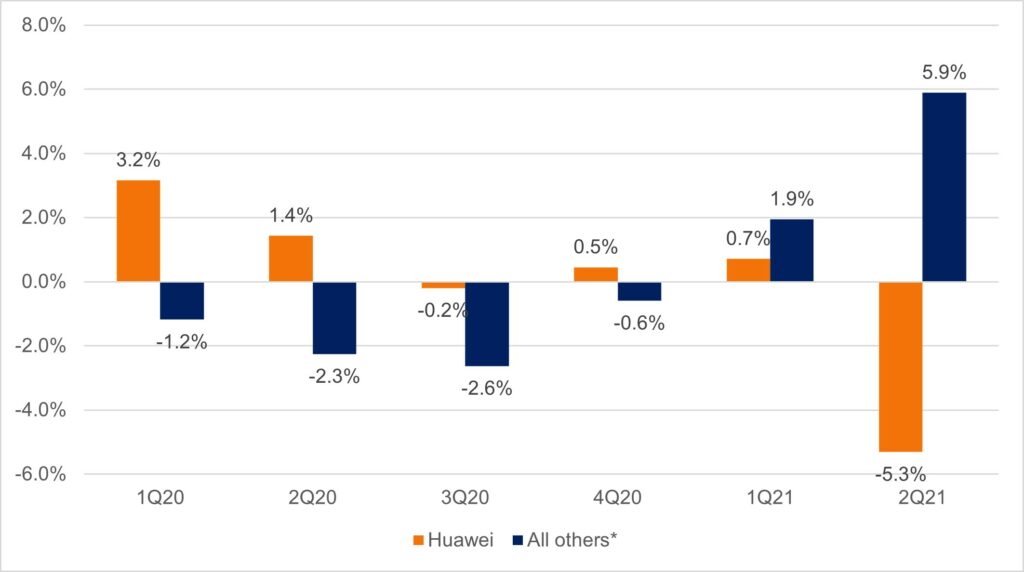
As Figure 1 shows, Huawei has tracked very differently from the overall market: outperforming in 1H20 due to Chinese 5G spending, and lagging in the last two quarters as supply chain restrictions and security concerns caught up to the company. 

Figure 1: YoY change in annualized sales to telcos: Huawei vs. all others (preliminary)

Source: MTN Consulting
*Data for “all others” represents the sum of 71 vendors already reporting 2Q21 earnings, including historical data for acquired companies (e.g. Amdocs-Openet)

This growth is welcome news for the many vendors with strong positions in the telco sector. Moreover, the growth comes despite Huawei’s 7% decline in first half telco NI revenues. As the market’s (still) largest vendor, this 7% drop has a big impact on the overall market. Removing Huawei’s figures from our calculations, for 2Q21 alone preliminary telco NI vendor revenues grew by 11% on a YoY basis.

Among reporting vendors, the best 2Q21 results in terms of YoY change in telco NI revenues (on a USD basis) came from Ericsson, Nokia, Samsung, Microsoft and Capgemini. Ericsson and Nokia are benefiting from uptake of 5G worldwide and picking up some of Huawei’s old business. Samsung’s improvement is due both to its Verizon 5G deal and to making strides in smaller 5G markets like Canada and New Zealand. Microsoft’s result is due to a long list of telco collaborations, as well as two 2020 acquisitions (Affirmed and Metaswitch). Capgemini’s growth is due largely to acquiring Altran, an engineering services business with strong telco roots. As far as YoY drops in telco NI revenues in 2Q21, the only significant one among companies reporting to date is Huawei: we estimate its 2Q21 revenues at $12.2B, down from $14.4B in 2Q20.

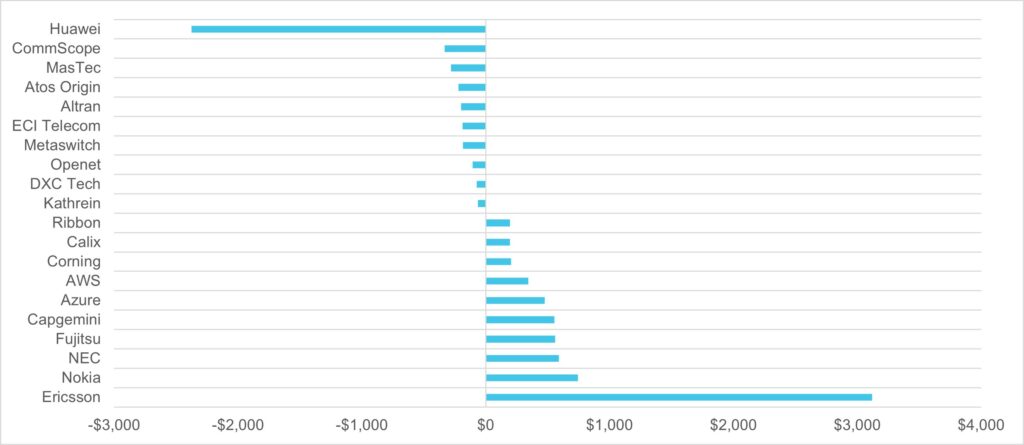
Moving back to a more long-term comparison, Figure 2 illustrates the biggest swings in annualized telco NI revenues for 2Q21 (versus 2Q20 annualized).

Figure 2: Biggest swings in annualized telco NI revenues, 2Q21 vs. 2Q20

Source: MTN Consulting

As Figure 2 makes clear, Microsoft (shown as “Azure”) is not the only cloud provider making progress in the telco sector. AWS also recorded an impressive bump in annualized telco NI revenues in 2Q21, just a bit behind Microsoft. GCP is not in the top 10 but its 2Q21 annualized telco NI revenues measured $129M, double the 3Q19-2Q20 figure. Combined, the three companies accounted for approximately $1.9B in annualized sales to telcos in 2Q21, from $970M a year earlier. That puts the three companies’ collective telco NI market share a bit ahead of Juniper Networks. Increasingly these webscale-based cloud providers are competing against vendors with a much longer track record in the telco industry: Amdocs, Cisco, Nokia, etc. AT&T’s recent deal with Microsoft will accelerate this competition as it entices more telcos to consider outsourcing and collaborating with the cloud. 

Huawei’s changing fortunes opening up opportunities

The Huawei dip in 1H21 is not unexpected. We wrote earlier this year that Chinese telco NI vendors would likely lose $4B of revenues in 2021 due to supply chain restrictions and security concerns. What we predicted is largely coming true:

“US policy will continue to restrict much of the Chinese technology sector’s access to US supply chains; the US government will aim to minimize deployment of Chinese technology in both US communications networks and those in allied countries; and, US policy will support alternative technologies and companies that can help smooth the transition away from China. Implications: Huawei will see market share in the telecom sector decline markedly over the next 2 years; China will push harder on its own allies to purchase Huawei/ZTE gear; Huawei and ZTE will emphasize services and software more, and hardware less; China will explore many ways around the rules but see limited success without crucial chipmaking technology; Open RAN will see an accelerated adoption curve; US companies like Ciena, Cisco, and Infinera, and others (e.g. Fujitsu and NEC), will see telecom opportunities pick up significantly in 2H21 and 2022.”

In recent earnings reports and calls, many vendors are pointing to the recent Huawei weakness as one driver for improved results; for instance:

  • ADVA: “With some of the Chinese competitors being limited in Europe due to security relevant issues, we see additional growth potential here.”
  • Dasan Zhone: cites “numerous Huawei and ZTE replacement opportunities”
  • Infinera: “On the competitive side, we see significant competitive disruption with the situation in Huawei being removed from the European and Asia operator
    networks over the course of the next 2 years to 5 years type time frame”
  • Ribbon: “Competing in large addressable markets such as optical and IP networking…there are opportunities for significant share growth and a favorable competitive environment with the global pressure on Huawei and other Chinese suppliers.”
  • Nokia: “there are cases…where operators for various, sometimes politically-driven
    reasons, have decided to … switch suppliers. And we have already estimated and I can confirm that, that we have won approximately 50% of such opportunities.”

As Nokia’s discrete wording suggests, discussing Huawei publicly can still be tricky for top execs. Many of these companies rely on China for various parts of their supply chain, or as an end use market. Ericsson’s decision to go after Chinese business more aggressively than Nokia has put it in a tough spot. Chinese officials are explicitly linking Sweden’s ban on Huawei in 5G with Chinese telco procurement decisions. This is a good reminder that China’s telcos are not private entities, and that Huawei’s fate is extremely important to Chinese politicians.

Final results available in September

As noted, this short note is based upon roughly 75% of the market reporting. A number of significant vendors have not yet published 2Q21 earnings. The largest of these, by far, are Cisco and ZTE. We will publish final results and commentary on the 2Q21 telco NI market in September.

Blog Details

Connected cars: OEM car maker strategies – where does the network operator fit in?

Connected Car Emerging Tech Series Part 3

Author: Waseem Haider

Today’s car industry is not the same as it used to be, thanks to technology. OEMs are not only manufacturing cars but also developing software solutions for a more connected, personalized customer experience. The ever-evolving auto industry provides opportunities to OEMs to advent new revenue streams and to have more direct, ongoing relationships with their consumers. The changing landscape comes with its share of challenges for OEMs as they need to now focus on products and services outside of their core activities and try to improve profitability by selling connectivity as part of their overall offering.

OEMs are developing different strategies to reap the full benefit of the connected car opportunity. Some OEMs are working on their own ecosystem while others are developing partnerships with specialist vendors. The expanded connected car ecosystem plays a significant role in catering to the consumer demand of today and in the future. Among the different stakeholders in the ecosystem, the role of network operators – both telcos and webscalers – cannot be ignored. In this third part of the connected car tech series, we will talk about the strategies of OEM car manufacturers in the connected car space, and the role played by network operators.

OEM connected car strategies

As with any other industry, the digital transformation of the automotive industry poses a great challenge to OEMs. The digital world has pushed car manufacturers to become software companies selling a personalized customer experience to meet changing consumer demands. Future car buyers will not make it easy for OEMs as the world will move to autonomous vehicles with some drastic changes in consumers’ willingness to own a car. OEMs are aware of these challenges, and are implementing different strategies to keep their dominance in the connected car space despite competition from big tech companies. 

In this section, let’s dive into some of the OEMs connected car strategies.

From the premium car manufacturers like BMW, Porsche, Audi, Mercedes etc. to the volume brands like Ford, Opel, Volvo etc., strategies differ based on relative dominance of the OEM, customer engagement, in-house capabilities, innovation, and investment in R&D. To simplify, let us group the OEM strategies in the connected car space into three main approaches:

  1. Developing In-house Capabilities
  2. Partnership/Building an Ecosystem
  3. Working with Global Industry Standards

1 – Developing In-house Capabilities

Big tech companies like Google, Facebook, and Amazon are at the forefront of connected car technology, putting Automotive OEMs in a difficult situation. As the expertise required for connected cars goes beyond the core business of OEMs, they are facing a big challenge to keep a dominant position in the ever-expanding ecosystem. Some of the OEMs are taking on these tech players directly by building in-house assets and capabilities for connected cars. One of most prominent OEMs who is realigning its strategy from car manufacturer to a software-driven mobility provider is Volkswagen.

Case Study: Volkswagen Connected Car Strategy

Volkswagen is reinventing itself into a digital mobility provider by investing heavily into several areas: software development, autonomous driving capabilities, electric vehicles’ battery technologies and other mobility services. With the new Group strategy “NEW AUTO – Mobility for Generations to Come”, the Volkswagen Group is realigning from a vehicle manufacturer to a leading, global software-driven mobility provider.

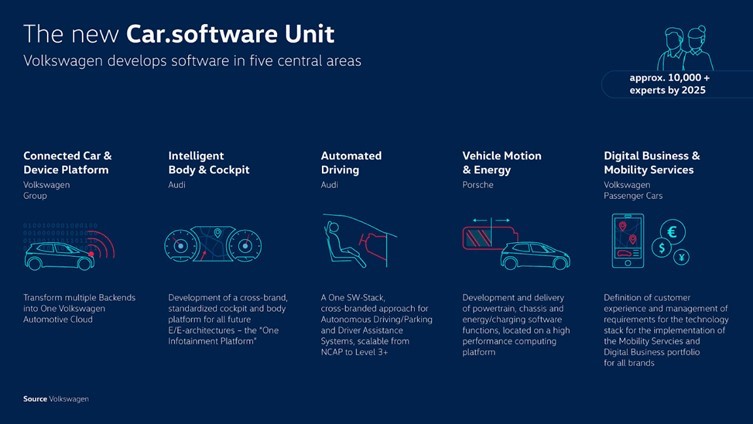
Volkswagen’s Car.Software group is central to this realignment (figure 1, below). The automotive giant is building its own end-to-end software platform with an in-car operating system (VW.OS), and capabilities aimed to enable the next generation of infotainment, vehicle performance, and passenger comfort as well as automated driving.

Figure 1: Volkswagen’s Car.Software organization

Fig 1, VW car software

Source: Volkswagen

In addition, Volkswagen has announced a strategic partnership with Cubic Telecom and Microsoft to develop the Microsoft Connected Vehicle Platform (MCVP).

Together with Microsoft, VW hopes to accelerate the development of one of the largest dedicated automotive industry clouds, known as Volkswagen Automotive Cloud or VW.AC. Designed to provide a smart, scalable foundation for connected vehicles, VW.AC is expected to handle data from millions of vehicles per day, with the goal of delivering connected experiences to customers around the globe starting in 2022 – a key part of the Volkswagen Group strategy to become a leading automotive software innovator.

Volkswagen Group writes less than 10 percent of the software embedded in its vehicles, the rest of which is tied to third party-owned proprietary software. With efforts like the Car.Software Organisation and VW.AC, the Volkswagen Group aims to write 60 percent of the vehicle software by 2025, providing a truly integrated end-to-end software.

Where does the network operator fit in? 

While Volkswagen is focused on in-house capabilities, its work with Microsoft makes clear that this strategy still involves network operators. Microsoft is one of the world’s largest “webscale network operators”, a tech company investing heavily in its own data centers, subsea cables, and related cloud infrastructure. It is possible that other types of operators may play a role in Volkswagen’s strategy over time, including telcos. Apart from providing connectivity, the operator is strongly positioned to offer cloud services, software and hardware solutions to supplement the OEM’s connected car in-house capabilities.

2 – Partnership/Building an Ecosystem

Some automotive OEMs are partnering with other OEMs by building global alliances to develop digital technologies for connected cars and future mobility services. One such global partnership is “The Alliance,” involving three OEM groups – Groupe Renault, Nissan Motor Company and Mitsubishi Motors Corporation –  working together on future mobility technologies and solutions.

Where does the network operator fit in?

With this approach, three big OEMs are working with each other to develop connected car technologies and solutions. Telcos can be helpful partners in such alliances to provide technology software and solutions. As an example, the Renault-Nissan-Mitsubishi alliance is working together with Orange in the field of electric vehicles (EVs). Microsoft also plays a role in The Alliance, as discussed below.

Case Study: Renault-Nissan-Mitsubishi connected car strategy

The Alliance connected vehicle team is developing the Alliance Intelligent Cloud. Microsoft supports the Connected Vehicles Platform component of the Alliance Intelligent Cloud (figure 2, below). The Connected Vehicles Platform manages Alliance connectivity across all markets. 

Figure 2: The Alliance Intelligent Cloud

Fig 2, the Alliance Intelligent Cloud

Source: Microsoft

Microsoft is not the only Alliance partner. In September 2018, the Alliance signed a global multiyear agreement to partner with Google to equip Renault, Nissan, and Mitsubishi Motors vehicles with intelligent infotainment systems. The Alliance will utilize Android to offer customers a new array of services including Google Maps, the Google Assistant, and the Google Play Store.

These services will be combined with Alliance Intelligent Cloud-based remote software upgrades and vehicle diagnostics. By combining the latest technologies from the Alliance and Google, the Alliance member companies’ vehicles aim to have the most intelligent infotainment system in the market. Drivers and passengers can leverage Android capabilities to access an ecosystem that includes several existing applications and an expanding array of new apps. Per Microsoft, vehicles utilizing the Alliance Intelligent Cloud “will benefit from seamless access to the internet, providing enhanced remote diagnostics, continuous software deployment, firmware updates and access to infotainment services.”

The Alliance Intelligent Cloud is designed to leverage the combined scale of the three partners and Azure’s vast footprint. The Alliance cloud aims to consolidate multiple legacy connected vehicle solutions with future connected car features and business operations, and support mobility services. Features built into the connected platform include remote services, proactive monitoring, connected navigation, connected assistance, over-the-air software updates and other customer tailored services. As noted, The Alliance does leverage Google’s Android app ecosystem, but relies heavily on Microsoft for the cloud. The goal is for this partnership of OEMs to own, operate, and design their own intelligent cloud platform on Azure.

The Alliance Intelligent Cloud also aims to connect Alliance vehicles with future smart cities infrastructure, simplifying negotiations and technical development by providing a single point of contact.

3 – Influencing Global Industry Standards

Automotive OEMs are not anymore only manufacturing cars but are also new-age software companies which need to comply with standards. The challenge, though, is for OEMs there are hardly any global industry standards for connected cars. This lack of standards also creates an opportunity; those who write the standards often have a strong position in the market to follow. One strategy is ensuring you have a seat at the table when the standards are drafted.

To address the standards issue, OEMs together with other automotive vendors formed a non-profit alliance in 2009 – GENIVI. The alliance develops standard approaches for integrating operating systems and middleware present in the centralized and connected vehicle cockpit. The GENIVI platform consists of Linux-based core services (kernel, libraries), middleware and an open user interface. The goal is for this platform to form the basis upon which automobile manufacturers and their suppliers can establish a wide variety of products and services.

Notably, the alliance currently has no participation from the network operator side. The only exception is that Github has long been a member, and Github was acquired by Microsoft in 2018. Going forward, telcos and webscalers aiming to play a key role in the connected car market may need to participate in GENIVI.

Conclusion

Regardless of which connected car strategy is adopted, the common thread is that OEMs do not want to give away their dominant position to big tech players or new entrants. The three approaches discussed above should not be seen as exclusive. There are opportunities to combine one or more approaches with other innovative strategies. Network operators from both the telco and webscale/cloud world have opportunities to collaborate with OEMs, offering complementary solutions such as cloud services, software and hardware solutions along with the core asset of an operator, network connectivity.

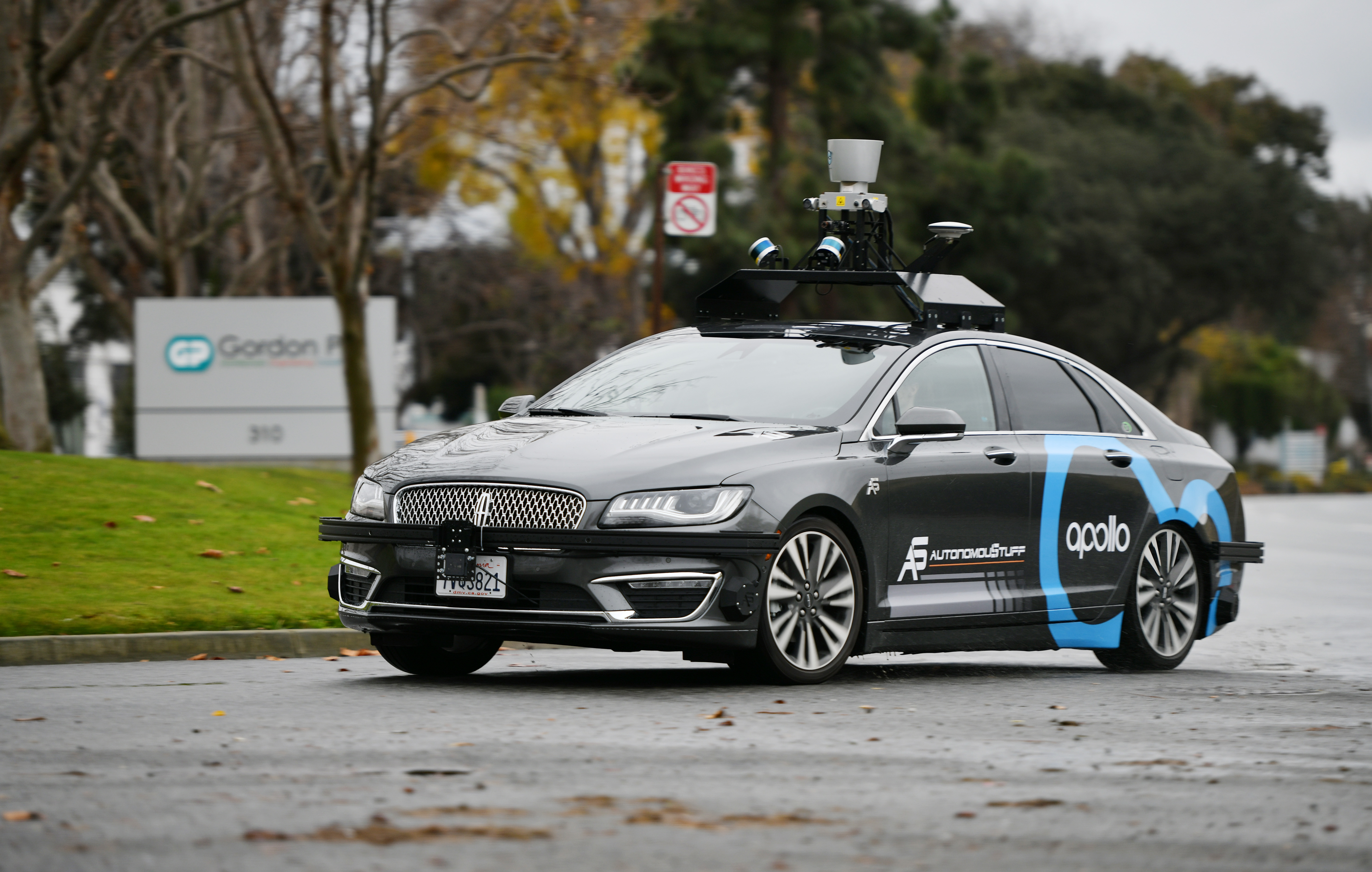
Image source: Baidu

Blog Details

Connected cars: Telco strategies and growth opportunity

Connected Car Emerging Tech Series Part 2

Author: Waseem Haider

In the first part of this series we outlined the role of telcos in the connected car ecosystem. Historically, telcos are well experienced in adding value to adjacent verticals based primarily on their core assets. Some of the verticals where telcos have already made a mark are  Smart Home, Utilities/Smart Energy, Finance, Retail and Public sector, to name a few. Telcos are now making their mark in connected cars.

Telco connected car strategies

Connectivity is the cornerstone of any connected car and telcos have a competitive advantage in providing safe and reliable connectivity. However, with the ever-expanding connected car ecosystem, it is not only connectivity which telcos bring to the table but also other capabilities. In this write-up we will have a look at what different strategies telcos are implementing in the growing connected car market.

Core strategy: connectivity

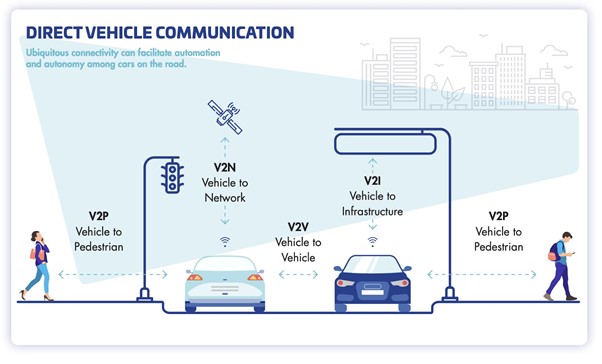
As part of telcos’ strategies in the connected car space, Figure 1 provides an overview of connectivity categories.

Figure 1: Automobile connectivity categories

cc part 2 fig1

Source: McKinsey & Company

Connectivity is a vital part of the technology stack seen in connected cars being manufactured by OEMs. Some of these cars are capable of exchanging data and information not only in-vehicle but also with the external environment (see Figure 1, above). V2X (vehicle-to-everything) encompasses all the related terms – communication with other vehicles (V2V), networks (V2N), infrastructure (V2I) and pedestrians (V2P). Most of the OEMs already allow car owners to connect, monitor and interact with their vehicles. As we move towards autonomous vehicles in future, cars will rely on connectivity to communicate with one another and the external environment. Broadly, connectivity for any connected car falls into two major types:

  • Cellular & Satellite (Network based communication)
  • Wireless point-to-point (Direct communication)

Network-based Communication is long-range, also known as V2N (vehicle-to-network) communication, where V2N employs telcos’ commercially licensed spectrum. Connected cars also have access to cloud services and other security offerings of telecom networks.

Direct Communication involves short-range wireless communication between nearby vehicles (V2V), infrastructure (V2I) such as traffic lights, and pedestrians (V2P) where vehicles communicate directly with the device carried by pedestrians. In some specific scenarios such as non-line-of-sight (NLOS) objects, cellular network-assisted direct communication is of relevance.

Regardless of the type of communication, telcos are playing a significant role in providing connectivity to today’s connected cars today, and will do so in the future when autonomous cars will be commonplace. The telcos are working with a mix of complementary technologies to enable reliable and safe connectivity to connected cars like 4G/LTE, Satellite, DSRC (dedicated short-range communication) and 5G for autonomous vehicles with low latency and more reliable communication compared to existing technologies.

Adjacent strategy: VAS (value-added services) 

Apart from providing reliable and safe connectivity for the connected cars ecosystem, telcos have an edge in deploying integrated solutions which leverage their experience working with multiple partners. Telcos are uniquely positioned to manage value-added services (VAS), collaborating across consumers and OEMs. There is no “one-size fits all” strategy and strategies can vary across telecom operators, depending upon which area of the connected car value chain they are focusing on and where they want to compete. 

As customer expectations are increasingly high and technology is much more advanced, telcos can be at the forefront of new emerging use cases in the connected car space. Some of the most popular value-added services which are part of telcos’ offerings are:

  • Cloud-based integrated platform
  • Customized billing solutions
  • Telematics and big data analytics platform
  • Other VAS

Some of the specific examples of value-added services provided by Telcos in the connected car space are:

  • Lost/stolen vehicle recovery end-to-end service
  • Usage-based insurance
  • Vehicle location monitoring
  • Pay-per-use billing for in-vehicle services 
  • Cross-device identity management
  • Fleet management services
  • Data management across IoT sensors
  • Vehicle/Infrastructure data integration services
  • Vehicle and device security solutions

Future strategy: end-to-end mobility services

The future of mobility is more connected, intelligent, shared, and autonomous, which creates a plethora of opportunities for telcos. One of the biggest opportunities coming out of the shifting mobility landscape is the leveraging of all the data generated by vehicles. For example: the in-vehicle infotainment data could be analyzed by telcos to track consumer usage to advise content producers, advertisers, and media houses on consumption patterns, and can be monetized by telcos, leveraging consumer data insights. Another example is fleet management services including tracking, dispatching, and scheduling fleets. Telcos can make use of customer profile data and other authentication details to manage vehicle access on behalf of fleet operators. 

However, any opportunity emerging from data monetization in the connected car space is surrounded with challenges. Some of these challenges are – who owns the data? Are consumers willing to pay for data services and/or provide consent to use their personal data? Are automotive OEMs ready to share the pie with telcos and other ecosystem players? What measures are telcos undertaking for data protection and security? Telcos can overcome some of these challenges based on their history of managing sensitive customer data while ensuring personal data protection. This gives the telco an edge to provide data-based products and services, including targeted advertising, pay-as-you-go infotainment, Mobility-as-a-service (MaaS), consumer health monitoring including user-based insurance etc.

Additionally, with the roll-out of autonomous vehicles and 5G, telcos will continue to work on more innovative products and services, to bring a differentiated offering to end-users and other ecosystem partners. The future role of telcos in the a connected car space will be providing  broader mobility solution, going beyond connectivity and value-added-services.

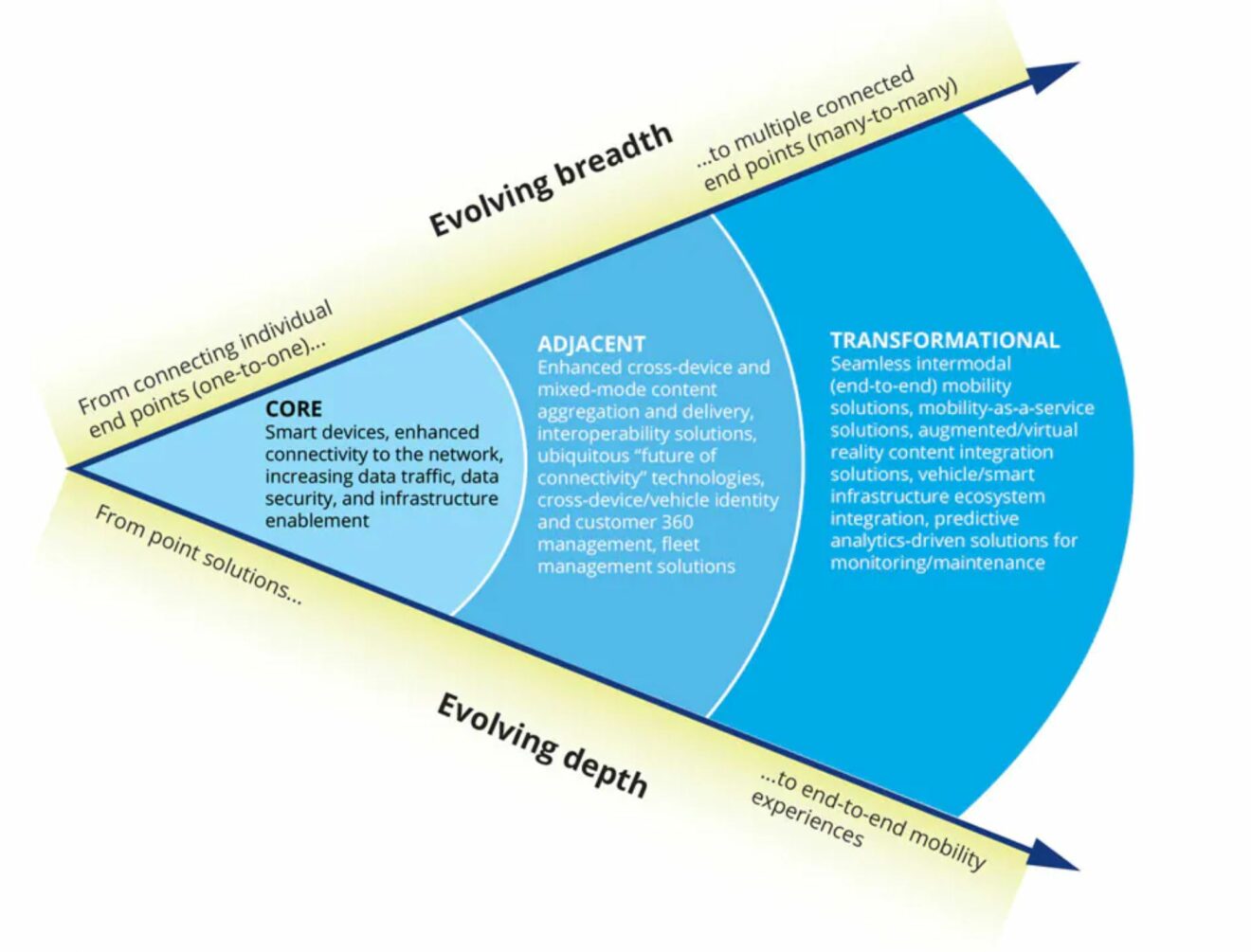
Figure 2 below illustrates how telco strategies in connected cars may evolve, from point solutions to transformational, end-to-end mobility experiences. 

Figure 2: Telco strategy evolution in connected car market

cc part 2 fig2

Source: Deloitte

Case Study: AT&T

AT&T has a dedicated connected car platform called “AT&T Drive”. This is a modular platform which allows auto OEMs to choose from a range of services, from connectivity to revenue management solutions. AT&T is working with various stakeholders – automakers, developers, and other suppliers – to design customized solutions to bring new services to connected cars. Some of the services provided by AT&T in concert with other solution providers in the connected cars ecosystem are:

Amdocs: Customized Billing solution

Ericsson: Global Application delivery platform

Accenture: Telematics and Big Data Analytics

Jasper Wireless: Global cloud-based connected device platform

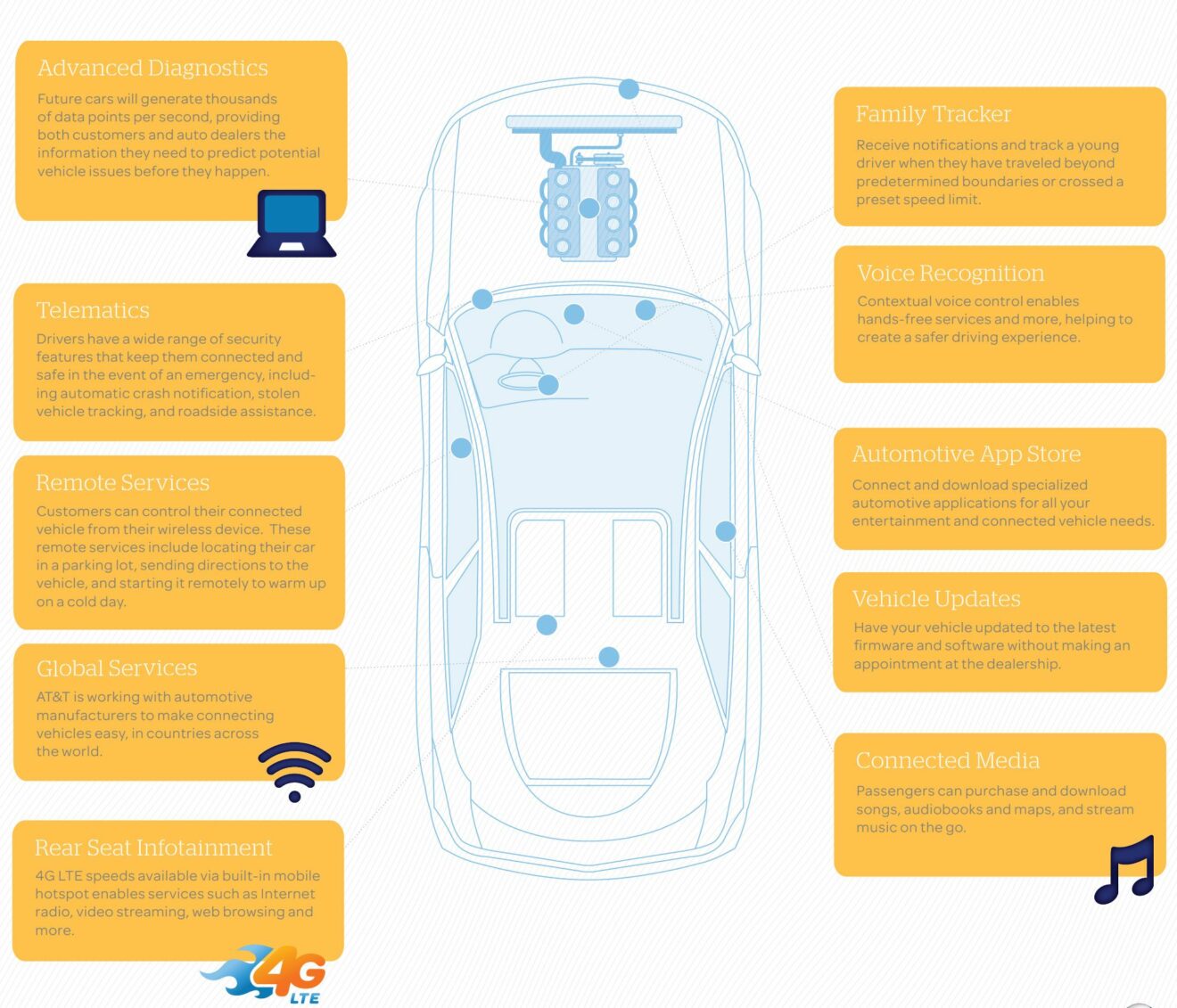
Figure 3 illustrates AT&T’s current proposition in the connected car market.

Figure 3: AT&T’s Connected Car Positioning 

cc part 2, fig3

Source: AT&T

Conclusion

MTN Consulting believes that telcos have real revenue upside opportunities in the connected car space. However, for that to become a reality, there is a need for telcos to think out-of-the-box in terms of future strategies. Telcos should aggressively build capabilities which they do not own traditionally, even if that means new partnerships and alliances to develop service portfolios around the connected car landscape. For instance, they could partner with augmented-reality providers to demonstrate the ability to deliver enhanced multimedia content experiences within the vehicle, and they could partner with fleet management service providers to provide intermodal mobility device tracking, monitoring, and interoperability. 

Image Source: Toyota

Blog Details

5G positioning update: Intel and Nokia

Intel and Nokia 5G Update

Author: Arun Menon

MWC was held in person this week, for the first time since February 2019. With all the hype about MWC’s re-emergence, it’s easy to forget that vendors update the analyst community on products & strategy all the time, independent of trade shows and conferences. That’s all the more true since COVID-19 virtually killed the trade show, and a nonstop stream of online events took over the analyst’s schedule. Vendors still do pre-brief analysts in advance of important events like MWC, though. Intel and Nokia both did so in late June. Nokia addressed 5G core and hyperscale issues, while Intel provided an update on its overall 5G network and edge strategy.

Nokia: “The future of 5G Core”

Late last month Nokia held a session for analysts, “The future of 5G Core on hyperscalers and the journey to NaaS.” With the growth of telco spending on 5G cores (including transmission) this year, and Nokia’s repositioning towards more collaboration with the webscale (aka hyperscale) sector, this was an enlightening session.

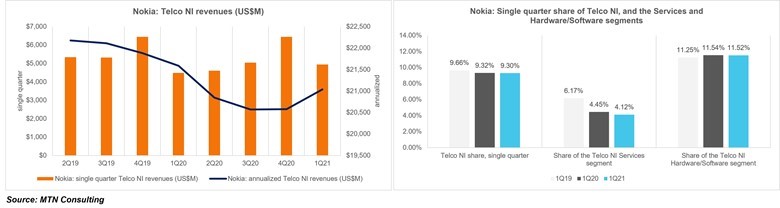
As background, Nokia is ranked 3 in the global market for telco network infrastructure, and places second in the hardware & software segment of telco NI. The below figure illustrates Nokia’s telco NI revenues over the last few quarters and its share in the overall market, as well as the services and hardware/software segments.

Intel-Nokia 1

MTN Consulting’s summary of the Nokia session follows.

  • With the advent of 5G, CSPs (telcos) face challenges brought by multi-layered networks that run complex operations
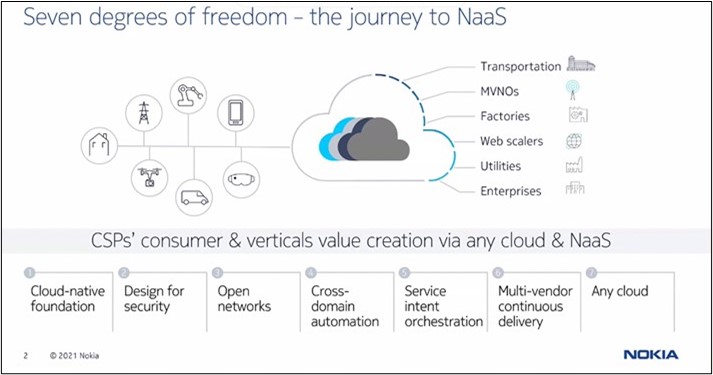
  • “Seven degrees of freedom” are key for CSPs to achieve the full business value of 5G and embark on a journey to a Network-as-a-Service (NaaS) future
  • The seven degrees of freedom represent seven key design principles that can be addressed by CSPs to achieve full freedom in creating value with 5G and transition to NaaS in the most flexible way. The chart below illustrates the seven degrees.

Intel-Nokia 2

  • The seven principles presented by Nokia consist of the following:
    • Cloud-native foundation: Inconsistent or limited implementations of cloud-native real-time applications will restrict a CSP’s ability to achieve a true 5G network that can take full advantage of the cloud’s agility, scaling and efficiency. Software vendors must develop the right disciplines of cloud-native design across the full span of 5G applications, and consistent methodology is key for simplification.
    • Freedom of “any cloud” platform: CSPs gain flexibility by being able to use any platform for cloud and NaaS. The challenge is to ensure multiple vendors’ telco applications can readily use cloud vendors’ Containers-as-a-Service (CaaS) and Platform-as-a-Service (PaaS) capabilities.
    • Openness of networks and ecosystems: Service-oriented architectures (SOAs) have existed in the webscale world for 15+ years, yet telco applications struggle to fully embrace the SOA approach. It is essential for a CSP to build a norm of using open networks and ecosystems in their organization. Strong API design in secure and non-secure environments is the basis for uniform exposure that enables the creation of 5G services and simplified operations.
    • Cross-domain automation: Cloud-native designs increase complexity at the application and sub-domain levels. Also, when automation overlaps with a hybrid private/public cloud strategy, real-time application complexity and lifecycle management needs are enormous compared to a simple web application. There is a need for careful software design for highly complex lifecycle interdependencies.
    • Service intent orchestration: Service intent-driven network orchestration is vital for the design of 5G slicing and agile 5G vertical services. This requires service demand to be attached to a QoS and SLA metric across the network. Core, radio and routing must be tightly connected to deliver the required SLAs and QoS. The orchestration and assurance of these designs is complex.
    • Build a continuous delivery framework: CSPs work with multiple vendors that feed software into their extensive landscape of network and operations. Legacy process models cannot support a continuous feed of new software releases being introduced more often. The software delivery pipeline must be mature enough to handle multi-vendor environments, and it must be secure and consistent in both building and testing frameworks. All integration points must be automated and secure.
    • Design for security: Security is an ever-present and ever-growing challenge. Threat analysis, vulnerability management and software validation are essential considerations when designing and delivering applications. Applications must be built with a “design for security” practice, including a detailed security risk assessment. Security must be end-to-end and continuous across applications, endpoints, management access points and APIs. 
  • Nokia’s lessons learned from deploying with hyperscalers
    • Aggregation required across ISVs as cloud providers have their own continuous integration (CI) / continuous delivery (CD) pipeline and lifecycle management tools
    • Alignment required between cloud provider’s CI/CD pipeline and ISV’s repository
    • VLAN-based network separation not possible in user-plane network functions 
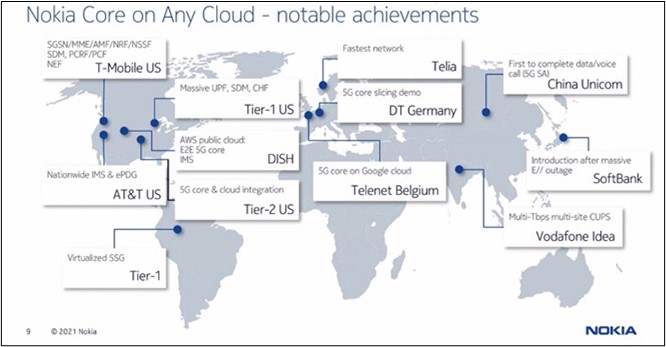
  • Nokia’s key “Any Cloud” achievements:

Intel-Nokia 3

Intel: “Network and Edge Update”

Intel’s role in telco network infrastructure is often overlooked. It sells to OEMs but over the last 3 years has developed a growing set of direct customer relationships with telcos. This session provided an update on Intel’s “network and edge” offerings with a focus on 5G.

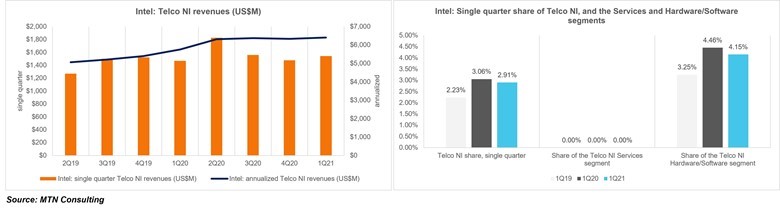
As background, Intel is ranked 9 in the global market for telco network infrastructure, with an annualized market share of just under 3%. That counts all Intel telco revenues as if they were direct to telco arrangements. The below figure illustrates Intel’s telco NI revenues over the last few quarters and its share in the overall market, as well as the services and hardware/software segments. Intel doesn’t record any services revenues in telco NI, hence its share of HW/SW is higher than overall.

Intel-Nokia 4

MTN Consulting’s summary of the Intel session follows.

  • Intel showcased new silicon and software platforms comprising processors, accelerators, Ethernet adaptors, memory, software toolkits – all aimed at the goal of strengthening its position in vRAN and 5G wireless network technologies at the edge.
  • According to Intel, operators of 5G networks want a more agile, flexible infrastructure to unleash the full possibilities of 5G and edge as they address increased network demands from more connected devices. At the same time, global digitalization is creating new opportunities to use the potential of 5G, edge, artificial intelligence (AI), and cloud to reshape industries ranging from manufacturing to retail, health care, education, and more.
  • According to Intel, experts expect 75% of data will be created outside of the datacenter by 2023 — at the edge in factories, hospitals, retail stores, and across cities.
  • Intel wants to target the market where various capabilities can be converged at the edge, such as AI, analytics, media, and networking.
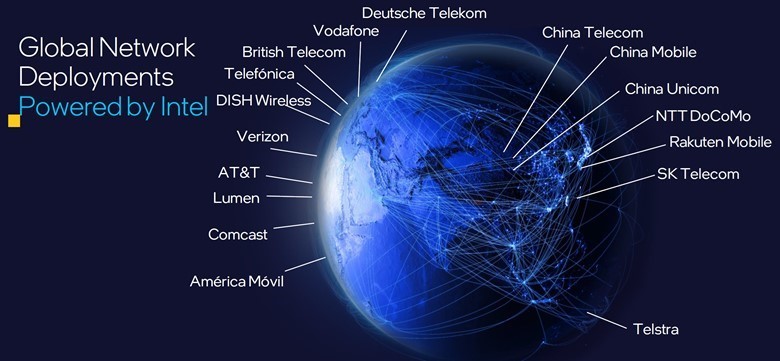
  • A select list of the “Powered by Intel” network deployments, as presented in the session:

Intel-Nokia 5

  • Reliance Jio, Deutsche Telekom, and Dish Wireless are transforming their networks on Intel’s architecture. The vRAN promises cloud-like agility and automation capabilities that can help optimize RAN performance and ultimately improve the experience for users. The company claimed that “Nearly all commercial vRAN deployments are running on Intel technology”
  • Intel is expanding its family of Agilex FPGA by adding a new FPGA with integrated cryptography acceleration that can support MACSec in 5G applications. This adds another layer of security to vRAN at the fronthaul, midhaul, and backhaul levels.
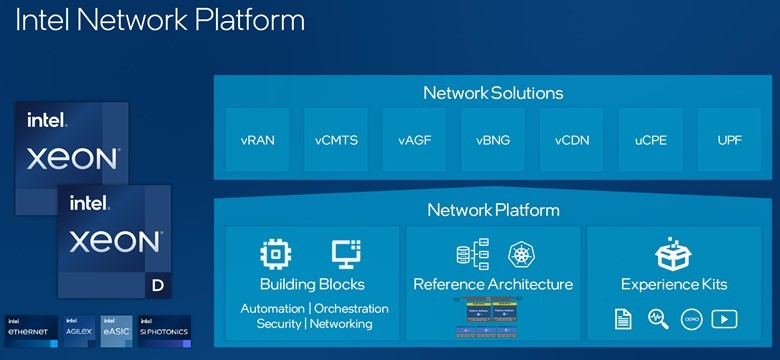
  • The chipmaker also unveiled Intel Network Platform – a technology foundation that (Intel says) can reduce development complexity, accelerate time to market and help to ensure customers and partners can take advantage of the features in Intel hardware, from core to access to edge. INP incorporates building blocks, a reference architecture and experience kits, and can support a range of different network solutions including vRAN but also other (non-5G) applications like vCMTS.

Intel-Nokia 6

  • Intel also announced a new commercial software, Intel Smart Edge, focused on enterprise on-premise use cases, such as private networks and universal Customer Premise equipment.
  • Intel’s Ethernet 800 Series family is expanding, with Intel’s SyncE capable Ethernet Adapter that is designed for space-constrained systems on the edge. It is well-suited for both high-bandwidth 4G and 5G RAN as well as other time- and latency-sensitive applications in sectors such as industrial, financial and energy.

Blog Details

Connected cars and telecom

Connected Car Emerging Tech Series Part 1: Role of Telcos

Author: Waseem Haider

Connected Car Ecosystem

Mobility today is changing rapidly, and connected cars are the driving force behind this disruption. The future of mobility is all about autonomous driving, electric vehicles, carsharing and connected cars. The biggest impact of this shift unquestionably is on Automotive OEMs and their suppliers. However, the connected car space is a dynamic ecosystem which includes OEMs and various stakeholders ranging from telcos, software & platform providers, equipment suppliers and consumers.

The connected car ecosystem is evolving extremely fast and many other key stakeholders apart from telcos are trying to establish or have already made a mark in the connected car value chain.

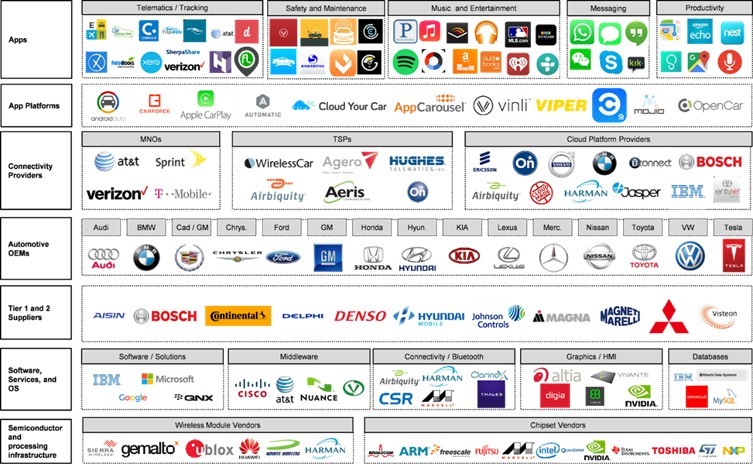
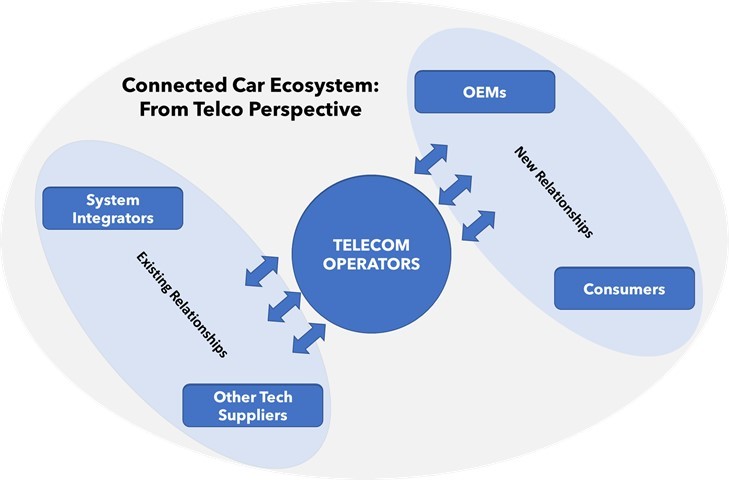
Figure 1 illustrates how complex the connected car ecosystem is becoming.

Figure 1: Connected Car Ecosystem

CC fig1

Source: Red Chalk Group

Some of the key elements in the connected car ecosystem include:

  • Telecom Operators – AT&T, Deutsche Telekom, Telia, Telefonica, Vodafone etc.
  • Technology Vendors – Nokia, Ericsson etc.
  • Cloud Providers – Google, Amazon, Microsoft etc.
  • Original Equipment Manufacturers (OEMs) – VW, Ford, BMW, Audi, Hyundai etc.
  • System Integrators (SIs) – IBM, Accenture etc.
  • Over-the-Top (OTTs) Players – Google, Apple etc.
  • Platform Providers – Jasper, Airbiquity
  • Other Suppliers – OnStar, Continental etc.

The connected car is providing fresh opportunities to traditional players such as TSPs (Telematics Service Providers) e.g., Airbiquity, Tier 1&2 automotive suppliers like Bosch, new players such as webscalers Google, Alibaba, and Apple, as well as traditional telcos. In fact telcos have a crucial role to play as this market evolves.

For instance, Bosch supplies infotainment systems to a majority of OEMs globally but these systems require cellular connections provided by telcos’ 3G/4G networks. Bosch is also involved in pilot projects to test 5G technology for future systems for new innovative services and better connectivity. 

The Role of Telcos in Connected Cars

In this first part of the connected car series, we will focus on the role of telecom network operators (telcos) in a connected car ecosystem. Telcos act as the backbone of any connected car by providing the required communication network. 

Figure 2: Telcos play a central role in the connected car ecosystem

CC fig2

Source: MTN Consulting

Telecom operators have a competitive advantage when it comes to providing fast and reliable connectivity for connected cars. Further, the ever-evolving connected car ecosystem offers telcos some interesting new revenue opportunities. That is important as telcos are struggling to attain any top-line revenue growth in their current scope of operations. Even with 5G now emerging around the globe, most telcos continue to see flat to down service revenue trends. Developing new types of services and penetrating new vertical markets is essential for telcos to grow.

There are two basic types of services envisioned for telcos in the connected car space:

  • In(side)-car services: Infotainment (music, weather, social), and Navigation (location/traffic, landmarks, etc.)
  • Out(side)-car services: Telematics/M2M (insurance, repairs, parts, etc.), Remote (stolen vehicle, parking information, etc.).

Telcos are playing a significant role in both types of above services. For in(side)-car services, Telcos and OTTs (aka webscalers) are trying to build a niche in the infotainment/apps space. Apple and Google for example have already launched their connected car offerings – CarPlay and Android Auto respectively – while Telcos provide the SIM cards and Wi-Fi connectivity to access the services offered by OTTs.

However, the big opportunity for telcos in the connected car space, where they have an edge over other ecosystem players are – out(side)-car services. Telcos are uniquely positioned to provide Telematics/M2M and remote services by leveraging their core connectivity assets as well as strong cloud offerings. Depending upon the service provided, Telcos are working on both B2C and B2B business models. Telcos have grabbed this opportunity by launching dedicated connected car offerings and facilitating key partnerships with major OEMs and other ecosystem players.

A few examples of telcos making a huge difference in the connected car space are: 

  • AT&T considers the connected car business as one of the “key growth areas” and it serves over 30 million connected cars on its network. In the US, 31 different car brands are working with AT&T, where the carrier provides cellular connectivity to virtually the entire industry. LTE is the main connectivity technology but AT&T is exploring 5G for next-generation connectivity to future vehicles. 
  • Vodafone goes a step further by providing hardware and software to be fitted in connected cars, as well as the network to connect everything. Vodafone also provides managed services to car customers and is supplying telematics systems to major OEMs like Audi, BMW, Porsche etc. 
  • Orange has taken a slightly different approach by providing the connected car ecosystem with infrastructure services incorporating mobile and information technology. For example, Orange is supplying M2M SIM cards to all the Renault vehicles which are installed with an in-house developed connected tablet equipped with a R-Link system.

Future Development

Apart from the existing use cases for connected cars, telcos are actively involved in pilot projects to benefit from implementation of 5G technology. One of the most talked-about 5G-enabled wireless communication is called URLLC (Ultra-Reliable and Low-Latency Communication). URLLC is aimed at mission critical communications, and ideal for latency sensitive applications such as autonomous driving.  For instance, several URLLC use cases are under research like automated driving, road safety and intelligent navigation systems, to name a few.

Deutsche Telekom and BMW

Deutsche Telekom is an example of a telco that has embraced the connected car market and is actively developing a role in the ecosystem. Key to that role is a partnership with BMW.

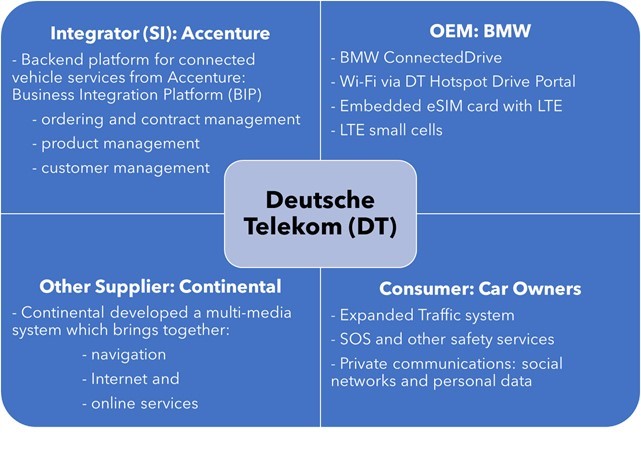
Deutsche Telekom has been part of the BMW connected car journey since 2015. BMW ConnectedDrive is the name of the connected car service provided by BMW together with Deutsche Telekom and other ecosystem partners (see below figure). The Wi-Fi Hotspot within ConnectedDrive vehicles is provided by Deutsche Telekom. The BMW ConnectedDrive system now comes with an LTE eSIM which is permanently embedded into the vehicles.

By partnering with OEMs like BMW, Deutsche Telekom is playing a significant role in providing a seamless customer experience (CX) for car drivers and/or travellers. Together with Continental, a tier 1 automotive supplier, DT has developed a multi-media system to provide car drivers best in-car services: real-time navigation, automatic SOS (eCall) and online infotainment services. 

Figure 3: Case Study —  Deutsche Telekom and BMW ConnectedDrive

CC fig3

Sources: Deutsche Telekom, BMW, and MTN Consulting

The Deutsche Telekom Wi-Fi Hotspot makes it possible to connect 10 Wi-Fi enabled devices to high-speed internet all over Europe. Not only that, but Deutsche Telekom is also fitting BMW ConnectedDrive cars with LTE technology in the form of embedded eSIMs which can be updated via over-the-air (OTA) whenever required from outside.

Another service offering from Deutsche Telekom is the Smart Home app which can be used to control the devices at home via a mobile phone. The Smart Home app has been available for use in the BMW ConnectedDrive system since 2015. Working hand-in-hand with Deutsche Telekom, the system makes it possible, for example, to control the lighting or heating system at home. The remote home control system is plugged into BMW’s vehicle operating system through a feature that allows users to integrate third-party apps via BMW ConnectedDrive.

In Conclusion 

Telcos have a competitive edge in the connected car ecosystem as they already have a proven track record of working together and partnering with related verticals for providing fast and reliable connectivity. The value a telco can bring to the connected car is not only limited to its core assets (networks) but also existing partnerships with system integrators (IBM, Accenture), technology vendors (Nokia, Ericsson) and other tier 1/2  automotive suppliers (Continental, Bosch).

Most of the major telecom players, such as AT&T, DT, Telefonica, Telia, and Vodafone, are ahead of the curve to benefit from this opportunity. Deutsche Telekom has a dedicated connected car division, and most of the telcos mentioned here offer innovative solutions and services to OEMs along with other ecosystem players.  

MTNC believes that moving forward, there are a plethora of opportunities in the connected car space for telcos, especially with the implementation and adoption of 5G technology. The future of mobility will be car-sharing, electric vehicles and autonomous driving, where 5G will be able to enhance the customer experience with innovation such as ultra-reliable low-latency communication (URLLC), putting telcos at the forefront of the connected car ecosystem.

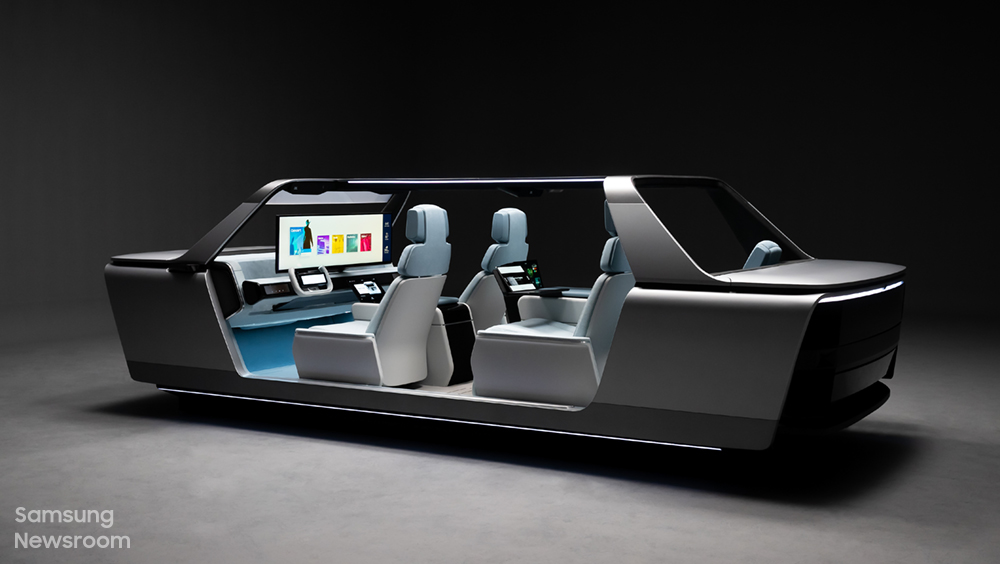
Image source: Samsung Newsroom

Blog Details

Organic revenue growth continues to be a stretch for telcos in 1Q21

Organic revenue growth continues to be a stretch for telcos in 1Q21

Two weeks ago, we provided a preliminary view on revenue trends based on the first 13 significant telcos to report 1Q21 earnings. In it, we noted that revenue growth rates appeared promising for 11 of these 13, as the YoY % change in 1Q21 was improved relative to 4Q20. However, we also flagged a trend of concern, namely, that much of the apparent telco revenue growth was coming from sales of equipment (e.g. handsets) rather than core services. This has been happening on the mobile side with new 5G device sales, and also with cable companies catering to the work from home crowd. A survey of 25 additional telcos which have reported since our last newsletter confirms this trend. Telcos are still not persuading investors that the new services they are investing heavily to develop will lead to significant top-line growth. 

Revenue trends in 1Q21 – the latest 25 reporters

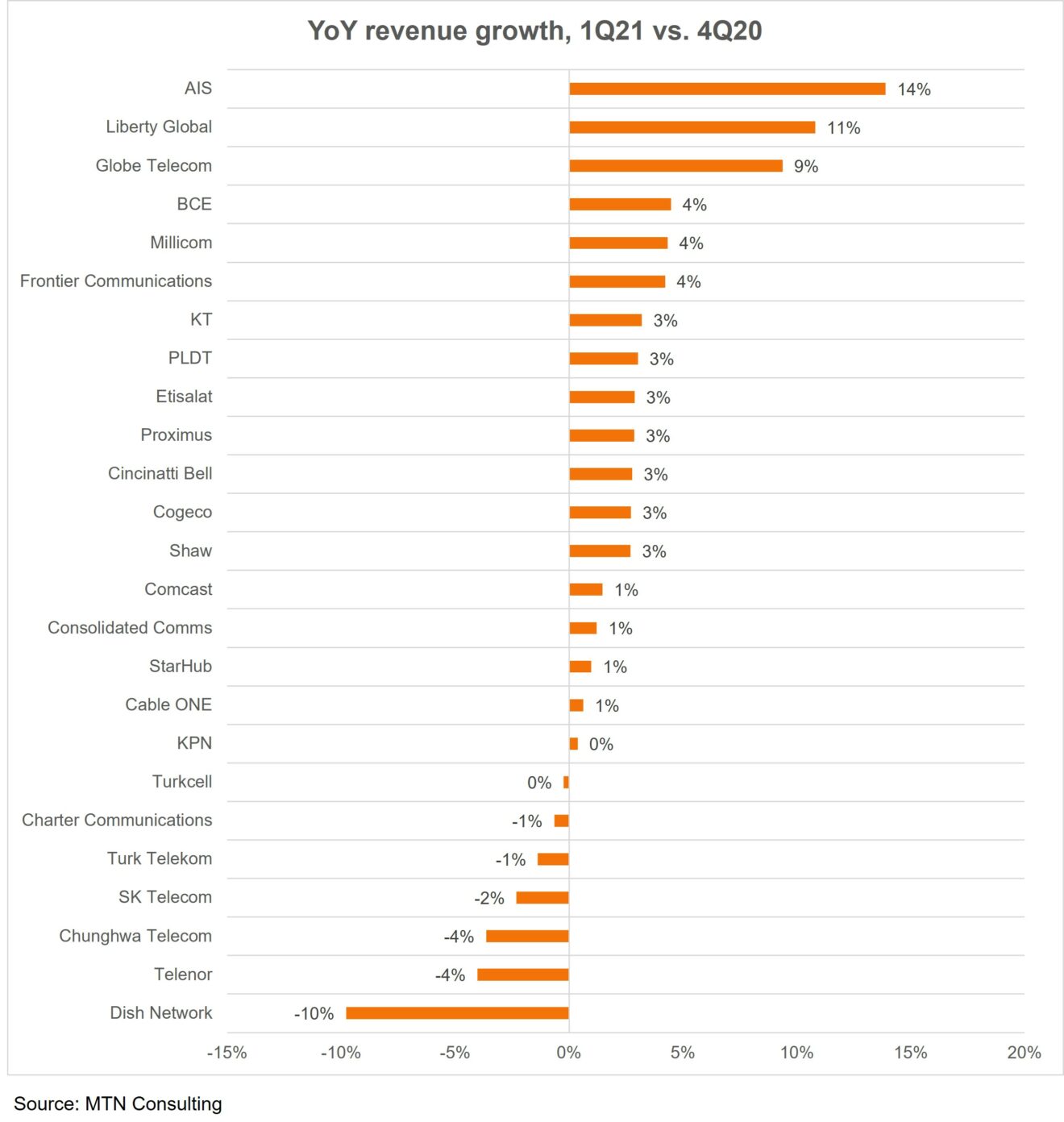
The figure below illustrates the difference in the YoY revenue growth rate achieved for the group of 25, comparing 1Q21/1Q20 to 4Q20/4Q19. As shown, 18 of the 25 improved their YoY revenue trend line at least a bit between 4Q20 and 1Q21. 

YoY revenue growth in 1Q21 for telcos, v2

Thailand’s biggest telco, AIS, had the best result of the 25 due to aggressive investments in both 5G and consumer fiber broadband completed in 2020. Its 4Q20 revenues declined by 7% YoY, while 1Q21 revenues grew by 7%, netting a positive 14%. Liberty Global grew by double digits as well, but that’s almost entirely due to recent acquisitions (of Sunrise, and Vodafone properties). 

The worst performer of the group was Dish Network, but this is misleading as the company is ramping up a new service so growth rates will inevitably decline over time. Telenor had the second worst result of the group, for more substantive reasons: its Myanmar operations have collapsed amidst political unrest, and its Thailand arm DTAC is running behind rivals True and AIS in 5G rollouts. To compensate, DTAC is now accelerating a 5G rollout based on 700MHz spectrum, and Telenor is attempting to gain scale in another regional market, Malaysia, by merging its local operations with Axiata. At the corporate level, Telenor continues its long-running efforts to optimize its operational cost base: it claims a 7% company-wide decline in opex for 1Q21.

For the largest companies in the group of 25 – Comcast (#6 globally by revenues as of 3Q20), Charter (#13), KT (#17), and BCE (#19) – BCE and KT made the biggest gains between 4Q20 and 1Q21. However, as noted below one-time sales of equipment were a major factor for both. It was also a major factor for AIS, in fact.

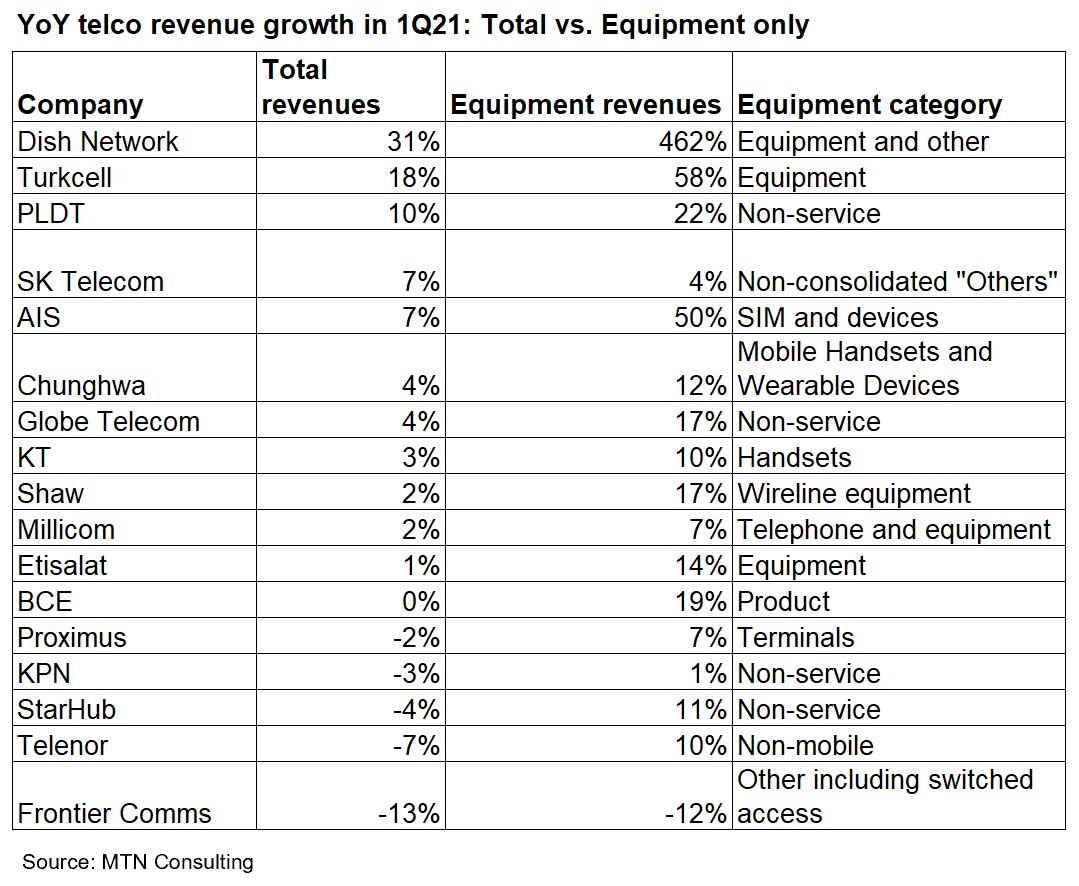
The table below provides a summary of total revenue growth in 1Q21 for a subset of the 25, and the growth reported in non-service (equipment) revenues for the same time period. As shown below, equipment revenue growth outpaced the total company trend line for nearly every telco, in some cases by huge margins (e.g. Dish, AIS, Global Telecom, Etisalat). SKT was the only exception, as its corporate revenues climbed by 7.4% in 1Q21, while the non-consolidated “others” category of sales (which includes handsets) grew by just 3.8%. Not unrelatedly, SKT is planning to spin off part of its operations in the near future, in particular the parts growing faster than its telco core.

rev v eqpt rev 1q21 next 25

Only 17 of the 25 are included above because the rest do not report equipment revenues, as they (generally) lease CPE to customers and capitalize the gear onto their balance sheets. That’s true for Cable ONE, Charter, Cincinnati Bell, Cogeco, Comcast, Consolidated, and Liberty Global; the 8th of this group is Turk Telekom, which does not publish its non-service (equipment) revenue figures for other reasons. 

Capex trends – changes in capital intensity due to 5G, fiber, and transformation

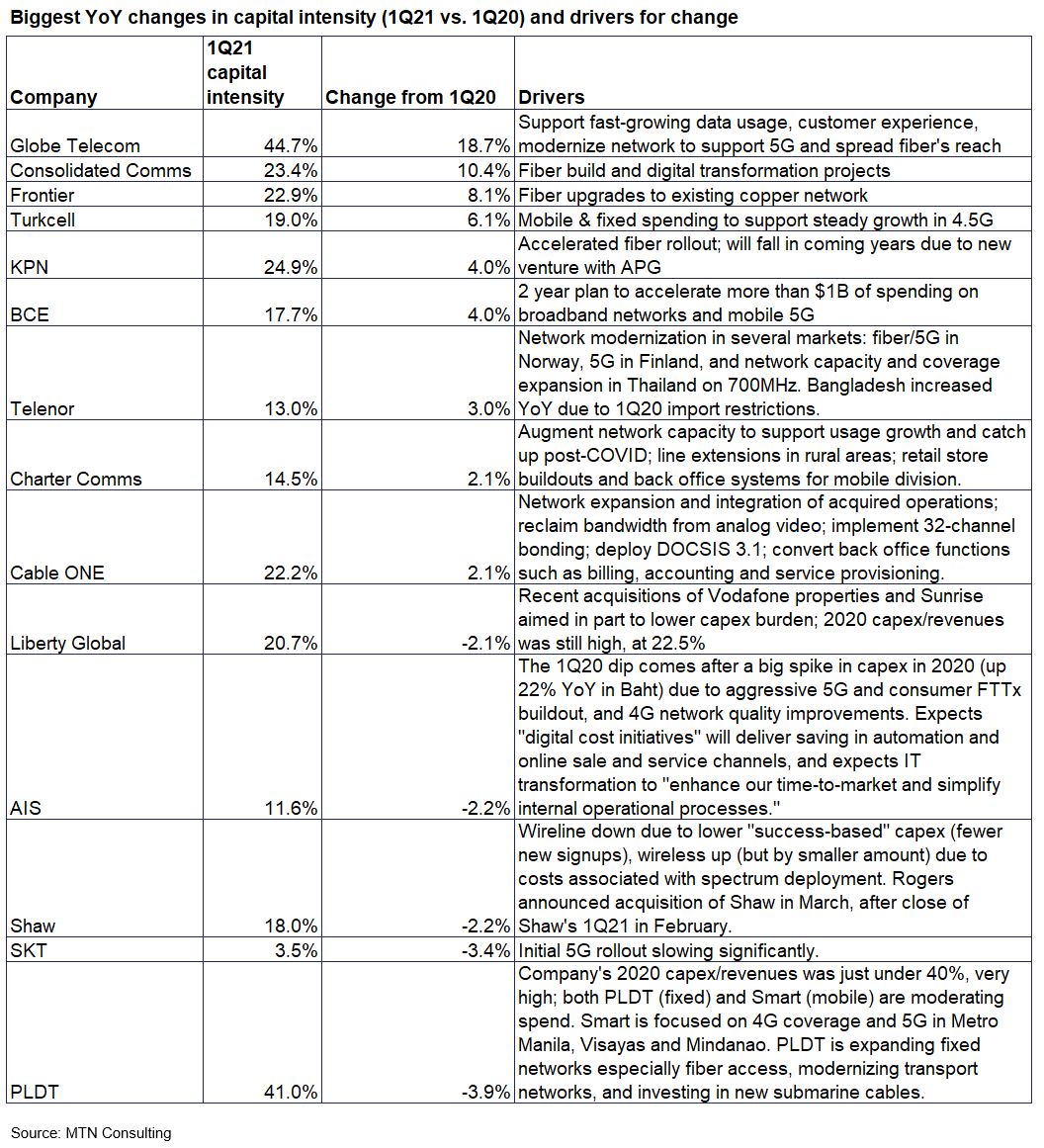
Much of MTN Consulting’s research is concerned with network spending trends, so we track capex closely each quarter. We are projecting a slight uptick in telco capex (in US$) for 2021. Based on early stats for 1Q21, this scenario is still likely. There are a number of sizable companies reporting capital intensity (capex/revenue) ratios higher for 1Q21 than 1Q20, for instance. This alone is not a great benchmark, as some telcos were forced to cut back capex in 1Q20 as the COVID-19 pandemic began to spread. Nonetheless, telcos aren’t shying away from modest capex investments in their network in order to improve operational efficiency (e.g. digital transformation, automation) and support a new generation of services on new 5G networks and FTTH.

The table below presents single quarter capital intensity for 1Q21, the change from 1Q20, and the drivers for that change. Not all 25 telcos are shown below; this table includes only telcos which reported capital intensity either >2.0% higher or lower for 1Q21 than the prior year period, 1Q20. Companies are listed according to their relative in capital intensity across these two periods, high to low.

biggest capint swings in 1q12 to date

Who will capture 5G’s value?

As we noted in our last research, many telcos deploying 5G are seeing a revenue uptick related to sales of 5G-capable devices. This also happened with 4G. Looking back, device and app companies captured much of the revenue upside related to deployment of 4G networks. This is a risk with 5G as well. As telcos deploy stand-alone 5G networks and rollout some of the more sophisticated functionality that comes with 5G, they will need to stay focused on deploying new services that deliver them growth. That will not be easy, and will require collaboration with both their vendors and the adjacent webscale sector of operators.

Blog Details

Device revenues are driving a growth uptick for telcos in 1Q21

Device revenues are driving a growth uptick for telcos in 1Q21

As of April 28, 13 of the 138 telecom operators (telcos) we cover in our quarterly tracker have reported 1Q21 earnings. Revenues for the early reporters have been surprisingly strong: all but 2 of the 13 have reported YoY revenue growth rates greater than the 4Q20 vs. 4Q19 result. This comes with a big caveat, however. Nearly all of the 13 owe their relative success to growth in equipment or device revenues, not to their core operations/services. For instance, 1Q21 device revenues climbed by 218% and 45% for China Telecom and AT&T, respectively. Not surprisingly, revenues for key handset suppliers are surging: Apple’s iPhone product revenues grew by 17.1% YoY in 1Q21 to $65.6B, while Samsung mobile device revenues were up 13.0% YoY in 1Q21 to 25.82 trillion Won (~$23.2B). Huawei is down but that is a company-specific situation, and early signs are that other Chinese handset suppliers (e.g. Oppo, Vivo, Xiaomi) did quite well in 1Q21.

On the network investment side, only 10 of the 13 reported capex for 1Q21, as the three Chinese companies in the group report capex only every 6 months. MTN Consulting expects telco capex to grow roughly 4% in 2021, but there is no obvious pattern of growth yet based on these 10 telcos’ reports. Du and Tele2 reported 52%, and 36% YoY growth, respectively, but most of the larger telcos in the group of 10 reported YoY capex declines. Orange was an exception, as it reported 3.1% YoY growth in capex for the first quarter, due both to fiber builds in rural France and international markets as to 5G.

Revenue trends in 1Q21

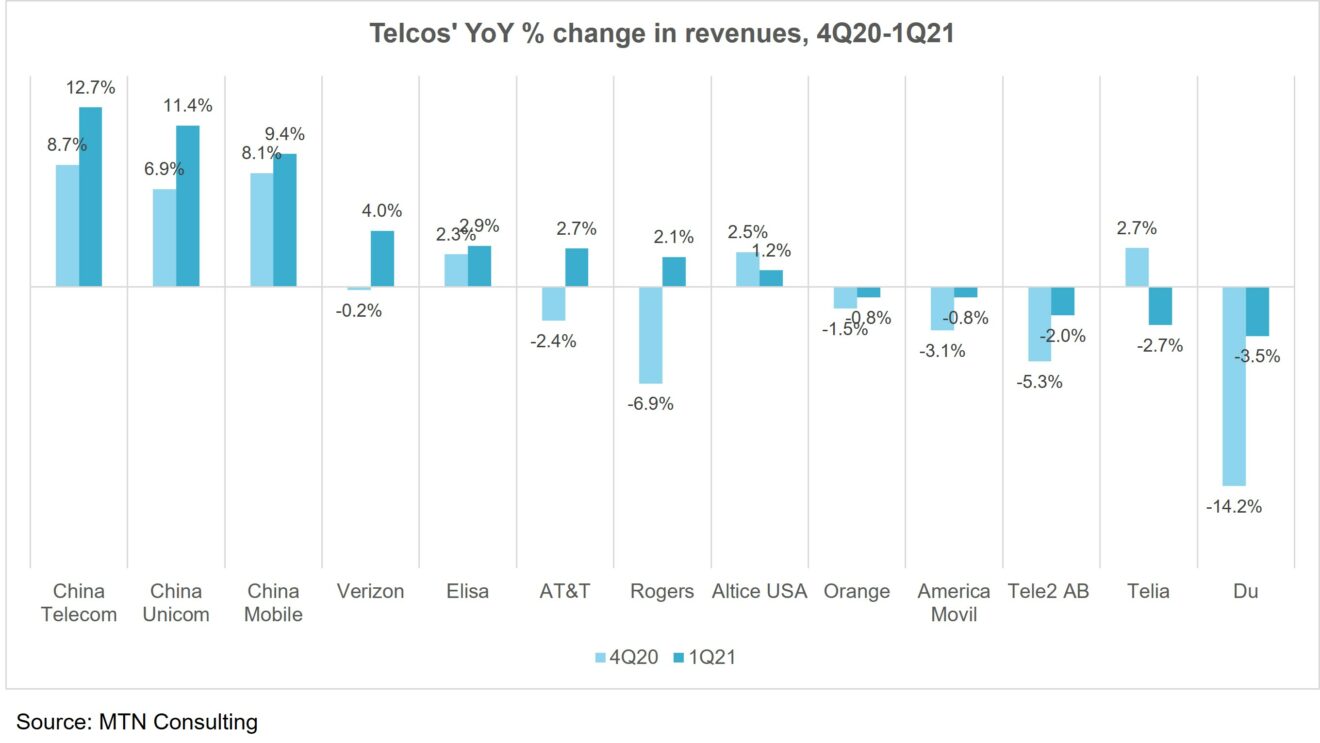
As the figure below illustrates, total revenues increased on a YoY basis in 1Q21 for 8 of the 13 companies reporting to date. That’s promising given that 2020 revenues for the global telecom market declined by about 1%. Further, there were a number of significant improvements in growth between 4Q20 and 1Q21, for instance China Unicom’s acceleration from 6.9% YoY growth to 11.4%. Growth flipped from negative to positive for Verizon, AT&T and Rogers. One factor is a pickup in economic activity in many global markets as COVID-19 vaccines started their rollout and government stimulus programs took effect. The more important factor is the 4G to 5G transition. 

telco rev change prelim 1Q21

Most of the telcos reporting above operate in markets where that transition has already started: China, USA, Finland, Canada, France, Sweden, and the UAE. America Movil is an exception, as 5G is still emerging in most of its markets. Altice USA is the other exception as its mobile business is tiny and based on an MVNO with T-Mobile. For all others, though, device/equipment revenues related to 5G were the primary driver behind the YoY improvement in 1Q21 revenues:

  • China Telecom: Device revenues up 218% YoY
  • China Unicom: Device revenues up 51%
  • China Mobile: Device/other sales up 67%
  • Verizon: Wireless equipment revenues up 24%
  • Elisa: Devices up by 11%, and “Digital services” (including content/media) up a bit faster, +12%
  • AT&T: Mobility division’s equipment revenues up 45%
  • Rogers: Wireless equipment revenues up 27%
  • Orange: Equipment sales up 10% YoY
  • Tele2 AB: Equipment revenues up by 12% YoY, services declined by 1%
  • Telia: Equipment up 13% YoY
  • Du: equipment lumped into an “others” segment but company said that “Strong demand for the iPhone 12 fuel handset sales”

In their earnings, not all telcos addressed how much of their growth was attributable to one-time handset purchases that are mostly flow-through revenues. China Mobile was more direct, saying its 67% revenue growth in the sales of “products and others” was due to the the “buoyant growth of handset sales as 5G handsets were available with more varieties and at more affordable prices in the terminal market.”

Capex a mixed bag: 5 up, 5 down

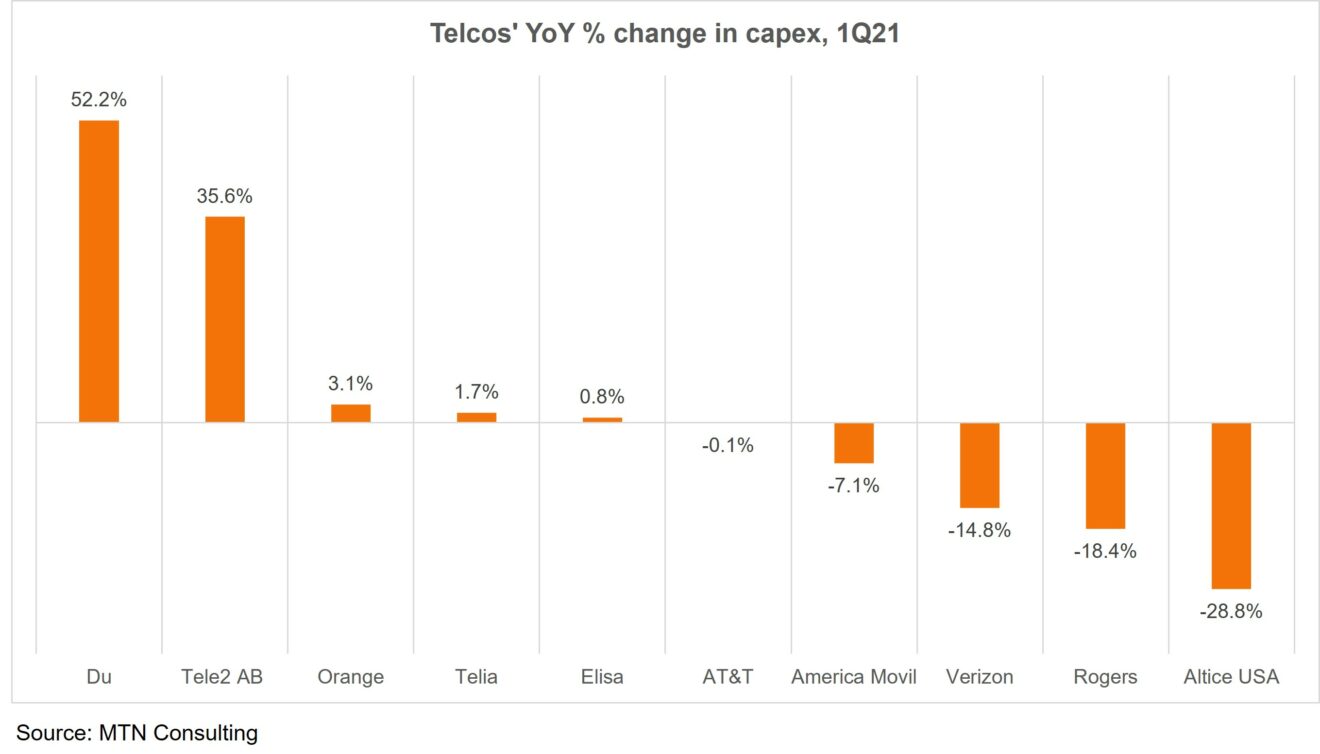
Ten of the 13 telcos reporting have published capex figures for 1Q21. As the figure below shows, half reported YoY growth, half showed declines.

telco capex change prelim 1Q21

For all but Altice, the 5G transition plays into the capex fluctuations of all these telcos – with the cost of spectrum an issue that often arises.

Du’s 52% growth in 1Q21 is due to capex spend “mainly on the core network as well as 5G roll-out and on improving mobile coverage and capacity.” Tele2 cites its rollout of nationwide 5G in Sweden, and Remote-PHY on the fixed side. Orange’s modest growth is due to a ramp-up in its core France market aimed at getting Paris ready for its March 5G launch, as well as growing fiber investments in both rural France and overseas markets like Poland. Telia’s slight increase reflects a decline in fiber investments in Sweden offset by rising 5G costs as it builds out the network based on newly secured spectrum in both Sweden and Denmark. Elisa’s ~1% YoY increase is due to 4G capacity increases and expansion of its 5G coverage to reach 2.5 million people in Finland.

Among the capex decliners, America Movil’s dip is due in part to caution surrounding regional currency fluctuation and its December 2020 joint acquisition (with Telefonica and TIM) of Oi’s Brazil business. Moreover, America Movil is determined to implement 5G with minimum effect on capex: its CEO noted on AM’s 1Q21 earnings call that “I don’t think even for this year or for the next years, we [are] going to have an increase — substantial increase of CapEx for 5G.” Altice USA’s 29% dip is due mainly to a huge decline in CPE purchases, which flow into capex for Altice (as for most cable companies). Rogers also reduced capex in 1Q21, perhaps distracted by its huge pending acquisition of Shaw. Going forward, Rogers has committed publicly to major new investments in the network, in particular in rural and lower-income markets.

The two largest companies in the group of 10, by far, are AT&T and Verizon. Their capex outlays in 1Q21 were on the conservative side, falling 15% for Verizon and staying flat for AT&T (including its vendor financing payments). Their capital deployment focus in recent months has been spectrum: in the last two months, AT&T and Verizon have made payments of and $23 billion and $45 billion for C-Band spectrum, respectively, to the US FCC. 

Both companies have a long way to go to build out nationwide 5G coverage and now face an energized T-Mobile post its acquisition of Sprint. That makes their recent splurges on new C-Band spectrum all the more notable. The high cost may cause some pullbacks on capex, or at least a more eager approach to partnerships that may reduce capex, for instance webscale collaborations (e.g. AT&T-Microsoft cloud connectivity, and Verizon-AWS 5G MEC).

Clearly AT&T and Verizon need to buy equipment and software to turn this new spectrum into a usable resource, but the high cost does constrain them on the capex side. Verizon addressed this indirectly in its earnings call, saying that it is “delighted that the credit rating agencies consider the spectrum asset purchases as strategic and critical to our business operations and held their rating levels unchanged.” It’s true that spectrum is a strategic asset, but the same can be said for fiber and data center and other types of infrastructure that compete for capital within a telco budget. Costly spectrum will continue to be an issue impacting US telcos. To the extent all US telcos face this reality, the main effect will be to slow deployments in lower ARPU areas and increase consumer prices, but also encourage adoption of products & architectures which aim to maximize use of scarce spectrum resources.

Who will capture 5G’s value?

Telcos deploying 5G are clearly seeing a revenue uptick related to sales of 5G-capable devices. This also happened with 4G. Looking back, device and app companies captured much of the revenue upside related to deployment of 4G networks. This is a risk with 5G as well. As telcos deploy stand-alone 5G networks and rollout some of the more sophisticated functionality that comes with 5G, they will need to stay focused on deploying new services that deliver them growth. That will not be easy, and will require collaboration with both their vendors and the adjacent webscale sector of operators.

Blog Details

Webscalers ramp up push into telecom in 1Q21

Webscalers ramp up push into telecom in 1Q21

MTN Consulting’s formal review of 4Q20 performance for the webscale sector will be published within a week. Based on preliminary stats, it is clear that the webscale market of operators continued blockbuster growth in 2020, ending the year with just over $1.7 trillion in revenues, from $1.45T in 2019. The growth is due to several factors: acquisitions (e.g. Alibaba-Sun Art, Amazon-Zoox, and Microsoft-Zenimax); strong digital advertising spend (e.g. Google up 9% YoY to $146.9B), and increased cloud spending across a number of verticals amidst the COVID-19 pandemic.

Webscalers have been attacking the telco vertical for several years. Since the close of 4Q20, over the last three months the webscale sector’s efforts to engage telcos have picked up steam. A number of telcos have recently announced new deals with webscalers in the areas of edge computing, service development, digital transformation, and workload shift. At the same time, more traditional suppliers to telcos (e.g. Nokia) have expanded their own collaboration with the cloud providers who dominate the webscale market. These deals aim to differentiate among traditional telco vendors, prevent webscalers growing too fast in the market, and save costs for telcos. What follows is a brief outline of some of the key developments in 1Q21.

Telco deals with webscalers

Key deals from 1Q21 include the following.

Telefonica has engaged IBM, classified as a webscale operator in our coverage, to act as a systems integrator for an open RAN trial in Argentina. The proof of concept includes software and hardware components from Altiostar, Red Hat (an IBM subsidiary), Quanta, Gigatera, and Kontron. SDx Central notes that the trial follows on recent work between IBM and Telefonica on an overhaul of the telco’s enterprise-focused cloud platform (“Cloud Garden 2.0”)

TIM Brasil announced it would work with Oracle and Microsoft to migrate all of its on-premises workloads to the cloud. Capacity Media notes that the telco will “leverage Oracle Cloud Infrastructure (OCI) and Microsoft Azure, to move its mission-critical applications to the cloud, optimising and simplifying management of its IT infrastructure, as well as improving scalability and agility.”

SK Telecom made several announcements in 1Q21:

  • The company will connect its 5G mobile edge computing services with 34 other telcos across multiple regions via the Bridge Alliance. 
  • With Dell Technologies and its subsidiary VMWare, SK Telecom will create a technology called OneBox MEC to combine private wireless capabilities with an edge computing platform.
  • In early January, the Korean telco announced the launch of SKT 5GX Edge in collaboration with Amazon Web Services. The service allows its customers to build mobile applications that require ultra-low latency, according to Capacity Media.

South African provider Vodacom Business announced that it was certified as “the first” AWS partner in Africa to attain the AWS Outposts Ready designation. Vodacom clients can purchase datacenter managed services from both Vodacom and AWS, choosing a mix of private cloud on-premises, Vodacom data center hosting, public cloud using a local AWS availability zone, or a combination of multiple options.

Telecom Egypt has selected IBM and its Red Hat unit to develop an open hybrid cloud strategy. Per Computer Weekly, the largest telco in Egypt “has implemented IBM Cloud Pak for Automation to infuse artificial intelligence (AI) into its workflows to provide the flexibility to scale automation projects quickly, across any cloud or on-premise environment.”

Google Cloud announced a win at Canada’s Telus billed as a 10-year strategic alliance. The two will co-develop “new services and solutions that support digital transformation within key industries, including communications technology, healthcare, agriculture, security, and connected home.” The collaboration will also target network modernization within Telus’ operations. Telus will use GCP’s managed application platform, Anthos, to support 5G services and mobile edge computing.

Singtel announced it would offer 5G edge computing over the Microsoft Azure cloud platform. Trials will start later this year, and ultimately allow Singtel clients to run applications such as autonomous vehicles, drones, robots, and VR/AR with very low latency.

Australia’s Optus, a unit of Singtel, signed a 3-year partnership with Google Cloud to transform its customer support operations, using GCP’s Contact Center AI solution.

Globe Telecom in the Philippines announced it would use AWS to accelerate its own digital transformation and improve customer experience. Per the Manila Standard, Globe has “migrated carrier-grade and mission-critical applications, including contact center operations, customer analytics, network and service assurance systems and infrastructure operations, monitoring, and security, from its on-premises data centers to AWS.” That includes transitioning 3,000 customer service agents from a legacy Avaya solution to Amazon Connect.

Liberty Global’s Belgium unit, Telenet, announced vendors for its 5G rollout in March which include Ericsson, Nokia and Google Cloud. Ericsson won the radio access, and Nokia the core. Nokia will leverage Google Cloud’s Anthos for Telecom platform in Telenet data centers. Liberty says the Anthos platform will provide “the innovation infrastructure with solutions and applications for 5G users, to drive better customer experiences and service.”

Telecom-focused vendors partnering with cloud providers

Nokia was by far the most active of telco-focused vendors in 1Q21, announcing several collaborations with the webscale sector. 

In January, Nokia announced a partnership with GCP to develop cloud-native 5G core solutions. Nokia is supplying its voice core, cloud packet core, network exposure function, data management, and 5G core, while GCP’s Anthos for Telecom platform will serve as the platform for deploying applications. In March, Nokia expanded its work with GCP, announcing it would also partner to develop cloud-based 5G radio solutions. The collaboration leverages Nokia’s RAN, Open RAN, Cloud vRAN and edge cloud technologies with GCP’s edge computing platform and application ecosystem. Initial efforts center around Cloud RAN, and aim at integrating Nokia’s 5G virtualized distributed unit and virtualized centralized unit with Google’s edge computing platform running on Anthos. Nokia aims to certify its AirFrame Open Edge hardware with Anthos.

At the same time as the March GCP announcement, Nokia announced deals with Microsoft and Amazon. 

The Microsoft agreement will develop “new market-ready 4G and 5G private wireless use cases designed for enterprises”, combing Nokia’s Cloud RAN, Open RAN, radio access controller, and multi-access edge cloud technologies with the Azure Private Edge Zone.

With Amazon Web Services, Nokia and AWS will conduct joint R&D into enabling Nokia’s RAN, Open RAN, Cloud RAN, and edge solutions to operate “seamlessly” with AWS Outposts. The goal is to develop new customer-focused 5G solutions. Per Nokia, “operators will be able to simplify the network virtualization and platform layers for the Core and RAN network functions by leveraging the agility and scalability of cloud.” Ultimately Nokia will be able to leverage Amazon services like EC2, EKS, Local Zones and others to help automate network functions and deploy end customer applications.

Intel, which has attacked the telco market aggressively over the last few quarters, signed a deal with GCP in February to develop “reference architectures and integrated solutions” for telcos to enable 5G and edge network solutions. The collaboration involves three main aspects: virtualized RAN and open RAN solution development; a network functions validation lab; and, service delivery to the edge.

Israeli telco vendor Radcom announced the integration of its 5G assurance solution (ACE) with Microsoft Azure. Radcom says that the integration of ACE with Azure “enables operators to assure the quality of 5G services by leveraging AI and machine learning-driven assurance and automation” ACE runs as a cloud native function over the Azure Kubernetes Service.

Vendor collaborations with webscalers will continue throughout 2021, no doubt. Mavenir’s SVP for Business Development, John Baker, addressed this trend indirectly in a January interview with SDx Central: “I really do believe the hyperscalers are going to become the new telecom providers going forward…Apart from the physical radio that goes on a tower, everything we’re doing now follows the data center model, and these guys know how to manage data centers, software, and applications.”

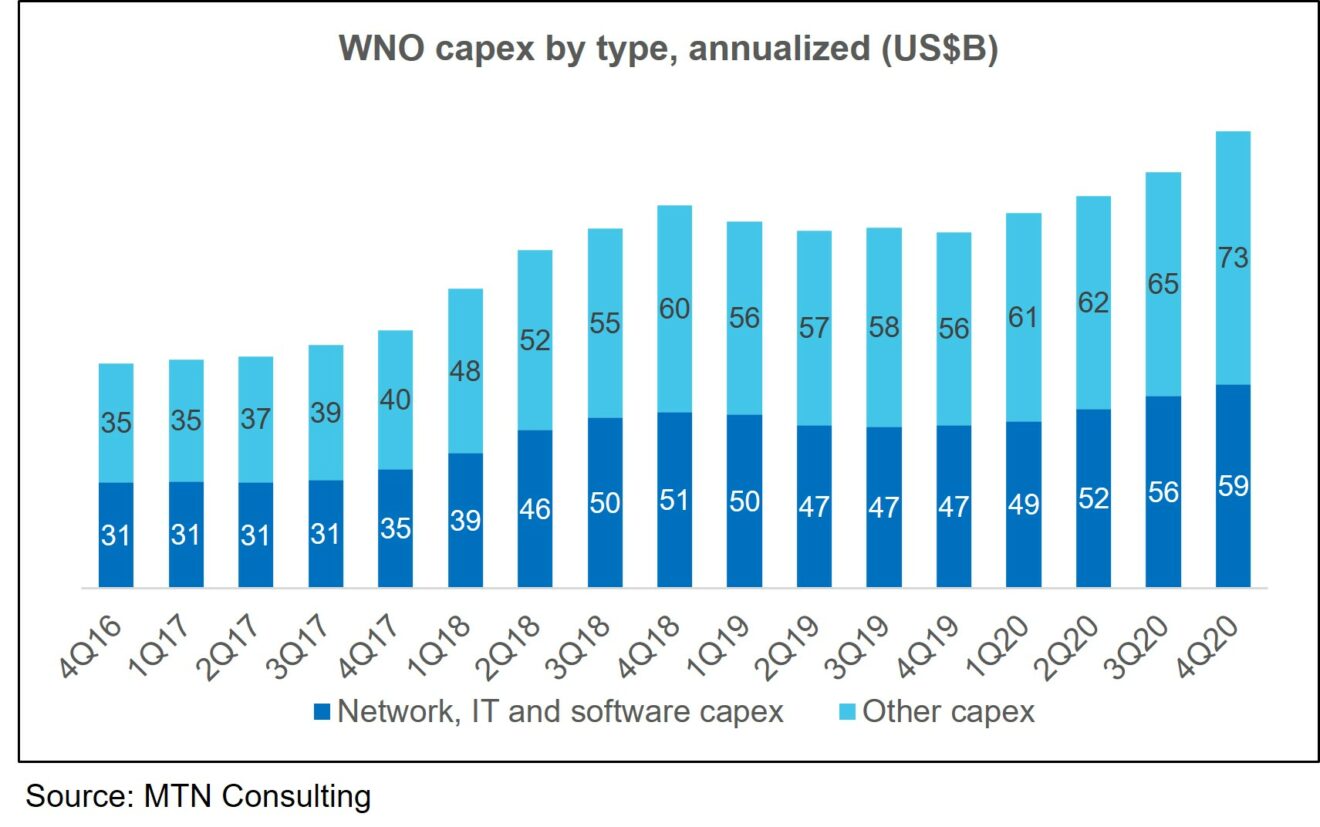
For webscale operators to support all these new activities requires heavy investment in network infrastructure. The figure below shows capex by type, on an annualized basis, for the total webscale network operator market since 2016.

webscale capex trendline2

Blog Details

Big telco merger in Canada comes as industry capex poised for uptick in 2021

Telcos choose M&A to cope with weak revenues and new capex needs: surprise?

Rogers to buy Shaw, leaving Canada with 3 big telco groups

Earlier this week, Canadians woke up to a shock: Rogers Communications agreed to buy Shaw Communications, for US$21 billion (including assumed debt).

Rogers is Canada’s second largest telco, with a mix of wireless (61%), cable (28%), and media (11%) revenues. Among its media holdings is the Toronto Blue Jays, a baseball team. Shaw is Canada’s fourth largest telco, with just 22% of revenues coming from wireless (largely through the 2016 acquisition of Freedom Mobile), 68% in wireline consumer, and 10% wireline business. Shaw’s “wireline” revenues are delivered primarily over a cable TV network, complemented by satellite. 

Rogers-Shaw would be a big deal in any market, but adjusted for Canada’s relatively small market, it is immense. A deal of similar magnitude in the US market, 8.3 times the size of Canada (based on 2019 telco revenues), would be $174 billion. For context, three of the largest recent US telco mergers were far smaller: AT&T-Time Warner in 2016 ($85.4B, 2016); AT&T-DirecTV in 2014 ($67B); and, T-Mobile-Sprint in 2020 ($26.5B). 

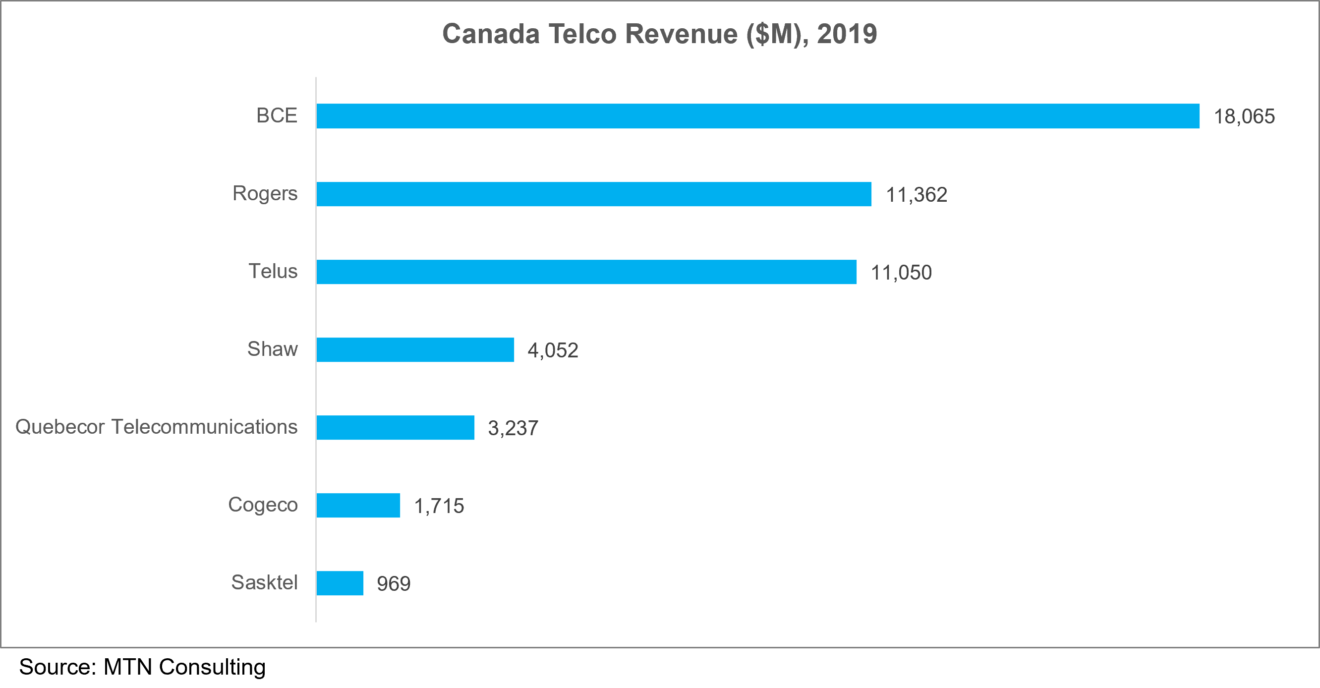
The figure below shows 2019 revenues for Canada’s top telco groups, per MTN Consulting stats.

canada telco revenue

While many analysts are shocked at the deal, it’s almost a surprise that it took so long to happen. Many markets larger than Canada have consolidated around three large national telco groups. For countries like the US and Canada, with a viable cable TV sector, that consolidation has taken longer. But assuming that all three are national competitors across wireline and wireless, the number three doesn’t appear unreasonable on its face. That’s especially true as telcos struggle with both flat revenues and growing competition from the cloud/webscale sector.

5G isn’t cheap

What’s worth looking at it is, why is such a deal taking place now?

One obvious answer is the turmoil caused by COVID-19. Like telcos elsewhere, those in Canada saw revenue declines in 2020. Annualized telco revenues began falling for the Canadian telco market in 2Q19, however, and the declines seen in 2020 were in the same ballpark.

Margins aren’t an obvious issue, either. For Rogers, margins have held steady, with EBITDA margin improving in 2020 vs 2019 for both its wireless and cable units (media dropped slightly). Shaw’s most recent quarter, ended November 2020, saw company EBITDA margins up to 44.3% from 42.5% in the quarter ended November 2019.

The more likely answer is the need to ramp up 5G networks and roll out services. And that is exactly what Rogers’ CEO argued in the analyst conference:

“Without question, the deal will accelerate deployment of 5G around the country and will assure competition and capital continue to be prioritized and reinvested in new technologies at home here in Canada and especially in Western Canada…Today, both companies invest $3.7 billion annually in CapEx. And the underlying investment in 5G inherent in this total will only go up as 5G technologies continue to roll out across the country. This is a big task for both companies. And when combined, both companies are up for the challenge.”

This statement came along with a specific commitment to invest C$2.5B “to build 5G networks in Western Canada,” and C$1B for the creation of a “Rural and Indigenous Connectivity Fund.” 

Rogers says it expects up to C$1B in cost synergies, a mix of opex and capex, but says that most of the capex savings will be put back into the network: “more fiber, more connectivity, more rural connectivity and a few other programs related to the network,” per the CFO. The opex part is significant. New service platforms can require huge investments in expense categories like sales & marketing, among others, something which a combined Rogers-Shaw may be better able to cope with.

Beyond Canada

MTN Consulting expects global telco capex to rise slightly this year, from approximately $280 billion in 2020 to $292B in 2021. This modest growth is consistent across regions, as shown in the figure below from our latest capex forecast.

telco capex by region

In Canada, capex has been on the decline, from US$13.9B in 2018 to $13.8B in 2019 to $12.6B for the 12 months ended September 2020. Canadian telcos, however, are just beginning to deploy 5G – the bulk of the work is in the future, with many key vendor awards just concluded in mid-2020. Like the global market, Canada can expect a capex uptick in the next couple of years, albeit a modest one. Market leader BCE, for instance, has pledged to spend an extra C$1B to C$1.2B in 2021-22, with most (C$700M) in 2021; roughly 2/3 of the spending increase is for wireline, 1/3 for wireless. The second largest player, Telus, has projected 2021 capex to be flat with 2020; whether Telus is forced to increase in response to a faster rollout by others, though, is a real possibility.

What about other markets? What do 4Q20 earnings reports from key telcos suggest is on the way in 2021 and 2022 with regards to capex? Below are a few highlights:

  • America Movil: 2021 capex in line with 2020 at around US$8B
  • Charter: 2021 capex to be consistent as a percentage of revenue with 2020
  • China Telecom: 87B RMB in capex, from 85B in 2020, much lower spend on 4G, higher spend on “industrial digitization” 
  • China Unicom: 2021 capex of 70B RMB flat with 2020, 5G still roughly half of total in both years.
  • Comcast: “we are confident in our ability to increase profitability, expand margins and improve [i.e. reduce] CapEx intensity both in 2021 and thereafter”
  • DT: cash capex excluding spectrum is “expected to amount to around EUR 18.4 billion in 2021 and to remain stable in 2022. We want to continue investing heavily in building out our network infrastructure in Germany, the United States, and Europe in order to safeguard our technology leadership in the long term.”
  • Etisalat: capital intensity in 2021 of 16-18%, from 13.7% in 2020 due largely to 5G spend.
  • KPN: forecasts 1.2B Euros in capex for 2021, up from 1.1B, as it expects “another step-up in fiber CapEx to roll out or ramp up further to approximately 500,000 households.”
  • KT: 2021 capex likely flat but a much different mix, with more digital, AI and cloud focus.
  • STC: “expecting a slight decline” in capex for 2021 despite investing heavily in 5G expansion
  • Swisscom: “CapEx outlook is at around CHF 2.3 billion for the group, of which Switzerland a bit more than CHF 1.6 billion. We expect the CapEx slightly higher because of the FTTH rollout, and Fastweb steady at EUR 0.6 billion.”
  • Tele2: 2020 capex of 2.7B SEK was up from 2.4B in 2019; capex will grow to 2.8-3.3B range in 2021 due to 5G rollout. But company says “expect capex to be at low levels compared to peers even during the roll-out of 5G and Remote-PHY”
  • Telefonica: after capex declines in 2020, “CapEx to sales will trend back to normalized pre-COVID level, up to 15% of sales”
  • Turkcell: “We will continue to invest our infrastructure at around 20% of sales, driven mainly by capacity and software investment upgrades as well as expansion of fiber infrastructure.”
  • Veon: increased capex from $1.74B in 2019 to $1.9B in 2020 and expects a similar level for 2021 and 2022.
  • Verizon: capex of $17.5-18.5B in 2021, from $18.2B in 2020; focus on “further expansion of our 5G Ultra-Wideband network in new and existing markets”

As shown above, most telcos suggest capex in 2021 will be roughly flat, either on an absolute basis or capex/revenue basis. Nowadays few telcos want to boast of high spending to shareholders. However, quite a few telcos do expect capex growth over the next year or two. Not exactly a surge of spending, but on net consistent with MTN Consulting’s forecast of a slight uptick in the market.

On the supply side there will be significant change underway over the next two years, with Huawei taking more of a backseat. Some telcos worry that this may leave them paying too much for their network infrastructure, due to weaker supply side competition. Telcos will hedge their bets by ramping up collaboration with webscalers when possible, and continuing to explore open networking and network disaggregation.