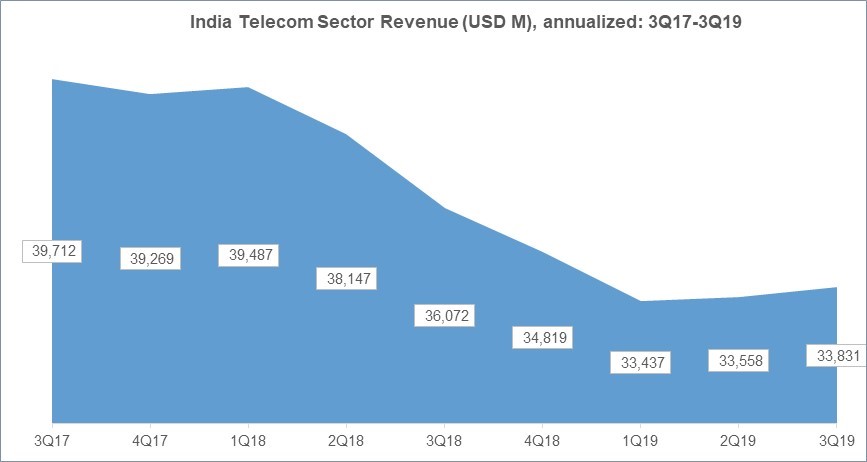
The Indian telecom sector is left in tatters following the Supreme Court’s verdict that supported the Department of Telecommunications (DoT) in a dispute with the telcos over how levies are calculated. Already ridden with massive revenue declines (Figure 1) and a collective debt of almost INR7,800B (US$110 billion), Indian telcos have little cash left for future investments including the upcoming 5G spectrum auctions.
Figure 1
Source: MTN Consulting
Airtel and Vodafone-Idea are under severe financial stress, with the latter on the verge of bankruptcy
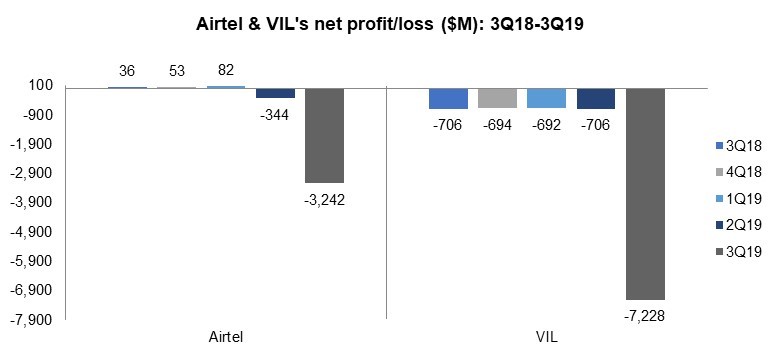
The court’s verdict on adjusted gross revenue (AGR) had significant financial implications on Airtel and Vodafone Idea Limited (VIL). In 3Q19, these two telcos reported combined losses of about $10.5B (Figure 2) as they set aside funds towards AGR dues.
The debate over AGR definition between the DoT and the operators goes back to 2005. The AGR definition is crucial as it has massive financial repercussions for both operators and the government. For instance, the telcos are required to pay 3-5% of the AGR towards spectrum usage charges, and nearly 8% of AGR as license fees.
DoT considers revenues from core and non-core business as AGR, while operators argue that AGR should include revenue only from core business and exclude revenues from dividend, interest income or gains on the sale of assets. Now with the Supreme Court verdict favoring the government’s stance, Airtel and VIL are liable to pay INR216B ($3B) and INR283B ($3.9B), respectively, towards AGR dues. For context, Airtel’s 2Q19 revenues amounted to $2.98B while VIL recorded $1.62B; AGR is significant for both.
Figure 2
Source: MTN Consulting
The liabilities incurred by the operators are huge mainly due to the interest and fines levied since 2005. With both operators already reeling under financial stress amidst the rapid growth of rival Jio, the operators’ strategy to hike prepaid tariffs does not come as a surprise. In the first week of December, Airtel, VIL, and Jio all hiked rates on prepaid plans by more than 40% and are in talks with TRAI to set up a floor price, a minimum tariff for mobile voice and data services. Jio’s decision to join the bandwagon of hiking prices could be the first sign of stability in the sector that has been battered for almost three years.
While both Airtel and VIL are in trouble, Airtel has more options. It plans to raise $3 billion to pay the government, which could involve the sale of its stake in its tower arm Bharti Infratel. VIL has not made clear its plan. It is precariously placed with piled up debt and huge subscriber losses. VIL’s debt to equity ratio increased from 181% in 3Q18 to 487% in 3Q19 (Figure 3). Further, VIL’s subscriber base declined to 311M subscribers in 3Q19 compared to 422M a year back. VIL’s parent entities Aditya Birla and Vodafone are also shying away from making additional investments in the merged entity. With mounting losses and no backing from the parent groups, chances of revival for VIL are low. An urgent sale to a rival operator is possible.
Jio is getting stronger amid Airtel’s and VIL’s financial crisis
Reliance Jio (Jio)’s entry into the telecom sector in 2016 has come down hard on established players like Airtel and VIL. Post Jio’s entry, the industry witnessed intense price competition setting off a sector wide consolidation resulting in just three private operators. Unlike Airtel and VIL, Jio has not been impacted much by the recent court decision on AGR. Jio’s total fine amounts to just $1.8M, given that it started operations in India only three years ago. Moreover, Jio’s parent company (RIL) is forming a new subsidiary that will hold its digital and mobility businesses, including Jio, and transfer all of Jio’s pending liabilities to other divisions within RIL. Post this restructuring process, Jio will be net debt-free with just spectrum related dues to pay. All of this helps Jio manage its cash flows better and will place Jio in a strong position with enough cash to fund for the upcoming spectrum auctions.
So, what lies ahead for the sector?
The next few quarters will be a testing phase for Airtel and VIL, as they seek relief measures from the government to stay afloat. Amid the AGR issue, the government decided to defer spectrum auction installments due from the telcos in FY21 and FY22 by 2 years. This is just a temporary relief, though, and it relates to older spectrum purchases – these operators need fresh spectrum for 5G.
The AGR ruling will be a major hindrance in the telcos’ ability to take part in 5G auctions. For instance, the current suggested base price for 5G is marked at INR4,920M ($69M) per Mhz, with a minimum sale of 20 MHz blocks. This would mean investing around INR100B ($1.4B) for 20 Mhz. The recommended price for the same band in countries like Korea, Spain, the UK and Italy is up to 6 times cheaper. For India’s telcos, spectrum cost constitutes a significant portion of total capex. Considering their financial woes, Airtel and VIL might not even bid for the upcoming 5G auctions at the current price.
Unavailability of adequate spectrum is a related concern. The Indian regulator had put up 300 Mhz of spectrum in the 3.3-3.5 Ghz bands, however with 125Mhz set aside for defense and space organizations, the telcos are left with just 175Mhz spectrum to bid for. Scarce resources get expensive quickly. To help address this, a minimum 100 Mhz block should be assigned per operator for better 5G enablement and deployment, but freeing up this much spectrum will be a challenge.
To justify future investments in 5G, both in spectrum and network infrastructure, telcos will also have to command significant pricing power in new 5G services, which currently seems unlikely.
Unlike many other countries in the MENA (Middle East and North Africa) region, 5G services are already available in the United Arab Emirates (UAE). Etisalat and Du, UAE’s only two operators, are both deploying 5G on the 3.5 GHz frequency band. In May 2019, Etisalat became the first operator in the MENA region to commercially launch 5G service.
Recommendations
For effective commercialization of 5G, operators should focus on device costs and finding ways to subsidize the cost if needed. For their part, government administrators should consider the following:
Provide a near term deadline to shutdown 3G services
Provide a longer-term deadline to shutdown 2G services
Put a strong emphasis on enabling vertical markets
Ease regulations for new entrants
UAE overview
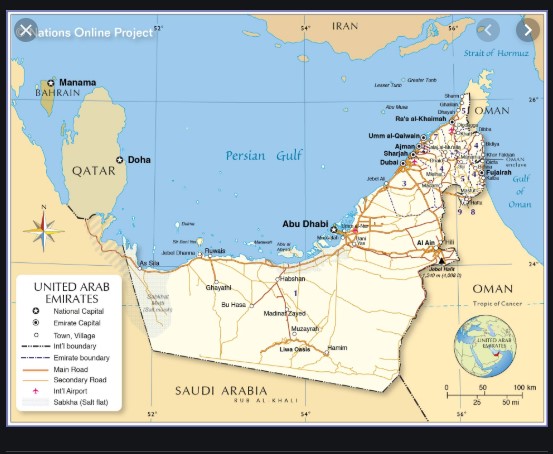
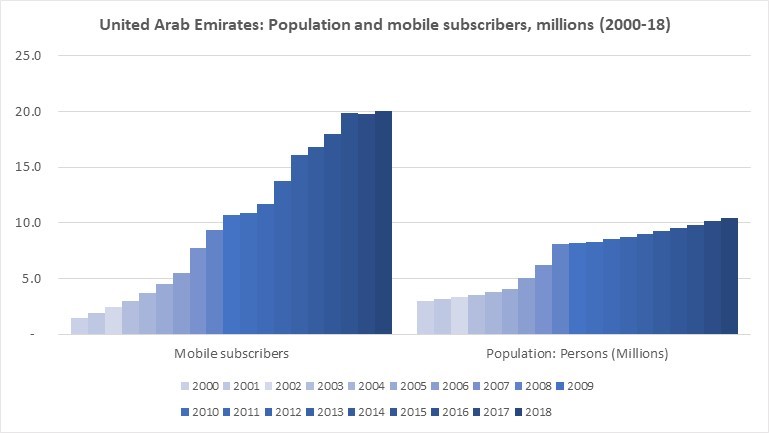
The United Arab Emirates or UAE is at the southeast end of the Arabian Peninsula on the Persian Gulf, bordering Oman to the east and Saudi Arabia to the south and west. It also shares maritime borders with Qatar to the west and Iran to the north. UAE is a federation of seven emirates consisting of Abu Dhabi (the capital), Ajman, Dubai, Fujairah, Ras Al Khaimah, Sharjah and Umm Al Quwain (Figure 1). UAE has one of the world’s highest percentage of immigrants: more than 70% of the overall population. At the end of 2018, the UAE’s population was 10.4 million, up from just 3.0M in 2000 (per the IMF).
The Telecommunications Regulatory Authority or TRA is the federal telecommunications regulatory agency of the UAE. It was established in 2003 to regulate the Information Communications and Telecommunications (ICT) sector. In 2013, its role was extended to include responsibility for the overall digital infrastructure in the country. TRA is also responsible for representing UAE in the international ICT forums.
Telecom Operators
Etisalat and du are the only two telecom network operators in the UAE. The UAE government owns large ownership stakes in both operators, and limits competition in the sector. The creation of du in 2007 added a second competitor to the mobile market, but fixed line competition only began in 2015. At the end of September 2019, Etisalat has 10.54 million while du has 7.736 million mobile subscribers. Thus, UAE has about 186% mobile penetration rate, one of the highest in the world. UAE has also the highest smartphone adoption rate in the MENA region, and second only to Singapore, with smartphones accounting for 85% of total connections in Q2 2018.
Figure 2 shows the growth of the UAE’s population and mobile subscriber base from 2000-18.
Figure 2
Sources: IMF and ITU
The MVNO phenomena was started in 2017 with the launch of Virgin Mobile by du, which was immediately followed by Etisalat’s Swyp. These Mobile Virtual Network Operators are targeting the younger tech-savvy generation. The packages offered by these MVNOs are tailored more towards mobile data rather than phone calls and SMS services.
Etisalat and du have extensively deployed optical fiber throughout the country. FTTH (fiber to the home) service is also widely available in UAE. Based on September 2018 stats from the FTTH Council MENA, the UAE ranked number one (globally) with a 95.7% FTTH penetration rate. A small geography and a high average income both facilitate this. While competition in fixed line is only a few years old, du has built up a noticeable market share.
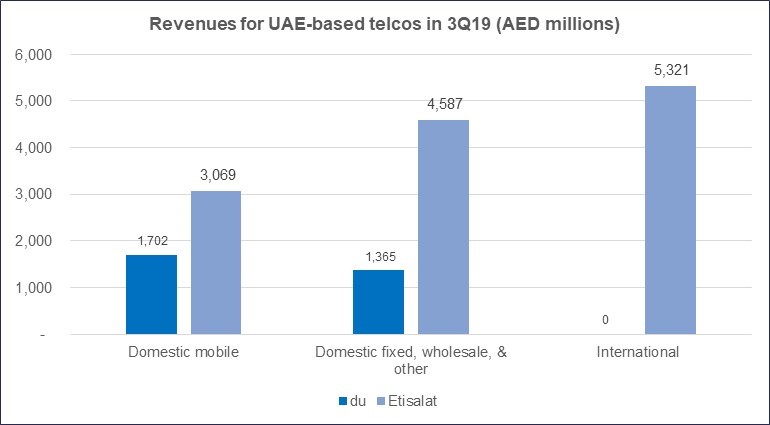
Figure 3 below illustrates revenues for the two companies by type, in 3Q19.
Figure 3
Source: company earnings reports
5G
Etisalat awarded contracts to both Huawei and Ericsson for the rollout of its 5G mobile network in February 2019. It plans to deploy 900 5G-enabled base station sites during 2019-20. Etisalat’s rival du plans to deploy 700 5G base stations during the same time frame. Huawei and Nokia are du’s 5G network suppliers. ZTE’s Axon 10 Pro 5G is one of the first 5G handsets (if not the first) that was launched by both operators in the UAE.
Connectivity
The UAE has two key landing stations for connectivity with international submarine cables. The Fiber-Optic Link Around the Globe (FLAG), South East Asia-Middle-East-Western Europe 3 (SEA ME WE 3), SEA-ME-WE 4 and Asia-Africa-Europe-1 (AAE-1) lands at the port of Fujairah, whereas SEA-ME-WE 5 lands at Kalba.
UAE also uses satellite earth stations such as 3 Intelsat (1 Atlantic Ocean and 2 Indian Ocean), 1 Arabsat, etc., for connectivity.
Spectrum
In November 2018, the regulator TRA issued 100 MHz to each of the two incumbent operators in the 3.3 to 3.8 GHz frequency range to offer 5G services. This free issuance of spectrum is hugely beneficial for operators’ financial health and network rollout.
In addition to this C-band assignment, the regulator is also looking at the 1427 MHz-1518 MHz, 24.25 GHz – 27.5 GHz and bands above 40 GHz for 5G. Both Etisalat and du also have spectrum assignments in 800, 900, 1800 and 2100 MHz bands to offer 2G, 3G and 4G services. Etisalat additionally uses the 2600 MHz band to provide 4G LTE service.
Key Challenges
The UAE’s key challenge is the commercialization aspect of 5G in conjunction with the heavy baggage of 2G, 3G and 4G networks.
UAE is one of the richest countries of the world with a GDP per capita of over $40K. The IMF expects the UAE economy to grow at 1.6% in 2019 and 2.5% per year through 2025. In the telecom sector, the duopoly and state-controlled structure has landed the operators in a reasonable financial state. With little possibility of a third player, the two operators as compared to many other markets have few things to worry about, at least in the near term.
Recommendations
To further streamline the process of effective and meaningful commercialization of 5G, the following steps may be considered:
3G Shutdown: TRA and operators may come up with a near term deadline to close down the 3G networks. The slower and less spectrally efficient 3G is definitely not required when better 4G and 5G networks are available. The 2100 MHz band which is used to operate 3G is not primarily used for 4G and 5G worldwide and thus keeping it for future use may not be worthwhile. Eventually, it will free up capacity, reduce the number of network elements and further improve their networks’ quality of service and overall financial health. Transition issues such as QoS degradation and vendor contract renegotiation are manageable.
2G Shutdown: The operators also have a huge customer base of low ARPU, price sensitive customers. The vast majority of these customers are expats (immigrants) and a large number of them have come from a poor and less educated background. With high tendency to save money for families in their home countries, cheaper 2G/3G phones are preferred over more tech-savvy and high-end devices. Regulators and operators should jointly consider developing a detailed roadmap for the discontinuation of 2G services. The roadmap may look into such issues as: the availability of low cost 4G and 5G phones, as most of the available low-end phones are not capable of operating on 4G/5G networks; reengineering of the required section of the networks including disposal of unnecessary elements; and, creation of awareness programs. Furthermore, 2G primarily operates in the 900 MHz band which has not been recommended for 4G and 5G.
5G Device Cost: Operators may further increase their due diligence with the device suppliers to lower the cost of 5G devices to attract masses. The current cost of a 5G device in UAE hovers around USD 800-1,200 as compared to $10-$30 for 2G/3G phones.
Vertical Markets: It will be difficult to have a good return on 5G investments without its enablement in vertical industries. An effective roadmap is needed to strengthen 5G in IoT (Internet of Things), AI (Artificial Intelligence), V2X (vehicle to everything – connected cars), etc., markets. The list of stakeholders is long and with perhaps many open as well as clandestine political agendas, it won’t be easy to come up with such a roadmap. The seven emirates and ministries / regulators along with the corresponding industries (education, finance, health, maritime, telecommunication, tourism, transportation, etc.) will eventually face an uphill battle.
New Entrants: With 5G and its enormous possibilities in vertical industries, the regulator (TRA) may conduct another round of due diligence on the viability of new entrants in the telecom space.
Thailand is making good progress in its goal of launching commercial 5G service in 2020. The recent auction of frequencies in the 700 MHz band, the agreements between operators and telecom equipment suppliers, as well the development in academia and 5G lab setups by suppliers in the Eastern Economic Corridor (at Chonburi) are all great steps in the right direction.
Recommendations
To further streamline the process of effective and meaningful commercialization of 5G following recommendations may be considered by the administration and operators:
• Provide a deadline to shutdown 3G networks. Operators should study this subject and deduce plans; • Consider further lowering the USO (Universal Service Obligation) contribution rate for the operators; • Execute effective field trials to understand the coexistence of satellite and IMT (International Mobile Telecommunication) in the C-band (3.4 GHz -3.7 GHz); • Auction either 26 GHz or 28 GHz but not both in the year 2020; • Do not consider the 2600 MHz for 5G in the near future as it will be difficult to achieve economies of scale, since it is not one of the desired bands for 5G at the world stage; • Recommend a footnote for the future use of 3.4-4.2 GHz for IMT at the World Radiocommunication Conference 2019; • Provide a 3 to 5 year frequency spectrum roadmap.
Thailand overview
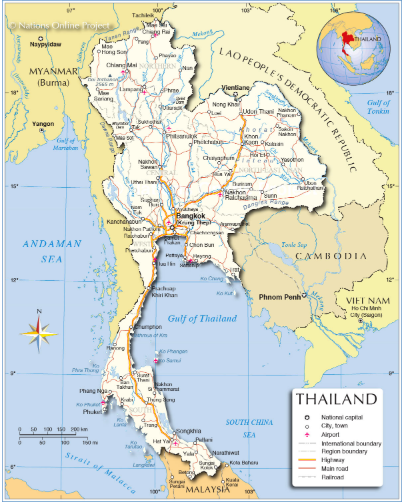
The Kingdom of Thailand is a country at the center of the Southeast Asian Indochinese peninsula composed of 76 provinces. Home to over 69 million people, it shares borders with Cambodia, Malaysia, Myanmar and Laos. It also has a long coastline along the Gulf of Thailand (1,875 km) and the Andaman Sea (740 km), excluding the coastlines of some 400 islands (Figure 1). GDP per capita was $7,274 in 2018.
The Ministry of Digital Economy and Society was formed on October 03, 2002. It is responsible for national policy on digital development, statistics and meteorology. It is also responsible for managing country’s telecommunication networks and regulating cyber security. It manages two public telecommunication companies namely TOT (Telephone Organization of Thailand) Public Company Ltd and CAT (Communications Authority of Thailand) Telecom Public Company Ltd. Prior to the 2002 creation of the MDES, Thailand’s telecom sector was overseen by a Ministry of Information and Communication Technology.
The National Broadcasting and Telecommunications Commission or NBTC is the national and independent regulator in Thailand that manages both telecommunications and broadcasting sectors. It has the authority to assign frequency spectrum and regulate the two sectors in accordance with the Act on Spectrum Allocation Authority, Regulatory & Control over Radio & TV Broadcast and Telecommunications of 2010 (or NRA Act of 2010).
Mobile Operators
Thailand is a market of approximately 94 million mobile subscribers (June 2019), resulting in a mobile phone penetration rate of about 136%. It is predominantly a prepaid market having more than 70% share.
The mobile phone operators can be divided into two groups – stated owned enterprises and private companies. TOT and CAT are the state-run operators having a combined market share of around 2%. While their services share is tiny, TOT and CAT play important roles as concession holders for private telcos. In addition, their networks include lots of fiber in the backbone and backhaul, as well as cell towers, so they are important infrastructure suppliers to the private sector.
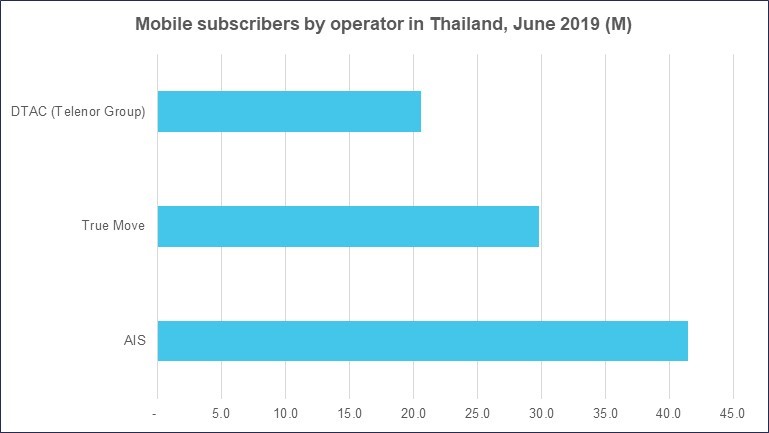
The key private telcos are three players – AIS (Advanced Info Service), TrueMove H and DTAC (Total Access Communication). AIS is the market leader with 41.5 million subscribers followed by True Move with 29.8 million. DTAC, which is owned by Telenor Group, comes in at number three with 20.6 million of users at end of June 2019 (Figure 2).
Figure 2
Source: company earnings reports
A number of MVNOs (Mobile Virtual Network Operators) are also present that provide services to their customers using the networks of the state-run enterprises. For example, Buzzme uses TOT’s network whereas Real Move depends on CAT’s network. These MVNOs lack their own radio frequencies and networks, instead they lease capacity from the two state run enterprises.
Fixed line Operators
Thailand’s fixed line subscriptions continue to decline as in other ASEAN countries due to heavy penetration of mobile phones and mobile broadband. The subscription total is down from 3.466 million in 2017 to 2.929 million in 2018. After the dissolution of TT&T (Thai Telephone & Telecommunications) in 2017, TOT took over TT&T’s operations. Now, TOT and AIS are the only two large fixed line operators remaining in the country. TOT has around 70% of the market while most of the rest belongs to AIS. The AIS fixed line customer base comes partly from its 2017 acquisition of CSLoxinfo (see “Running Converged Networks is Costly; A View From Thailand”). In addition to AIS there are several smaller ISPs with fiber and/or DSL networks, some targeting mainly consumer (such as 3BB, owned by Jasmine) and some focused on enterprise (such as Symphony).
Spectrum
Over the last few years the regulator conducted multiple auctions for the launch and promotion of 3G/4G services. The most important one happened in 2012, when the regulator allocated 45 MHz in the 2100 MHz frequency band. An assignment of 15 MHz was made to each of the three mobile phone operators. This spectrum is currently used to offer 3G/4G services. To keep up with the pace of demands from 3G/4G networks, the regulator successfully managed to auction some spectrum in the 900 MHz and 1800 MHz frequency bands in 2015.
To kickoff 5G, the regulator conducted an auction of 700 MHz in June 2019. A block of 2 x 10 MHz was assigned to each of the three private operators and the respective licenses will be valid for the next 15 years starting from October 01, 2020. The auction was conducted at a reserve price of THB17.6 billion ($562 million) per block. This frequency band could be instrumental in kicking off 5G in the country.
The current spectrum assignments for each operator is are shown in Table 1.
Thailand is moving ahead to launch 5G during 2020.
The regulator (NBTC) took a great step in December 2018 by mandating operators to shut down 2G services by October 2019 in order to free up capacity for 5G services. The recently concluded 700 MHz auction, along with the existing bands that were in use for 2G services, will also help in the launch and development of 5G.
There are other positive signs:
Vendor deals: The recent agreements of Nokia, Huawei and ZTE with AIS on the development of 5G use cases for a wide range of industrial verticals.
5G use case development: besides spectrum auctions, NBTC is also facilitating the development of 5G at leading educational institutes in each region. After an initial trial at Chulalongkorn University, 5G service was launched at Chiang Mai University (CMU), Khon Kaen University (KKU) and Prince of Songkla University in the 25 and 28 GHz bands. CMU is situated in northern Thailand, KKU in northeast, PSU in south whereas Chulalongkorn University is located in Bangkok (central Thailand). This project will assist academia as well the telecom sector in the development of 5G across the length and breadth of Thailand.
R&D: Another key development is the 5G lab setups by Huawei, Nokia and Ericsson. These are located in Chonburi, about 90 km (56 miles) southeast of Bangkok. The surrounding area is the target of the Eastern Economic Corridor, which Thailand is hoping to develop by attracting $45B of new investment.
Connectivity
Thailand’s domestic fiber optic cable network spanned 310,000 kilometers at the end of 2018. Most of this is owned by the public sector (210,000 kilometers in total), in particular TOT and CAT. The private sector owns the remaining 100,000 kilometers.
Thailand has multiple submarine cable landing stations for international connectivity. The main submarine cables landing in Thailand are SEA-ME-WE 3, SEA-ME-WE 4, Thailand-Indonesia-Singapore cable, Asia-Pacific Cable Network, Thailand-Vietnam-Hong Kong cable, and FLAG (Fiber-Optic Link Around the Globe). In addition, a new cable system, the SJC2 (South-East Asia Japan Cable System 2) cable is under construction and will land in Songkhla by end of next year.
Key Challenges
Thailand is in a reasonable position to launch 5G. However, there are still a number of challenges that need to be addressed:
The famous C-band: Frequencies in the range of 3.4 to 4.2 GHz, which is part of the core 5G band, are extensively used for TV broadcasting services in Thailand. This spectrum won’t free up for a while. Even though the only satellite that operates in 3.4 GHz to 3.7 GHz range is Thaicom5, its license will not expire before 2022-23. The newer Thaicom6 is also an issue, as it operates in the 3.7-4.2 GHz range and has a valid license till 2029. Field trials are underway in Thailand to understand the compatibility / co-existence of IMT with existing satellite services in the 3.4 to 3.7 GHz band. The only possibility at least for the near future is 3.3-3.4 GHz band for 5G services.
Spectrum Roadmap: lack of a clear spectrum roadmap remains an issue in Thailand. It’s promising that, in addition to the recent 700 MHz auction, NBTC is planning to auction 2.6 GHz, 26 GHz, 28 GHz bands in 2020. However, the cost of acquisition issue needs to be addressed.
Recommendations
To further streamline the process of effective and meaningful commercialization of 5G, the following steps may be considered:
3G Shutdown: Operators should start thinking about shutting down their 3G networks. This will free up capacity, reduce the number of network elements, reduce their annual license cost, and spectrum can be returned to the regulator if needed and/or possible or can be reused for 5G if possible. In a nutshell, it will improve their networks’ quality of service and overall financial health. Transition issues such as QoS degradation and vendor contract renegotiation are manageable.
USO Contribution: Operators make USO obligatory payments out of their revenues to the government. These payments are made to extend the reach of telecommunication services to underserved and remote areas of the country where getting a return on investment is next to impossible. Though the government has recently cut the USO fee to 2.5% from 3.75%, the rate is worth a relook.
2020 Spectrum Auction: A 2×10 MHz block in 700 MHz is not suitable to offer real 5G broadband services and thus additional frequencies are needed. Fortunately, there are other options. According to NBTC, a total of 190 MHz in 2.6 GHz, 2.25 GHz of bandwidth in the 26 GHz band, and 3 GHz in 28 GHz are available and all are expected to be put on auction in 2020. We recommend that either 26 GHz or 28 GHz band may be auctioned but not both in 2020. Secondly, we suggest that 2600 MHz may not be put for auction as it is not one of the desired bands at the world stage for 5G in 2020:
Both bands (26 GHz and 28 GHz) have enough bandwidth to offer 5G for the coming years
Not to give additional financial burden to the operators
C-band (3.4 GHz – 3.7 GHz): A quick completion of the currently underway 5G and satellite co-existence/ compatibility trial will be good omen, particularly if the results are positive. Thailand may recommend a footnote for the future use of 3.4-4.2 GHz for IMT at the World Radiocommunication Conference 2019.
3.3 GHz – 3.4 GHz: This range may only be made available if existing satellite usage in 3.4 – 3.7 GHz can co-exist with IMT, otherwise bandwidth is not enough to be shared among three operators along with the guard band of 10-20 MHz.
Spectrum Roadmap: A clear 3 to 5 year roadmap is needed to assist operators and their shareholders in their decision-making process.
The top five vendors selling 5G network infrastructure have now reported 3Q19 earnings. Nokia, Ericsson, and Samsung each reported public earnings data allowing a breakout of revenues to telcos. ZTE provided its usual interim (1st and 3rd quarter) report, which lacks revenues by customer segment. Huawei published a press release including total revenues and high-level commentary on demand trends.
Our take
There are modest signs of an uptick in telco spending in these results. Overall, the five recorded approximately $25.9B in 2Q19 revenues to the telco vertical (“Telco NI”), up 1% from the group’s 3Q18 total of $25.5B. For each of these vendors, except perhaps Samsung, 5G is only a small slice of their overall activities – and many things are being re-branded as 5G, so true 5G breakouts are challenging. Nevertheless, early figures do suggest commercial 5G momentum is spreading, despite ongoing trade wars and supply chain interruptions.
These are preliminary figures, based on a few assumptions. One is that Huawei’s actual carrier (Telco NI) revenues grew 3% in local currency terms; this is an assumption that needs to be further verified given Huawei’s limited reporting. Second is that ZTE’s carrier (Telco NI) revenues amount to 70% of total, which also needs to be confirmed.
With these assumptions, Samsung and ZTE are the clear growth standouts, growing Telco NI revenues by 17% and 13% YoY in 3Q19, respectively. Samsung continues to ride its domestic market’s early adoption of 5G. ZTE’s recorded growth benefits from an unusual 3Q18 base period, when sanctions were in place.
Huawei’s assumed 3% annual growth in RMB translates to a -0.2% decline in USD revenues. If this bears out, this would be a significant improvement over 2Q19, when we estimate that Huawei’s Telco NI revenues declined 6% YoY. The push by Chinese telcos to accelerate 5Gand invest in new areas (including overseas, for China Mobile) is helping both Huawei and ZTE, as it has in the past.
Ericsson and Nokia grew Telco NI revenues at roughly the same rate in 2Q19 (in USD), about +2% YoY, but Ericsson opened up a lead in 3Q19 with 0.7% YoY growth (Nokia: -1.3%).
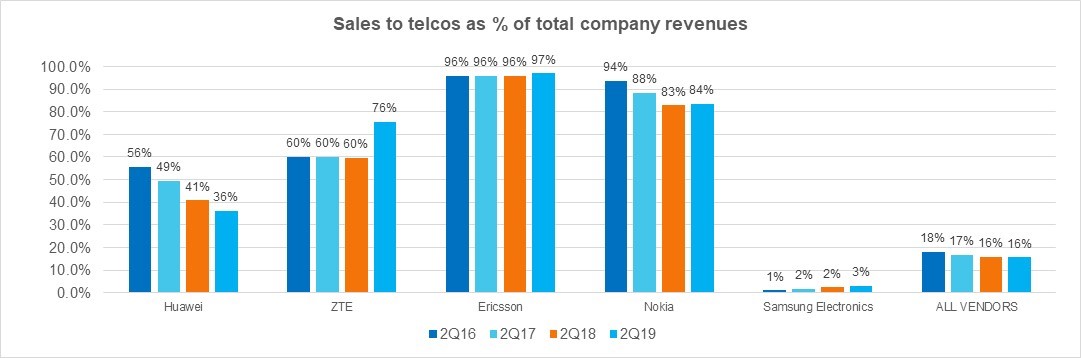
There is lots of noise around the number of signed commercial contracts, especially deals involving deep-pocketed telcos. However, it’s notable that 5G is much more of a multi-vertical technology than previous generations, with complex use cases being laid out across sectors. All key 5G vendors are exploring these. Of the top 5, Ericsson will likely be the most reliant on partnerships, given its relatively high dependence on the telco market for its revenues (Figure, below).
Indonesia, the world’s fourth most populous country, is expected to face an uphill battle to enable 5G. Reasons include its complex geography, unavailability of core 5G frequency band (i.e. C-band 3.3 to 4.2 GHz), and dwindling operator revenues. The goal of this post is to briefly address these challenges and make suggestions for how to improve 5G’s outlook in the country.
Recommendations
There are several steps that would improve the outlook for 5G in Indonesia. The Ministry of Communication and Informatics (MCI) may:
• take steps to make the 3.3-3.4 GHz band available for International Mobile Telecommunication (IMT);
• recommend a footnote for the future use of 3.4-4.2 GHz for IMT at the World Radiocommunication Conference 2019;
• conduct effective spectrum auctions for suitable millimeter wave band(s), perhaps starting with 28 GHz; and,
• remove roadblocks to ease the process of cellular market consolidation.
Meanwhile Indonesia’s operators should utilize the connectivity provided by the recently completed Palapa Ring project to expand their business in remote areas, and work with MCI for an effective market consolidation.
Indonesia overview
Indonesia, home to over 271 million people, is an island country in Southeast Asia comprised of more than 17,000 islands. It is the world’s 4th most populated country with the world’s 16th largest economy in terms of nominal GDP (gross domestic product).
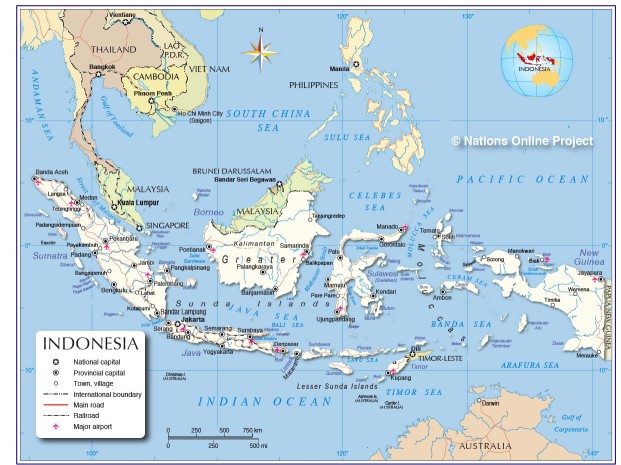
Indonesia shares land borders with Papua New Guinea, Timor Leste, and the eastern part of Malaysia. Australia, India, Palau, Philippines, Singapore, Thailand, and Vietnam are its maritime neighbors (Figure 1).
Indonesia’s Ministry of Communication and Informatics is responsible for organizing government policy in the field of Information and Communications Technology. In 2003, the Ministry established the Indonesian Telecommunications Regulatory Body (BRTI) to which it delegates authority to regulate, supervise and control telecommunications networks and services. BRTI is also responsible for executing frequency spectrum auctions.
Mobile operators
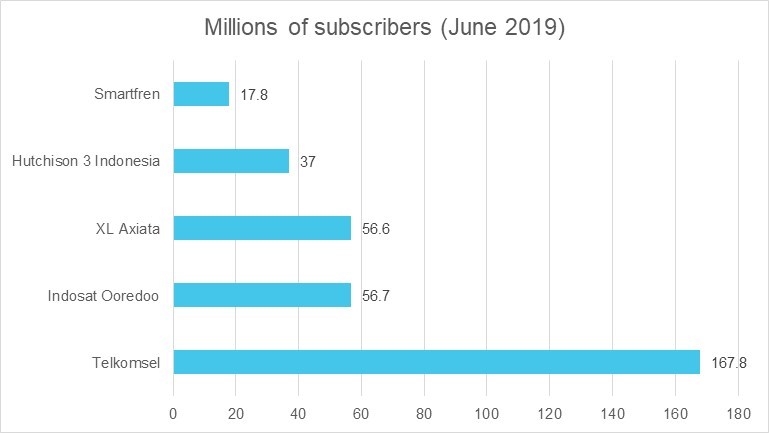
Indonesia is the fourth largest cellular market in the world with more than 330 million subscribers. The market is dominated by five cellular players, including state-owned Telkomsel and privately held Indosat Ooredoo, Hutchison 3 Indonesia, XL Axiata, and Smartfren. (Figure 2) SingTel has a 35% stake in Telkomsel, with the remainder held by incumbent Telkom Indonesia.
2G (GSM/GPRS) is still the dominant technology with close to 45% of subscriptions. Mobile broadband comprised of 3G and 4G networks has made substantial progress since inception. Operators continue to expand 4G network coverage to remote areas. For example, Telkomsel deployed 22,000 4G LTE base stations in its network between January and September of 2019, stretching deeper into rural regions.
Figure 2: Mobile subscriber totals for Indonesian telcos, June 2019 (millions)
Source: Company earnings announcements
Although 5G is making headlines globally, Indonesia’s operators are not in a rush to deploy as they continue to expand 4G penetration and await a settlement between the US government and Chinese vendors, and perhaps for market consolidation.
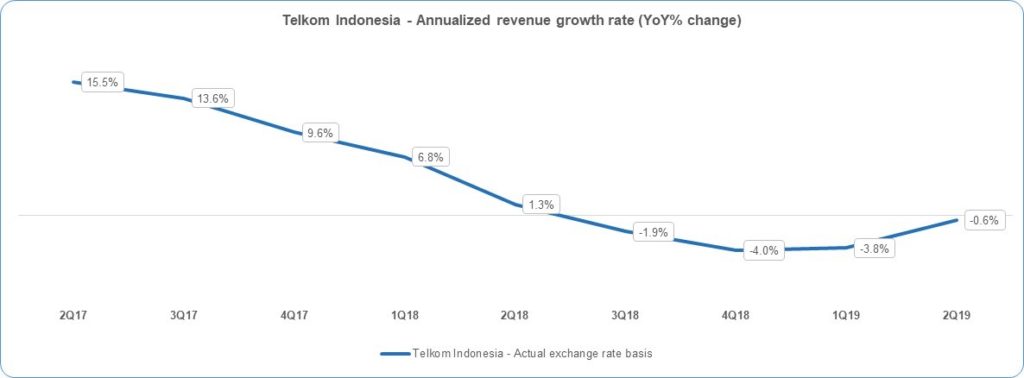
The Ministry is in favor of consolidation due to declining financial health of the operators. As in most countries, telcos in Indonesia are not finding topline growth easy to achieve. Market leader Telkom Indonesia, for instance, has faced negative revenue growth rates over the last few quarters, in USD terms (Figure 3).
Figure 3: Annualized revenue growth rate for Telkom Indonesia (YoY % change), USD-basis
Source: MTN Consulting
If measured in local currency, Telkom’s revenue growth rates are slightly better than the above figure. A weakening currency has worsened the comparisons. Currency issues have also made imported network equipment more expensive recently, a big issue in Indonesia where capex to revenue ratios are often well above 20%.
Independent tower operators
To help cope with high network costs, operators in Indonesia have transferred the bulk of their radio tower business to third parties (tower companies). Indonesia’s five big tower companies ended June 2019 with control of 45.3K towers, up from 42.5K in June 2018. Tower spinoffs continue. For example, Indosat Ooredoo recently agreed to sell as many as 3,100 telecommunication towers to local tower providers. PT Daya partner Telekomunikasi (Mitratel) will buy 2,100 of Indosat’s towers while PT Professional Telekomunikasi Indonesia (Protelindo) will acquire 1,000 with a total transaction value of about US$456 million.
This asset restructuring has helped Indonesian telcos lower their cost base and accelerate service coverage. It has also created a viable new industry of asset specialists, classified by MTN Consulting in its global research as “carrier-neutral network operators” (CNNOs). The largest of the group, Sarana Menara Nusantara, had total 2018 revenues of $412M, about 4% of the $9.2B booked by the largest local telco, Telkom Indonesia.
Spectrum
In 2015, the Ministry allocated an additional 246 MHz of radio frequency spectrum for mobile broadband purposes. The target allocation is 350 MHz according to the Ministry’s 2015-2019 Strategic Plan. These spectrum assignments have been made through various methods including auction, refarming, reallocation, etc. Indonesia’s mobile service providers are operating in various bands now, including 450, 800, 900, 1800, 2100 and 2300 MHz (Table 1).
Table 1: Operating frequency and bandwidth allotted (MHz)
Company
450
800
900
1800
2100
2300
Total
H3I
20
30
50
Indosat
25
40
30
95
STI
15
15
Smartfren
22
22
Smarttel
30
30
Telkomsel
30
45
30
30
135
XL Axiata
15
45
30
90
Total bandwidth
15
22
70
150
120
60
437
Source: “Analysis of 5G Band Candidates for Initial Deployment in Indonesia,” 2018, by Septi Andi Ekawibowo, Muhammad Putra Pamungkas, and Rifqy Hakimi of the Bandung Institute of Technology (page 3)
Note: PT Sampoerna Telekomunikasi Indonesia (STI, or “Net1”) is a regional operator which started operations in 2018. It utilizes the 450 MHz frequency band to offer 4G LTE.
While the Ministry hasn’t explicitly addressed spectrum allocations suitable for 5G, it is trying to free up spectrum. For instance: digitalization of television broadcasting: The ministry is taking steps to free up spectrum by switching off analog broadcasting in consultation with other stakeholders.
Fixed line
The fixed-line segment is quite small as compared to wireless telephony market due to complex national geography, high up-front cost and operational expenses. The state-owned Telekom has the monopoly in this segment, while Indosat is the second major player, both providing services mainly in the urban areas. There are a number of alternative broadband providers and ISPs which also invest in network infrastructure locally.
Vendors
Chinese suppliers are stronger than usual in Indonesia, but Huawei, ZTE, Ericsson and Nokia all have significant shares of the local network infrastructure market. That includes 4G, and will likely extend to 5G. Just recently, ZTE signed a Memorandum of Understanding (MoU) with Telkom to deploy 5G, while Nokia executed the first 5G millimeter wave network trial with Hutchison 3 Indonesia.
Geographic challenges
Development of infrastructure to provide ICT (Information and Communications Technology) services including broadband is a unique challenge due to Indonesia’s complex geography consisting of many remote islands and rural regions. Land-based connectivity is cumbersome due to oceanic separation between islands and between smaller islands to major cities, which are in some cases 1,000s of miles away. For example, the distance between Jakarta (capital of Indonesia) and Kupang (capital and major port of Indonesian province of East Nusa Tenggara), is 1,023 nautical miles. Thus, in many cases the preferred methods to provide connectivity include satellites, microwave radios and submarine fiber optic cable.
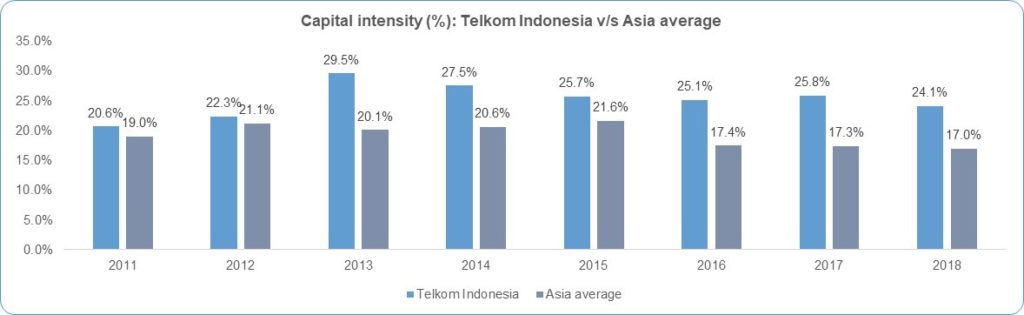
Due in part to its geography and disperse population, operators require higher capital investments than many other markets. For example, the capital spending of Telkom Indonesia has been higher than the Asia average consistently since 2011 (Figure 4).
Figure 4: Telkom Indonesia capex/revenues vs. Asia average, 2011-18
Source: MTN Consulting
Satellite-based Communications: Indonesia launched its own domestic satellite system in mid-1970s. The largest segment of the satellite telecom market is the backhaul connectivity followed by Internet communications for the consumers. However, only a small portion of total traffic is carried over the satellites.
Submarine Cable based Communications: Indonesia is lagging behind to some extent when it comes to providing international connectivity through submarine cables. Recent investments in new cables will help. For example, the SEA-ME-WE 3 (South East Asia – Middle East – Western Europe 3) lands in the Indonesian cities of Jakarta and Medan. Connectivity has been further improved with SEA-ME-WE 5, which was inaugurated in 2017. The SEA-ME-WE 5 cable lands in the Indonesian cities of Medan and Dumai. A number of other smaller cables connect the Indonesian market to Australia, Malaysia, Singapore and Thailand. New projects like INDIGO and the Australia-Singapore cable will help Indonesia as well.
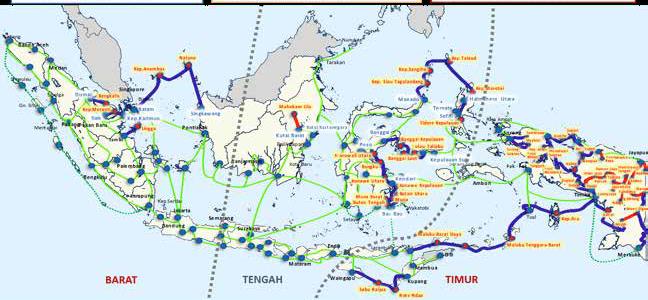
Palapa Ring Project
The Ministry has taken multiple large-scale infrastructure development projects to overcome the digital divide. One key project is the Palapa Ring network, a new national backbone network utilizing a mix of submarine and terrestrial routes. Completed in October 2019, this project took several years and $1.3B to complete. This new fiber optic backbone can be used by operators to provide broadband services. Figure 5 illustrates the Palapa project, using blue lines for fiber and blue dots for optical nodes.
Indonesia was ranked 111th out of 176 countries in the ITU’s 2017 ICT Development Index. This index measures the levels of economics, prosperity, literacy and other skills that enable citizens to take full advantage of ICTs. Much can be done to improve the ICT status of Indonesia, and telecommunications has a role to play.
5G could be one of the key enablers to improve the ICT standing of the country. To enable 5G, though, Indonesia at least needs a long-term roadmap, a solid fiber optic cable network, effective frequency spectrum auction(s) and a strategy for market consolidation.
The development of some of the pieces of this puzzle are still in the rudimentary stage and more concrete steps are needed. Our recommendations for further progress are as follows:
Long-term policy roadmap: Indonesia’s telecom Ministry (MCI) may need a long term roadmap for development of the sector, with three prongs. One to solve the technicalities (e.g. spectrum allocation); another to ensure an opportunity for effective return on investment; and thirdly and most importantly its benefits and implications for the people of Indonesia. With strong policy coordination, the government can use 5G as an enabler to reduce the broadband connectivity gap between its rich and poorest regions, create jobs and strengthen its ICT standing in the world.
Market Consolidation: Many successful markets have 3 to 4 cellular providers; Indonesia has five operators. Consolidation should help strengthen the dwindling financial strength of these companies. Out of the five operators, only Telkomsel has an EBITDA of 50 percent whereas Indosat, XL Axiata and Smartfren all suffered losses in 2018.
Frequency Spectrum: in Indonesia, the 5G core spectrum band of 3.5 GHz (i.e. 3.3 – 3.8 GHz) and frequencies up to 4.2 GHz are currently used for fixed satellite service (FSS) applications. FSS applications include tv broadcasting, banking communications, and Internet connectivity. In more granular terms, the range from 3.3 to 3.4 GHz is used for fixed wireless broadband and rest for FSS. FSS is extensively used in this particular band and thus to use this band for 5G will be a daunting task. Indonesia may reflect its intention for the future use of this band for mobile and more specifically for IMT (International Mobile Telecommunication) in the footnotes in the coming WRC-19.
As the availability of the core band is next to impossible in the near future, it is important to pay more attention to millimeter wave band frequencies. The recent completion of the live 5G trial in 28 GHz using Nokia’s equipment on Hutchison 3 Indonesia network is a good step. Along similar lines, ZTE and Smartfren have also conducted an indoor 5G trial on 28 GHz.
Spectrum Auctions: Spectrum auctions for 5G particularly for the core band need to be executed by keeping a strong balance between the wish-list of the government and desires of the operators. There is no magic figure for the base price of a particular frequency band, which depends on a number of variables. However, it should be lower for millimeter wave bands as compared to the core band due to much higher implementation costs of the former.
Connectivity: A solid transport network including backhaul is a must for the success of broadband and 5G. The Palapa Ring project and ongoing investments by local CNNOs and telcos will both boost the development and implementation of 5G.
–
*Saad Asif is a Contributing Analyst for MTN Consulting and a recognized industry expert in wireless communications. He has worked in the field of telecommunication for over 21 years, and has authored three books and multiple peer-reviewed technical papers. Saad has been granted multiple patents and is a senior member of the IEEE.
Optimistic 5G forecasts assume that telcos’ spectrum needs are met
Ericsson recently predicted that by 2024 5G subscriptions will reach 1.9 billion, 35 percent of traffic will be carried by 5G networks and up to 65 percent of the global population could be covered by 5G. This is one of the many forecasts that predict the success of 5G, however there are many variables attached to it. A key one is the availability of suitable, affordable and importantly harmonized radio frequency spectrum, which is the focus of this blog.
Harmonized spectrum is key for 5G success
At the upcoming World Radiocommunication Conference (WRC), the overall goal of the telecommunication world at is to secure a sizeable chunk of harmonized spectrum for 5G.
Spectrum harmonization drives economies of scale, better battery life (as phones don’t need multiple radio modules and to toggle between frequencies), less cumbersome roaming and lesser cross border interference. It’s essential for 5G to succeed.
Government policymakers want to auction or license this harmonized spectrum to cover their current and future budgets. Telecom network operators on the other hand are interested in getting this harmonized band(s) at a reasonable cost from governments in order to meet operational excellence requirements and achieve their business targets in partnership with their vendors.
Background on spectrum
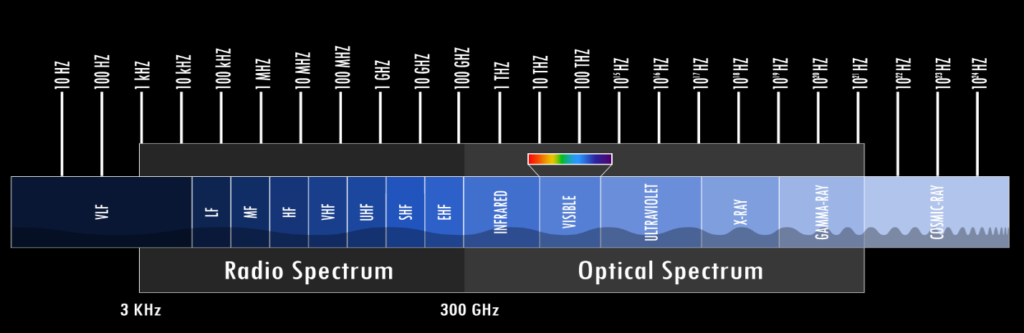
Wireless communications require airwaves to provide services. Airwaves, or electromagnetic spectrum, consist of a range of all types of electromagnetic radiation, from radio waves to gamma rays. The range of frequencies that are used for providing mobile and WiFi connectivity falls under the radio frequency (RF) portion of the electromagnetic spectrum. RF spectrum ranges from 3 kHz to 300 GHz (Figure 1).
Figure 1: Range of frequencies in wireless communications
Source: Nasa (https://imagine.gsfc.nasa.gov/science/toolbox/emspectrum1.html)
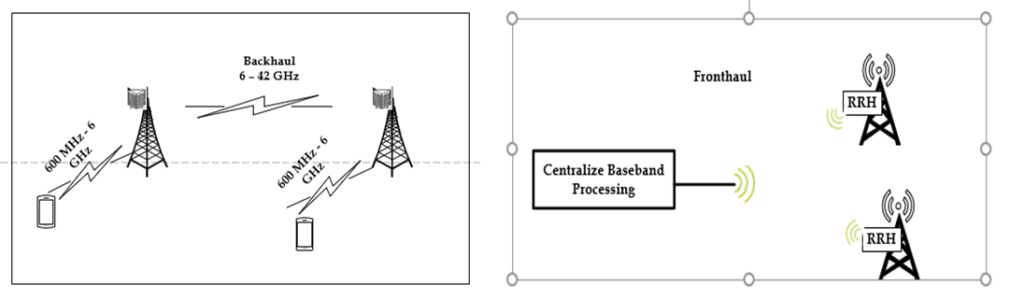
Mobile communications – a subset of wireless communications – primarily takes place in the range of 600 MHz to 42 GHz. The lower frequency bands are suitable for addressing communications between mobile phones and base stations (radio towers) while the high bands are used for supporting backhaul connectivity between radio towers. Fronthaul, which is a much newer concept, connects remote radio heads mounted on towers to baseband units located in a centralized location. Fronthaul requires much higher bandwidth and minimal latency and thus for the most part it is supported with optical fiber. However, in case fiber is not available, a wireless medium can be used (e.g. microwave). (Figure 2).
Figure 2: Use of radio waves in cellular networks
Source: MTN Consulting
The electromagnetic spectrum requires proper management, allocation, assignment and harmonization at a global level. That’s because wireless communications isn’t limited by national boundaries, and a global approach helps facilitate economies of scale. This huge function is performed by the ITU (International Telecommunication Union), which is the United Nations’ specialized agency covering information and communication technologies (ICTs). More specifically, the ITU’s Radiocommunication sector (ITU-R) takes care of this obligation at the global level.
ITU-R allocates spectrum through the pivotal World Radiocommunication Conference (WRC), which takes place once every 3-4 years. WRC is the most significant inter-governmental event related to the frequency spectrum. WRC has a mandate to review, and, if necessary, revise global Radio Regulations, the international treaty governing the use of the radio-frequency spectrum and the geostationary-satellite and non-geostationary-satellite orbits. This treaty is the basis for the harmonization of spectrum worldwide.
WRC allocates frequencies to everything that needs airwaves for execution – from as small as garage door openers all the way to space satellites, and everything in between (terrestrial, aviation, maritime, etc.).
Once spectrum is allocated at the WRC, national regulatory bodies such as the FCC and can assign specific bands to specific service providers (such as AT&T, Sprint, etc.) through a license for a specific number of years.
To predict the future, you have to understand the past
The focus of this blog is three-fold: (a) to provide a brief summary of the key activities that took place at WRC-15 (b) to give a sneak preview of the upcoming WRC-19 and (c) to analyze the cost and global implications of spectrum for 5G.
Recap from WRC-15
The demand for wireless connectivity and applications on the go is continuously on the rise. The wireless industry requires quick access to frequency spectrum and a lot of it, on a worldwide basis. Back in 2014, the ITU-R predicted that the world would need an additional 1340-1960 MHz for broadband services by 2020. The aim of the world body was to get harmonized spectrum in the range suggested by ITU-R, preferably on a global scale, if not then at least to some extent on the regional basis.
To keep the story short, WRC-15 can be considered as the first major international event that looked into allocating frequency spectrum for 5G. However due to some geopolitical challenges and presence of many existing services, the WRC-15 was only able to allocate 51 MHz for IMT (International Mobile Telecommunications) systems on the worldwide basis. In addition to this 51 MHz allocation which was made in the L-band (1-2 GHz), sizeable additional allocations were made on a regional basis. The total allocation was over 1500 MHz, satisfying the regional requirements for the most part (Table 1).
To clarify, IMT is the flagship project of the ITU-R and covers 3G, 4G and 5G systems. The ITU-R doesn’t allocate spectrum for a specific mobile generation but rather in generic terms of MOBILE and IMT. This capitalization means that the service has been allocated on a primary basis and no other service can interfere in its operations.
In the past, the identification of spectrum as MOBILE for cellular/broadband systems (including 2G) was sufficient. However, the advent of 4G/5G has the brought the concept of IMT systems to the limelight and now even if a service is already allocated for MOBILE, it doesn’t necessarily mean that it can be used for it unless it has been identified as IMT in the footnotes.
Table 1: IMT allocation at WRC-15
Band (MHz)
Regions (or parts thereof) *
Bandwidth (MHz)
450-470
2
20
470-698
2 & 3
228
694/698-960
1, 2 & 3 (not worldwide)
262
1427-1452
Worldwide
25
1452-1492
2 & 3
40
1492-1518
Worldwide
26
1710-2025
2
315
2110-2200
2
90
2300-2400
2
100
2500-2690
2
190
3300-3400
1, 2 & 3 (not worldwide)
100
3400-3600
1, 2 & 3 (not worldwide)
200
3600-3700
2
100
4800-4990
2 & 3
190
Sources: 5G Mobile Communications: Concepts and Technologies, and the ITU. *Region 1 comprises of Europe, Africa, the former Soviet Union, Mongolia, and the Middle East west of the Persian Gulf, including Iraq. Region 2 includes Americas including Greenland, and some of the eastern Pacific Islands. Region 3 covers non-FSU (former Soviet Union) east of and including Iran, and most of Oceania.
WRC-15 also identified several bands as study items for their potential usage for IMT. The range covers various bands from 24.25 GHz to 86 GHz. These bands are already providing a number of services particularly backhaul and satellite. The specific services in these bands also can differ by region to some degree. Therefore, spectrum sharing and compatibility studies were required to look at their applicability of co-existence with IMT.
WRC-19 Preview
Before diving into WRC-19 it is worthwhile to look into the work executed by 3GPP in this regard after WRC-15. 3GPP, the flagship organization for 4G and 5G specifications, identified the following two frequency ranges:
Frequency Range 1 (FR1): 410 MHz to 6000 MHz with channel bandwidths in the range of 5 to 100 MHz with increments of either 5 or 10 MHz. This frequency range is applicable for both frequency and time division multiplexing modes.
Frequency Range 2 (FR2): 24.25 GHz to 52.60 GHz with channel bandwidths of 50, 100, 200 and 400 MHz supporting operations only in time division multiplexing mode.
3GPP focuses more on the nitty gritty of spectrum which has been identified in broad terms by ITU-R. 3GPP works more on the lines of identifying channel bandwidths and duplexing modes to support the underlying mobile services.
In preparations for WRC-19, the ITU-R as per its practice executed the two Conference Preparatory Meeting (CPM) sessions. In February 2019, the ITU-R issued a close to 1,000-page “CPM 19-2” report, designed to assist in preparations for and deliberations at WRC-19. It can be said that hundreds of resources, thousands of workforce hours and millions of dollars have been spent to study the subject frequency range.
The upcoming WRC-19, scheduled to take place later this quarter, has two major tasks when it comes to the allocation for MOBILE/IMT.
First to conclude on the applicability of the identified bands for MOBILE / IMT as required by agenda item 1.13 (Table 2). The CPM 19-2 report forecasted that IMT will require 0.33 GHz to 12 GHz of spectrum in the ranges of 24.25-33.4 GHz, 37-52.6 GHz and 66-86 GHz, depending upon the metrics, assumptions and frequency range. The problem is that all the bands listed in Table 2 are already in use. Further identification for IMT on a primary basis could face stiff opposition particularly from the satellite community at the WRC-19. Opposition from satellite is even more an issue than 2015 as many new players have entered this space, including some deep-pocketed companies like Amazon and Facebook.
Table 2: Applicability of identified bands for MOBILE/IMT (WRC-19 conference prep, Agenda item 1.13)
Source: ITU (https://www.itu.int/dms_pub/itu-r/opb/act/R-ACT-WRC.12-2015-PDF-E.pdf, and https://www.itu.int/dms_pub/itu-r/opb/act/R-ACT-CPM-2019-PDF-E.pdf)
Second, WRC-19 will need to look into spectrum allocation issues affecting several other big markets as listed in agenda items 1.11, 1.12, 1.14 and 1.16 and their implications on existing and future IMT systems:
Railway radiocommunication systems between train and trackside within existing mobile service allocations – RSTT
Intelligent Transport Systems (ITS) under existing mobile-service allocations
High-altitude Platform Stations (HAPS), within existing fixed-service allocations, and
Radio local area networks (RLAN), in the frequency bands between 5.150 GHz and 5.925 GHz
A brief summary of the key bands under consideration for these services is provided in Table 3 below. There are several bands that are already in use for IMT and thus any allocation to any new service needs to be justified and obtain consensus from administrators.
Table 3: Key bands for RSST, ITS, HAPS & WLAN
Potential Service
Key Bands Under Consideration
RSST
138-174, 335.4-470, 703-748, 758-803, 873-925, 918-960, and 1770-1880 MHz; 43.5-45.592 GHz and 92-109.5 GHz
ITS
5850-5925 MHz
HAPS
6.44-6.52, 21.4-22, 24.25-27.5, 27.9-28.2, 31-31.3, 38-39.5, 47.2-47.5 and 47.9-48.2 GHz
RLAN
5150 – 5925 MHz
Source: MTN Consulting
Big battles lie ahead
At this stage, the telecom industry is not close to achieving its target of harmonized, adequate 5G spectrum resources. Basically, there are two camps – one is favored by China and other by the USA. Disagreements are not settled easily at this stage as there is a first mover advantage in the development of mobile wireless generations. The market leader can set the stage for future infrastructure development, product development and specifications. In this context, three ranges of spectrum bands have been considered namely:
• low band (sub 1 GHz) which is used heavily for broadcasting and wireless services.
• mid band (1 GHz to 6 GHz) which is primarily used for wireless services.
• millimeter wave or mmWave (24 GHz to 100 GHz) which is used for many non-mobile services (Table 2)
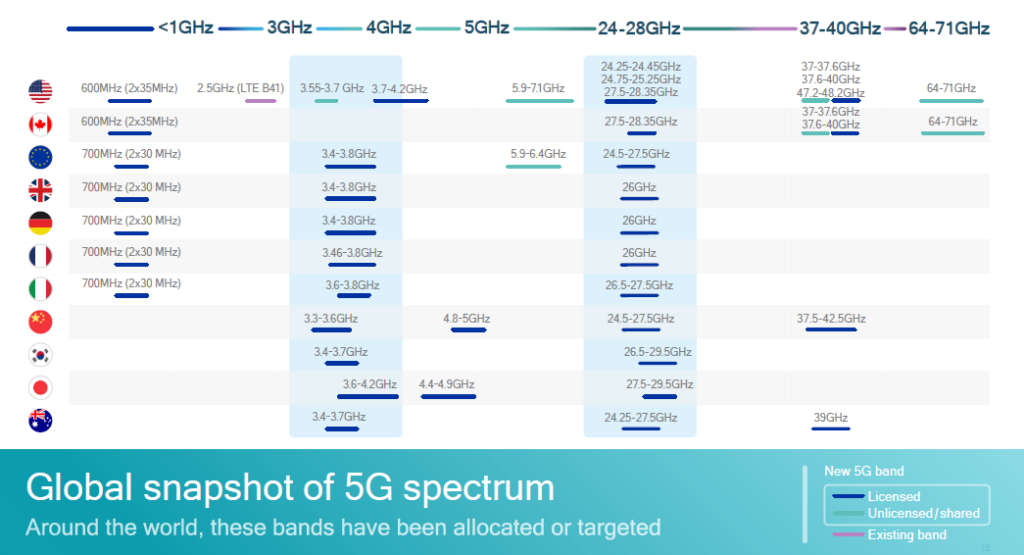
The battle hovers around the sub 6 GHz and mmWave bands. China is looking towards 3.5 GHz whereas the USA is focusing on multiple millimeter bands. The mid band, particularly the 3.5 GHz band that ranges from 3.3 to 3.8 GHz, is the most sought after band for use as a core band for 5G. That’s because of this band’s availability and lower deployment costs as compared to mmWave bands. China already assigned 200 MHz in this mid band. By contrast Japan and South Korea are working in both mid and mmWave bands. The rest of the world for the most part is playing catch-up on 5G spectrum assignments (Figure 3)
The US faces a unique problem in the mid-band. Namely, the US Department of Defense currently holds roughly 500 MHz in the 4 GHz range and thus it cannot be used for commercial operations. According to a DoD report, the estimated time required to clear spectrum (relocate existing users and systems to other parts of the spectrum) and then release it to the civil sector, either through auction, direct assignment, or other methods could take 10 years. Spectrum sharing between entities is another option and is a slightly faster process, but it could still take five years according to the same DoD report. Thus, the FCC has focused on the mmWave band. It had to auction out 24 GHz and 28 GHz bands and is planning to offer 37, 39 and 47 bands as well in the future. This is one of the key factors behind the limited coverage launches of 5G in USA. Verizon’s 5G network is based on the 28 GHz and 39 GHz bands, AT&T uses 39 GHz, and T-Mobile is planning 28 GHz. Sprint is eyeing the 2.5 GHz band as it doesn’t have any spectrum assets in the mmWave range.
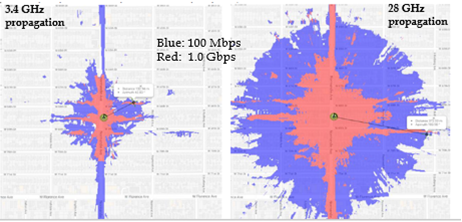
A study conducted by Google for DoD found severe limitations in the mmWave band. It concluded that for the same number of cell sites (macro cell sites and rooftops), 1 Gbps can only be provided to 3.9% coverage area at 28 GHz (US model) as compared to 21.2% at 3.4 GHz (Chinese model). The same study also estimated that it will require approximately 13 million utility pole-mounted 28-GHz base stations (one of the key choices of US operators for mmWave) and $400B in capex to deliver 100 Mbps edge rate at 28 GHz to 72% of the U.S. population, and up to 1 Gbps to approximately 55% of the U.S. population. Figure 4 illustrates the problem, showing the propagation difference between 28 GHz and 3.4 GHz deployments on the same pole height in a relatively flat part of Los Angeles.
Figure 4: Propagation difference in Los Angeles: 28GHz vs 3.4GHz
In a nutshell, mmWave bands will likely have a detrimental impact on operators’ budgets, at a time when they are not eager to ramp up capex. At the end of 2018, Verizon held ~$120B in debt with ~4% dividend yields, while AT&T held ~$175B in debt with over 6% dividend yields. T-Mobile holds ~$25B in debt, and Sprint holds ~$40B in debt. These companies are at the forefront of the U.S. effort to develop 5G, but their balance sheets suggest that they may struggle with the cost of a full mmWave network roll-out and the infrastructure it would require.
Conclusion
The wireless world’s technology leadership role will be at stake at WRC-19. History has proven that having access to the right set of spectrum assets can deliver a competitive advantage in the overall supply chain for years to come. The implications are vast both from the commercial and strategic point of views, impacting governments, operators, vendors, and ultimately jobs.
As of today, the industry lacks harmonized frequency bands for 5G. Perhaps at the end of WRC-19 the world will be closer to achieving this goal.
Stay tuned for more news from MTN Consulting on RF Spectrum and WRC-19!
–
*Saad Asif is a Contributing Analyst for MTN Consulting and a recognized industry expert in wireless communications. He has worked in the field of telecommunication for over 21 years, and has authored three books and multiple peer-reviewed technical papers. Saad has been granted multiple patents and is a senior member of the IEEE.
Huawei has dominated telecom news since the arrest last December of the Chinese vendor’s CFO in Vancouver. Since then, the US Commerce Department has restricted Huawei’s access to US-built tech components, including Google’s Android ecosystem. Huawei needs these components, so the heat is on. What happens next?
Let the Huawei chaos begin
Those waiting for a grand resolution to US-China disputes surrounding Huawei will be disappointed – the company’s problems did not arise with the Trump administration’s trade battles. Concerns about Huawei’s private company origins and independence from the Chinese state are fairly bipartisan in the US, at least two decades old, and shared by many European and Asian governments.
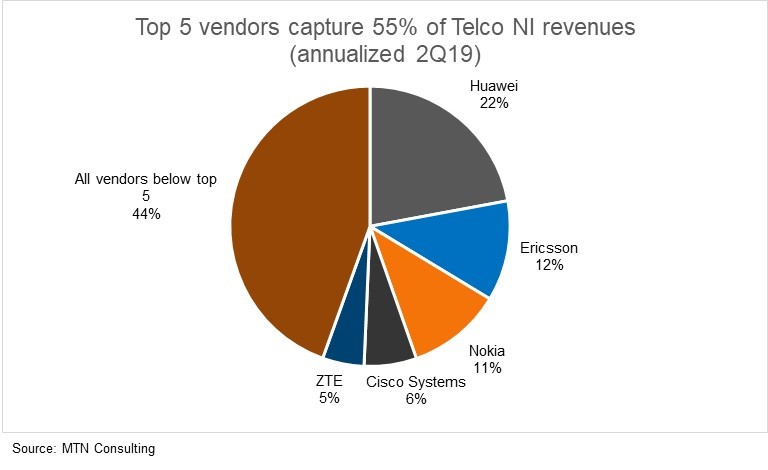
Yet Huawei certainly isn’t going anywhere; it has the broadest portfolio of products in the industry, and its 22% market share in network infrastructure sales to telcos (“Telco NI”) is nearly as much as Nokia and Ericsson combined (figure, below). Since Meng’s arrest, the vendor has hardly backed away from its ambitions – and the Chinese government has made clear its support for Huawei’s long term growth.
In the developing world, Huawei’s network infra share is over 30%, and its share in most developing markets is rising, due in part to “China Inc”. Huawei – and its customers – continue to benefit from cut-rate financing available from Chinese banks, among other incentives. This activity has picked up as Belt and Road Initiative (BRI)-related projects have got underway. Egypt’s new capital is an example – Huawei is supplying nearly all of the new telecom network infrastructure for an entirely new city intended to house 6.5 million.
Given Huawei’s position as a powerhouse in the developing world, it’s impossible to discuss 5G without addressing Huawei’s prospects.
5G not a rush in low ARPU markets
In developing regions such as CIS, Latin America (LA), and Sub-Saharan Africa, 3G remains the primary mobile connection technology. While 4G will overtake 3G soon even in these low ARPU markets, 5G will take years to emerge. According to stats from the GSMA, these regions will respectively see 5G account for 12%, 8%, and 3% of their total connections by 2025.
These are cellular connections and don’t factor in IoT – a big caveat given 5G’s promise for device to device connections. However, the point remains that 5G will be a slow evolution – telcos like to stretch the life of technologies whenever possible.
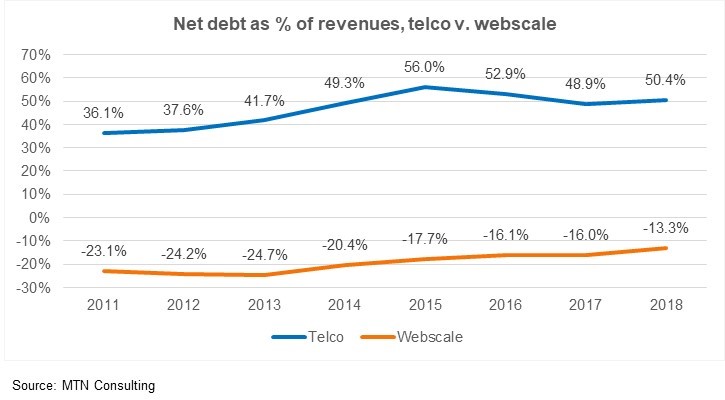
That’s especially true for telcos with high debt levels – and there are a lot of these. The net debt (debt minus cash) of the global telco sector was roughly half of revenues in 2018, having been in the 30-40% range of revenues at the cusp of the LTE buildout cycle. Few telcos have room in their budgets for a 5G capex splurge. Even if there are 5G trials underway across the developed world, the developing world will need 10 years or more for widespread migrations to complete.
Individual operators reflect this different pace. Etisalat for example is already advertising ZTE-provided 5G in its home market of the UAE ($41K GDP per capita); however, in the west African country of Togo ($617 GDP per capita), its local unit Moov Togo only launched 4G in mid-2018. There is little need or incentive for Etisalat to push 5G anytime soon in Togo.
The natural conservatism of telcos is heightened when lots of things are changing on the supply side. Right now, Huawei-related uncertainty is slowing down procurement. Even if a product is on the shelf, a telco needs to know it can be supported after the sale. Given that some countries are considering restrictions on Huawei, it’s only natural for telcos to take a breath.
Supply side push likely from Huawei
Any good vendor sales rep talks to customers frequently about new products, in search of interest and/or commitments. Huawei has been especially proactive about stirring up business in small markets like Togo, and successful in turning single-country projects into much larger ones. If Huawei can keep its supply chains running – although this is not certain – it will likely launch an aggressive supply side push for 5G in its strongest developing markets (e.g. Thailand). We can expect more low-cost financing, joint R&D facilities, university partnerships, tie-ins with Huawei’s device and cloud business, and lobbying. Huawei wants to seize the moment.
This could all end up being good for operators if they play it smartly. A better pitch from Huawei should provoke its rivals into doing the same, ultimately benefiting telco customers. The complication is on the financing end and the use of China’s state-owned banks – primarily CDB and Ex-Im. Politics are by definition part of the decision-making process of these banks, and telcos may not want to embroil themselves in that process.
This is now a political issue, as concerns about foreign debt levels grow. Just last month the Kiel Institute for the World Economy issued a report on “China’s Overseas Lending”, noting that for the 50 main recipients of Chinese direct lending, “the average stock of debt owed to China has increased from less than 1% of GDP in 2005 to more than 15% of debtor country GDP in 2017.” The study also found that “about one half of China’s overseas loans to the developing world are ‘hidden’”.
Telcos forced to do more with less as webscale operators splurge
Telcos’ network department headcounts and R&D budgets have been declining for many years. This has made telcos more reliant on vendors for knowledge and technical support, and even rudimentary design. In effect telcos have outsourced much of their R&D to their suppliers. This tends to benefit incumbent vendors.
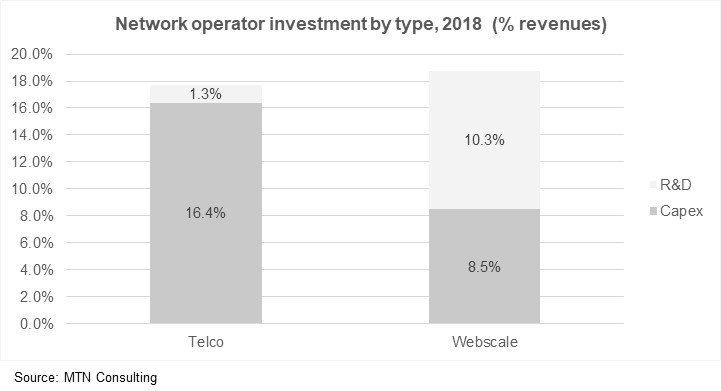
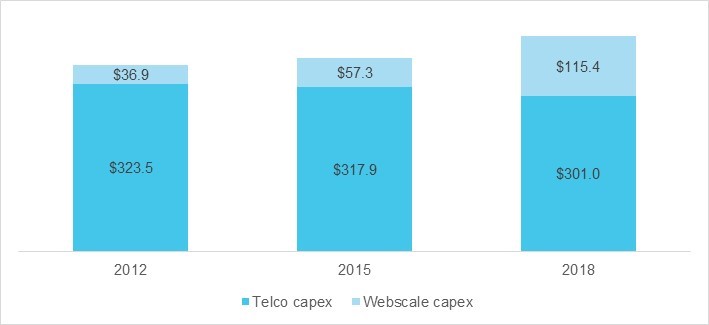
Network operators in the webscale world – Amazon, Facebook, Microsoft etc – are by contrast splurging on staff. They spend heavily on R&D, an average of 10.3% of revenues in 2018 (vs. 1.3% for telcos; figure). Webscale R&D projects are all over the map, in line with the range of the companies’ business interests. Most important, all of the big WNOs spend heavily on network R&D, designing equipment to suit their high-capacity, high-growth needs precisely. They typically use original design manufacturers (ODMs) to build and then ship the gear to sites worldwide.
These webscale companies have pushed open networking and open source efforts for years, starting in a big way with Facebook’s founding of the Open Compute Project (OCP) in 2014. Much of the webscale network equipment deployed in their cloud is either compliant with or derived from these open source-oriented bodies.
Change comes slower to the telco world, but AT&T giving open networking a push
However, telco adoption of open networking/open source has been slow due to weak OSS/BSS system support and telcos’ slow buying cycle: they do not introduce change into the network quickly. There are signs that this is changing; for instance with AT&T’s Dec. 2018 commitment to deploy “white box routers” at up to 60,000 5G cell towers over the next few years. AT&T first laid out its virtualization plan in 2013, which included using its own developed platform ONAP (Open Networking Automation Platform) and SDN to virtualize its network functions.
With AT&T’s white box commitment, open source hardware in the 5G RAN has become more attractive – even if just for routers. However, AT&T’s open source commitment comes at a cost. The company does have a significant R&D budget, totaling $1.4B in 2018 (or 0.9% of revenues). In the case of the cell site routers, AT&T is not just buying something off the shelf. The “UfiSpace” white box is powered by a network operating system called Vyatta. This OS required both internal development (i.e. R&D) and an acquisition (of Brocade’s Vyatta division) to develop. On the flip side, AT&T has managed to keep its capex outlays to just 12.2% of revenues (2018), among the lowest of all big telcos worldwide.
Not all carriers in the developing world can develop their own network operating system, clearly. Most need to allocate more funding to R&D, though, with the explicit goal of capex reduction – and increased leverage over their suppliers. That’s all the more important to do now as supply chains are in upheaval. Telcos with country operations in the developing world should be more involved in key bodies like ONF, OCP, O-RAN Alliance, and the Telecom Infrastructure Project (TIP).
There is a benefit to being an early mover, and that’s especially true now – lots of small players are eager to sign deals that give them bragging rights. Accton’s Edgecore Networks, for instance, is working on white box cell site gateways with large carriers Vodafone, Telefonica, TIM Brasil, BT, and Orange – all but BT have significant operations in developing markets where deployment is possible. Locally owned competitors would have strong incentives to follow.
New vendor opportunities emerging amidst the Huawei chaos
As 5G becomes a reality and Huawei still has issues, vendors elsewhere in Asia are looking to exploit uncertainty. That doesn’t just mean other RAN suppliers; it involves fiber, transmission, router/switch, and other product areas, and software/IT services. It also involves many countries: India, Korea, Taiwan, and Japan all host competitive players in the telecom network infrastructure space. None approach the scope of even a mini-Huawei but telcos are more willing to buy a la carte nowadays.
India is interesting because its latest Telecom Policy (2018) explicitly called for the development of its telecom equipment sector. Well before the Huawei crisis, India’s Telecom Secretary, Aruna Sundararajan, argued that India should embrace 5G aggressively, not just for services but to help develop India’s export sector. India is a big enough market that the big global RAN vendors are making local investments in R&D and manufacturing, and partnering locally. Ultimately this could expand prospects (and product lines) for companies in other segments like Sterlite and Tejas. It could also help open networking specialist Radisys, now owned by India’s largest telco Jio.
India becomes more interesting in terms of network infrastructure when you consider Taiwan. Its local tech trade association, TAITRA, is pushing hard on India for both export and partnership opportunities. India’s traditional strength (workforce-wise) has been in software (e.g. Wipro, Tech Mahindra), while Taiwan is strong in electronics manufacturing, chips, displays, and sensors. There are some partnership opportunities that look attractive on paper. Already Taiwan’s Foxconn is moving some iPhone production to India, for instance. But politics are a factor in the India-Taiwan avenue. And if politics is what motivates a deal, then a new political environment could make the deal unstable, so things are likely to go slowly here.
What’s an operator to do?
Mobile operators face an unsettled vendor landscape and tight capex budgets. Planning 5G in this climate is not easy. If I led a developing market mobile telco – Axiata, say, or America Movil – I would use this time to:
Study my current network equipment inventory (including software elements) to gauge security and regulatory risks – for all vendors;
Push regulators to guarantee no future unfunded mandates to rip & replace;
Adopt network design and procurement practices from webscale players when workable, but avoid adopting their lax security and privacy practices;
Increase R&D budget by at least 0.1% of revenues. This modest increase could potentially fund hundreds of new R&D hires for a company like America Movil; and,
Use the new hires to fully evaluate cost saving opportunities related to open networking, and infrastructure spinoffs to the carrier neutral sector of network operators.
Finally, I would make sure I was getting objective advice on prospects for 5G business use cases, and the right investment strategy to pursue them. More capex isn’t always the answer.
5G is moving full steam ahead in many developed economies. Recent announcements from both vendors and operators confirm this notion with news of 5G network rollouts and availability of 5G-enabled devices.
Many developing nations on the other hand are lagging behind, including Pakistan. Impediments in Pakistan include a slow return-on-investment, a shortage of disposable income, and lack of urgency towards innovation. (National spending on R&D, for instance, is just 0.3% for Pakistan, versus 0.8% for India and 2.0% for China.) These and other obstacles make the enablement of 5G both more challenging and interesting.
Very briefly, the aim of this blog to look at the outlook for 5G in Pakistan, including some of the challenges and the opportunities the technology could bring to this nation of 217 million.
Background
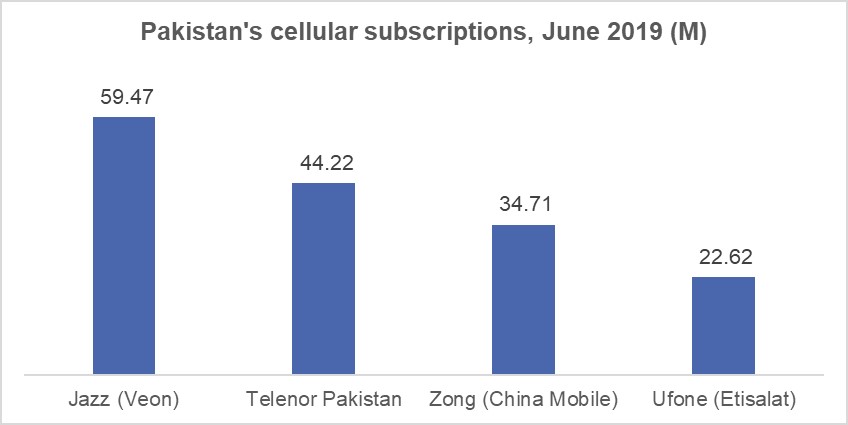
Pakistan has more than 161 million cellular subscribers including 69 million 3G/4G-LTE users divided among four cellular operators. Jazz is the mobile leader with around 60 million users while Telenor Pakistan stands at number two with approximately 44 million users (figure).
An interesting element of the cellular market is that the parent companies of all the operators reside outside Pakistan. Jazz is part of VEON, Telenor Pakistan is 100% owned by Norway based Telenor Group, Zong is a subsidiary of China Mobile and Ufone belongs to Etisalat.
The supplier’s market is primarily in the hands of Chinese vendors. Huawei and ZTE are the incumbents in the radio access network (RAN). However, things started to change in the fall of 2018. One reason is the restrictions put on these two vendors by the Trump administration, which have allowed Nokia to reenter the market. Telenor Pakistan is in the process of swapping all its radio sites from ZTE to Nokia while Jazz is planning for the same, over fewer sites. Ericsson is a non-player in the RAN market, but did win an optimization project at Jazz in Feb 2018.
Even with regulatory & supply chain risk related to Chinese vendors, the transmission network (including backhaul) is not likely to be swapped. Transmission networks in Pakistan rely almost entirely on China. Ericsson can hardly be seen in the market. It has a very small footprint in the transmission network while NEC supports backhaul (via microwave radio hops) in Telenor’s network. Core networks are usually supplied by the radio access vendor. Within the RAN, Huawei has up to 60% market share of the installed base, with ZTE capturing virtually all the remainder (prior to the recent swaps).
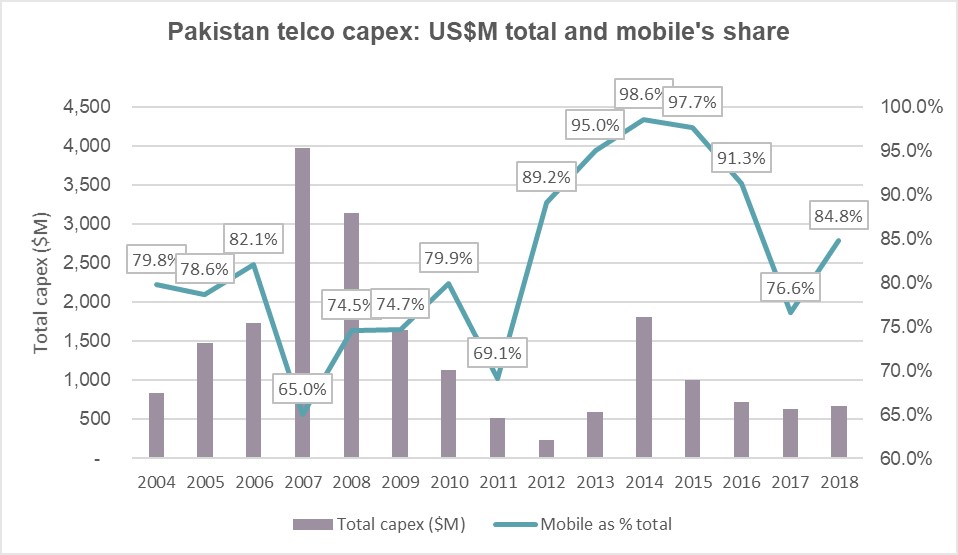
According to the Pakistan Telecommunication Authority, telco capex has averaged to well over US$1B per year since 2004 (figure, below). Variations tend to be driven by new licenses, technology upgrade cycles, and macroeconomic factors.
Source: PTA. Note: total includes Cellular, LDI (Long Distance International), LL (Local Loop) and WLL (Wireless Local Loop).
Over the 2004-18 15-year period, mobile cellular operators accounted for just under 80% of industry capex. With 5G buildouts approaching, total capex should soon see a bump, and mobile’s contribution may rise above 90% again.
Challenges
The telecom sector of the country faces many common and a few unique challenges. One of the key obstacles to progress comes from the non-implementation of Telecom Policy 2015.
The Ministry of IT and Telecommunication issued the National Telecommunication Policy in 2015. This policy secured Pakistan’s government a “Government Leadership” award from the GSMA in 2017. However, actual implementation of this policy has been lacking to date. This failure will curtail the development of 5G and Pakistan’s overall telecommunication sector.
There are many other challenges, some common to developing nations and some unique to Pakistan.
Common Challenges:
Lack of a frequency spectrum roadmap
Wireless communications cannot take place without the air waves (frequency spectrum), which are under the control of national governments. Governments often consider spectrum as a cash cow, particularly when it comes to mobile communications. The mobile telco industry on the other hand desires effective auctions and nominal license fees, and some level of certainty about the future. Hence, it is important that governments / regulators provide a mid to long term spectrum roadmap, update it on a regular basis, and ensure that operators use the same effectively.
According to the Telecom Policy 2015, the Ministry was required to provide a 3-year rolling Spectrum Strategy where it will lay out the future plans for this scarce resource. However, more than three years have been passed and the industry still hasn’t received the strategy. According to Saad Asif, a telecom consultant who has worked at both Jazz and Telenor Pakistan, “there is an urgent need for a Spectrum Outlook which will help service providers to make informed investment decisions.”
Costly / Bureaucratic Right-of-Way (RoW) granting process
Leasing RoW assets can be a lucrative way of making additional income, particularly in countries which lack either an investment-friendly national RoW policy, its implementation, or both. The situation is not different in Pakistan as noted recently by Rizwan Mir, CEO of Universal Service Fund, “Pakistan lacks effective tariff and policy controls on Right of Ways for laying fiber”.
5G will require deployment of a huge number of small cells as well as optical fiber. Tens of thousands of cell sites are currently accommodating traffic through microwave radios and down the road a good majority of those have to be switched to fiber. This requires an effective mechanism for expeditious treatment of right-of-way. This mechanism doesn’t yet exist, despite the telecom policy’s mandate.
Unique Challenges (in recent times):
Pending License Renewal
In 2004, the government issued 900 and 800 MHz licenses to Jazz, Telenor and Paktel (now Zong) for a period of fifteen years. These licenses were issued on the principle of technology neutrality i.e. they can be used for GSM, 3G, 4G, etc. In practice these are mainly used for providing 2G GSM services. The licenses were awarded at the price of US$291 million for a total of 13.6 MHz. The bandwidth includes a portion of spectrum in both 900 and 1800 MHz.
The renewal process for these licenses was started a couple of years ago, but hasn’t been concluded due to difference of opinions on the license cost. Service providers are demanding to buy at the same cost of $291 million, which turns out to be $7.31 million per MHz. However, the government has established a per-MHz cost based on frequency auctions conducted in 2016 and 2017, and asked the regulator (Pakistan Telecommunication Authority) and spectrum manager (Frequency Allocation Board) to implement the same.
The price per MHz cost from these auctions in 2016-17 turns out to be $39.5 million for 900 MHz and $29.5 million for 1800 MHz, which is quite high. The newer cost, if implemented, will be approximately 60% higher than 2004. Mobile operators are contesting these prices, and the matter is currently under judicial consideration before the Islamabad High Court.
Currency (PKR) Devaluation
The currency has been devalued by more than 40% to its value of January 2018. During January 2018 the exchange rate was USD 1 to PKR 110 and now in August 2019 it is hovering around PKR 160.
This is impacting the overall country and the telecom sector is not immune. The impact is three pronged at least – reduction in profit margins, decrease in available CAPEX for new investments (as nearly all equipment is imported) and increase in OPEX. Consultant Saad Asif adds that “this devaluation is resulting in a substantial increase in OPEX due to rising energy costs”.
Opportunities
Currently, 3G and 4G/LTE data services are often not up to par in Pakistan, even in major cities. The fault lies not only in the network but also the heavy penetration of low-grade smart phones. The performance benchmarks placed by the regulator for the rollout of 3G and 4G services are rather low.
The following are some of the opportunities emerging with 5G in Pakistan:
Improvement in current data service with better performance benchmarks
Telecom network engineers have to make trade-offs between coverage and capacity. These two parameters have a direct impact on KPIs (key performance indicators) such as voice quality, data rates, throughputs, etc.
Two reasons for poor network performance in Pakistan:
(1) the thresholds and benchmarks set by the regulator in the 3G/4G licenses of operators were kept quite low. Operators only have to maintain data rates of 256 kbps and 2 Mbps for 3G and 4G users respectively.
(2) most users care more about price than quality of service. Pakistan’s low ARPU illustrates this: Telenor’s Pakistan branch recorded an ARPU of just 12 NOK in 2Q19, less than half of Telenor Myanmar’s 25 NOK/month.
As any improvement in the QoS requires investment in the network, operators are frequently unwilling to take this approach since it may negatively impact their ROI (return on investment).
The PTA needs need to address this disincentive to build robust, resilient networks. That can come either as part of the current license renewal exercise (if operator(s) decide to use it for 3G /LTE services), or at the time of future 5G auctions. Waiting until 2029 for the next renewal of 3G/4G licenses is not an attractive fallback plan.
Internet of Things (IoT)
IoT is agnostic to mobile technology i.e. it can be operated using any generation of cellular technology. IoT is in the early stages of growth in the country and according to Cisco by 2030, 500 billion devices will be using Internet across the globe.
IoT can benefit multiple industries in Pakistan, particularly the public utilities to reduce mismanagement and corruption. For example: use of smart meters for electric and gas connections can substantially reduce the visits of utilities’ personnel to homes / facilities. Another use could be the procurement of water tankers to address the shortage of water through a connectivity among IoT modules, cellular networks and water supplier systems.
mHealth
A large segment of Pakistan’s population lacks access to basic health service. Initiatives have been taken both by public and private organizations but so far have had disappointing results.
The lack of education and information sharing is harmful to the promotion of mHealth, particularly in rural areas. Illiteracy rates are high in villages and remote areas, where mHealth is needed the most. The concerned ministries and regulators in partnership with private businesses need to strengthen the existing setups and establish new programs for the promotion of mHealth to build trust, and provide training to healthcare professionals and society at large.
As Pakistan’s 4G networks mature and operators evolve to 5G, remote diagnostics and eventually surgery have potential. Society needs to have systems in place to benefit from these new technologies, though, so the government needs to get to work.
About 20% of telecom’s 100 or so key vendors have now reported second quarter 2019 (2Q19) results. From these early vendor results, there are modest signs of a ramp-up in 5G-related spending.
Preliminary totals indicate growth of +1.9% YoY in vendor revenues to telecom operators (or telcos). Revenues for all vendors dropped last quarter, by 0.6% YoY, so this would be a slight trend reversal.
Ericsson only big NEP to report so far
Of the vendors reporting so far, the only large Network Equipment Provider (NEP) is Ericsson. (We also track IT services providers, and fiber/cabling vendors selling to telcos). Ericsson is also by far the largest to report so far, accounting for over 50% of reported revenues.
Per MTN Consulting estimates, Ericsson’s telco sales grew 2.1% YoY (on a USD basis), near the market average of 1.9% to date (see figure, below). That’s the fastest growth seen by Ericsson in several years, but it appears to have come at a price. Ericsson notes a negative margin impact from its push for “strategic contracts” in the Networks division.
There is a broad range of growth rates around the Ericsson-driven average. Vendors are finding growth in different aspects of the market, including high-capacity switches & open networking (Accton), high-speed test equipment (EXFO), 5G-related services & software (Infosys, TCS, Wipro), FTTx (Adtran, Nexans), and digital transformation consulting (Accenture). Some of these vendors sell to multiple segments, some are more specialized in the telecom vertical.
Source: MTN Consulting estimates of vendor sales to telcos (adjusted for M&A, US$ basis)
Some vendors also saw revenue dips in the telco segment, per our estimates; that includes Oracle and IBM, most importantly. These two vendors sell a range of software and services to telcos, as well as some network equipment, but are facing new competition. For example just last week Microsoft signed a large cloud deal with AT&T, a multiyear collaboration to help lower the company’s network and IT costs, moving more apps to the public cloud. At the same time, AT&T also expanded an existing cloud partnership with IBM. Both Oracle and IBM have annual sales to telcos in the $2-3B range, so don’t count them out.
The revenue drop shown above for TE Connectivity is estimated: SubCom is now part of Cerberus Capital, and does not report. However, SubCom’s pipeline was weak at the time of acquisition and deal integration usually causes a slowdown. Parts of the submarine market are picking up though, due to webscale investment and much-needed gap-filling in the Middle East & Africa. Nexans appears to be a beneficiary. Corning, Prysmian and other key fiber suppliers have not yet reported.
Growth trajectory remains modest
The figure below compares YoY growth rates for the sample with the market, i.e. the sum of all companies in MTN Consulting’s telecom vendor share coverage database.
Source: MTN Consulting
When including all vendors (black line, above), revenues have largely been flat over the last several quarters. The sample of companies reporting appears broadly similar. However, on the demand side, guidance from telcos on expected spending levels (capex and network opex) was quite conservative for 2Q19. The final growth rate for 2Q19 vendor revenues in the telco vertical will likely be below +2%.
To reiterate findings from our latest (1Q19) telco sector Market Review:
Telco profit margins remain tight, nothing new for the telecom industry. Operators are getting more concerned about debt, though. The net debt (debt minus cash) of the global telco sector was roughly half of revenues in 2018, after having been in the 30-40% range of revenues at the cusp of the LTE buildout cycle. Few telcos have room in their budgets for a 5G capex splurge.
Telco network investments continued a declining trend, as capex touched $70B in 1Q19, down almost 2.5% YoY. The weak 1Q19 result and continued supply side uncertainty does not bode well for 2019. The slowdown could be due to operator caution about market demand. Yet competitive realities will require operators to spend big on 5G and fiber in 2019-20. The market’s average capital intensity will exceed 17% by the end of this year.
We expect to publish further commentary on the market after Nokia and Samsung report next week.
In the last few years the demands from webscale network operators (WNOs, Figure 1) on transmission network architectures have changed considerably. From pure raw capacity requirements and lower costs, webscale players now prioritize highly scalable and advanced point to point bandwidth bundling interface technologies.
Figure 1: List of Webscale Network Operators (WNOs)
Source: MTN Consulting, LLC
Webscale operators’ field of expertise is the data center, and most planned at least initially to rent capacity as leased lines from telcos (or telecommunications network operators, aka TNOs). However, many TNOs did not have the end to end transmission networks able to support webscale needs in terms of capacity, latency, cost objectives. Further, telco networks were not flexible enough to follow rapidly WNOs’ needs for modifications, additions, and changes of the services they needed.
Hence several years ago, WNOs themselves decided to build their own backbone and regional transmission networks, sometimes linking continents. Undersea, the WNOs either leased capacity from existing submarine consortia systems or started to build submarine cables for their own dedicated use. The largest WNOs, such as Microsoft, Facebook and Alphabet, have increasingly favored the latter (self-build) approach. With these initiatives, WNOs seek to have full control of the transmission network, and adequate time to market for their needs.
As webscale players have built out their networks, they have become more influential across the industry. Their buying power alone is a major reason; Figure 2 shows how webscale operator capex has grown dramatically since 2012, while telco capex has stagnated.
Figure 2: Capex – telco vs webscale (US$B)
Source: MTN Consulting, LLC
At the same time, the telco market is far larger, and the largest integrated telcos spend well over 10% of capex on their transport networks. These telcos are heavily investing in the transformation of their transport networks, and supporting 5G is a central goal.
In the past, mobile services have been sold on the back of convenience of use. With very little considerations beyond coverage and without a capacity objective, there was never a firm commitment to service quality. 5G is probably the first access network with services subject to a wide variety of SLAs, from best effort to non-congested, and very low latency services with limits as low as 1ms. 5G will help operators to move from best effort services for all, to a tiered service level agreement (SLA)-based portfolio. Telcos hope this will help them to be more profitable, at least for the more sophisticated services.
Network slicing poised to play important role
The big change in direction in the strategy of transmission networks is that the planning, design, engineering and operations of a telecom operator will soon be subject to much tighter contracts and commitments.
For years, wild overbooking levels have been the norm, especially for mobile services, and networks were in most cases engineered for coverage alone. This won’t be possible for the next generation of services, which will require more than a 10x increase in bandwidth, and 10x less latency than the current generation.
In addition, webscale operators and large enterprises have demanding network KPI requirements. To serve this market, telcos must develop their transmission network end to end with enough flexibility to satisfy the capacity growth needs and resiliency requirements of these customers.
TNOs and WNOs both accept that the demanding requirements on bandwidth, latency and operational scalability to ensure short time to market for 5G services cannot be supported with existing network architectures.
A potential solution is “network slicing”, which starts with adding more TDM capabilities in the data plane to be able to provide a hard separation in the way services with different KPIs use network resources. This separation is orchestrated by an SDN centralized control and management plane.
Network slicing brings improvements to traffic engineering, with clear KPIs for bandwidth, latency and packet congestion. That helps to support all types of services over the same network infrastructure. Low priority services such as web browsing are effectively separated from network resources dedicated to services with demanding SLAs such as low latency leased lines or 5G inter-vehicle communications.
Operators pursuing FlexO technology to help cope with looming Shannon limit
Historically the main requirements telcos have standardized for transmission network architectures and platforms are high resiliency, powerful operations administration maintenance features, multiservice support, and backwards compatibility with legacy platforms.
This makes a lot of sense as most of the costs of running the network are operational in nature, such as repairs and maintenance. Further, multiservice capabilities can facilitate the migration of legacy services to newer platform. This reduces the need to support overlaid networks, and also avoids the cost of capacity expansions on older platforms at or near their end-of-life (EOL) dates.
In recent years, technological developments have pushed transmission networks towards the limit in the bandwidth per distance product, or the “Shannon limit”. The transmission technology is starting to hit the limits of the fiber medium.
One way to cope with this comes from the ITU, with its Flexible OTN, or FlexO, standard (G.709.1/Y.1331.1). FlexO allows client OTN handoffs above 100Gbps by defining an “OTUCn” modular structure: “an aggregate OTUCn (n ≥ 1) can be transferred using bonded FlexO short-reach interfaces as lower bandwidth elements.” FlexO also supports standard 100GbE optical modules.
FlexO has led telcos to consider how to fully exploit the flexibility of coherent transmission systems, allowing very high capacity transmission on non-regenerated short links, say 400Gbps links over 300Km distances, and lower capacity transmission over longer links, for example 100Gbps over 1500Km distances (figures for illustration only).
FlexO can bundle a number of lower rates at the TDM level to serve a higher capacity service for very long distances. For instance, by using inverse multiplexing or bundling a 400G service interface, capacity could be carried over four 100G links over (for instance) 1500kms without regeneration.
True to their backwards compatible requirements, telcos have made sure that FlexO supports 100G transmission requirements, and is an extension of existing OTN standards. This should simplify the roll out of FlexO on existing platforms.
FlexE to improve utilization, end-end manageability and router-transport connectivity
Operators – both telco & webscale – have also been exploring breakthroughs in the interfaces between transmission systems and servers and routers.
Aligned with FlexO, the Optical Internetworking Forum’s Flexible Ethernet (FlexE) supports similar schemes of bundling and multiplexing of interfaces between routers and transmission systems. FlexE offers a way to transport a range of Ethernet MAC rates whether or not they correspond to existing physical (Ethernet PHY) rates. Network utilization should improve, as should end-end manageability. One key element of FlexE was that Ethernet would grow within a TDM frame. This may pave the way to network slicing through the use of hard boundaries between tranches of services with different SLAs.
Most webscale operators lack an access link to the end user, making them rely heavily on telcos. And smaller webscale players like Netflix rent their clouds from other providers. Maintaining control of the user experience is an uphill battle. FlexO and FlexE help achieve this, in theory. On the UNI side, a WNO transmission network would now use FlexE interfaces with data platforms and servers and storage. On the NNI side, towards the fiber and other transmission systems, the WNO would use FlexO interfaces and standards.
Transmission interoperability improving due in part to the webscale push
Interoperability is something that transport engineers always wish for but never achieve due to network management interfaces’ lack of interoperability. Further, with coherent transmission, there is a problem with transmission interface incompatibility between vendors, each of whom can be more interested in higher performance and features differentiation than simplicity.
The telco response to the interoperability challenge has generally been to achieve subnetwork level interoperability rather than network element interoperability outright.
Things will change, though, as FlexO could be called the first optical standard that thrives on multivendor equipment operations.
Furthermore, webscale operators have designed simple transmission platforms and aimed to use cheap components already available from larger industries. Examples include the use of Ethernet interfaces components at 25G and 50G that were originally proposed for intra data center connectivity and rack cablings between servers and top rack unit switches. These will also be used in 5G base stations and mobile cloud engine platforms that require a transmission network to interconnect.
Conclusions
There is a growing alignment in the requirements for transmission network architectures across telecommunications and webscale network operators. They both need more flexible ways to grow their networks and manage them on an end to end basis. They want to benefit from low cost, open source components and procurement, but adapt technology to suit their customer base. They need to be able to support different classes of service and traffic. Even when providing free services, operators need to deliver a high quality of experience in order to monetize.
5G transport and data center interconnectivity services pose such a challenge to both TNOs and WNOs that work-arounds will not make up for limitations in either the data centers nor the network. For many operators, building a transmission network that supports network slicing principles will require a fresh start and new investments.
–
Source of cover image: CommScope.
[Note: a condensed version of this article first appeared at Telecomasia.net.]