
Blog Details

Connected cars – Data protection, privacy, and cybersecurity

CONNECTED CAR TECH SERIES PART 4: Complex regulatory landscape threatens to restrict the market’s development 

Contributed by: Waseem Haider

In the last three parts of our Connected Car Tech Series, we talked about the immense possibilities this space is offering to car manufacturers, network operators and other stakeholders. This obviously creates an impression of the grass as all green which is not the case. Connected cars have a number of challenges.

One significant roadblock facing the connected car industry relates to regulations and standards. The need for regulations governing in-vehicle data and other connected car resources is one of the most pressing issues affecting connected car stakeholders. This is partially because regulations were meant to deal with basic connectivity, e.g. emergency calling, and partially because of the expansion of the connected car ecosystem. Current regulations do not sufficiently address the challenges posed by increased connectivity and the role of different stakeholders.

Though there are multiple areas which are affected by lack of standardization and proper regulations in the connected car ecosystem, there are two significant areas which stand-out due to their impact on both the end-consumers and service providers: data protection and privacy, and cybersecurity.

Data Protection and Privacy

One of the biggest challenges faced by the connected car ecosystem is the protection of consumer data. Even though regulatory authorities have made some significant policy changes around connected cars, data access and privacy regulations have yet to be tackled adequately. For example, the EU updated its Motor Vehicle Type Approval Regulation in 2019, but the increasing vehicle connectivity is still a topic of discussion. 

One major data protection law from the EU is the General Data Protection Regulation, or GDPR. There is a lot of uncertainty between the EU and US since the introduction of GDPR. Meanwhile, numerous regional efforts around data protection have emerged, inspired by the GDPR. One such regulation is the California Consumer Privacy Act (CCPA). The CCPA directly addresses car manufacturers and automotive suppliers globally on their telematics data capture, and influences cloud service providers’ data privacy practices.

The amount of data generated not only within the car but also outside of the car, certainly poses a threat to the protection of personal data and raises serious privacy issues. According to some estimates, almost 25 gigabytes of data is produced per hour from a connected car. Most of this is driver’s personal data and that of passengers. Moreover, suddenly the data generated by connected cars have attracted the interests of multiple stakeholders – enforcement and government authorities, car insurance companies, car manufacturers and other third parties.

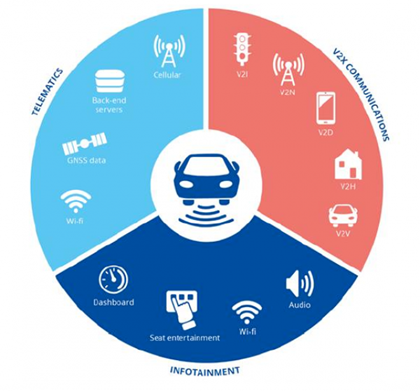
Primarily, connected cars are generating data from three different categories of functionalities: Telematics, V2X and Infotainment (see Figure 1 below).

Figure 1: Main Data Sources in Connected Cars 
Source: ENISA

The functions shown in the graphic enhance the customer experience for car owners and some of them are essential for safety and emergency services. However, the amount of personal data which the connected car systems are generating becomes a cause of worry for the protection of the data and privacy of individual car owners and/or related parties. Note that we are not talking about the fully autonomous vehicles of the future, which will generate and gather even larger amounts of data than today’s connected cars.

Hence, the question arises how to adopt data protection and privacy standards today which will stand the test of time. While there is some progress in creating standards and regulations surrounding connected cars, for instance the new Motor Vehicle Type Approval Regulation, EU GDPR, and CCPA, many issues have not been addressed comprehensively or consistently enough to support growth of this new market.

Cybersecurity

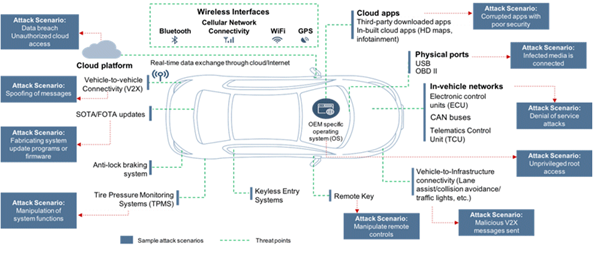
Another big challenge for the connected car ecosystem is the now-increased vulnerability of cyberattacks and hacking threats. The transformation of the automotive industry into one offering digital mobility products and services has given rise to importance of cybersecurity in the connected car ecosystem (see figure 2 below). Though the digital features in connected cars are adding great customer value, they are also exposing connected cars to multiple touchpoints for possible cyberattacks. As connected cars have more and more in-vehicle software units, hackers have access to electronic systems and data, posing potential threats to critical safety functions and data privacy.

Figure 2: Cyberattack scenarios in connected cars 
Source: Frost & Sullivan

In the past few years there have been multiple instances of cyberattacks on connected cars, where hackers have taken full control of the vehicles. The major challenge is lack of clear regulatory guidelines and standards for the connected car ecosystem. As such, the cybersecurity problem is related to data protection and privacy. Cybersecurity and data protection/privacy are two sides of the same coin: cybersecurity presents the outside-in scenario and data protection is the inside-out scenario.

One important point to highlight here is that regulators are having a tough time formulating such laws. Part of the challenge is the involvement of multiple stakeholders in the connected car ecosystem. This influences current supplier contracts with OEMs and other third-party relationships for software development, testing and managing over-the-air (OTA) updates.

Regulators face a difficult situation in adoption of standards across the entire automotive value-chain. For the last few years, however, regulators have been working on a cybersecurity framework for the automotive industry that will cover the entire value-chain. This year, the United Nations Economic Commission for Europe (UNECE) passed a law called the Vehicle Cyber-Security Management System (CSMS), to be implemented by automotive manufacturers. The law will make cybersecurity an integral part of the entire connected car ecosystem and OEMs need to implement a certified CSMS across the entire lifecycle of any given connected vehicle in near future.

Next Up: Data ownership

Among the many regulatory issues in the connected car ecosystem is, who owns the data generated by connected car ecosystem. In the next part of this series, we will take a deeper look at ownership of data in the connected car space.

*

Image credit: Erik Mclean
Blog Details

Connected cars: OEM car maker strategies – where does the network operator fit in?

Connected Car Emerging Tech Series Part 3

Author: Waseem Haider

Today’s car industry is not the same as it used to be, thanks to technology. OEMs are not only manufacturing cars but also developing software solutions for a more connected, personalized customer experience. The ever-evolving auto industry provides opportunities to OEMs to advent new revenue streams and to have more direct, ongoing relationships with their consumers. The changing landscape comes with its share of challenges for OEMs as they need to now focus on products and services outside of their core activities and try to improve profitability by selling connectivity as part of their overall offering.

OEMs are developing different strategies to reap the full benefit of the connected car opportunity. Some OEMs are working on their own ecosystem while others are developing partnerships with specialist vendors. The expanded connected car ecosystem plays a significant role in catering to the consumer demand of today and in the future. Among the different stakeholders in the ecosystem, the role of network operators – both telcos and webscalers – cannot be ignored. In this third part of the connected car tech series, we will talk about the strategies of OEM car manufacturers in the connected car space, and the role played by network operators.

OEM connected car strategies

As with any other industry, the digital transformation of the automotive industry poses a great challenge to OEMs. The digital world has pushed car manufacturers to become software companies selling a personalized customer experience to meet changing consumer demands. Future car buyers will not make it easy for OEMs as the world will move to autonomous vehicles with some drastic changes in consumers’ willingness to own a car. OEMs are aware of these challenges, and are implementing different strategies to keep their dominance in the connected car space despite competition from big tech companies. 

In this section, let’s dive into some of the OEMs connected car strategies.

From the premium car manufacturers like BMW, Porsche, Audi, Mercedes etc. to the volume brands like Ford, Opel, Volvo etc., strategies differ based on relative dominance of the OEM, customer engagement, in-house capabilities, innovation, and investment in R&D. To simplify, let us group the OEM strategies in the connected car space into three main approaches:

  1. Developing In-house Capabilities
  2. Partnership/Building an Ecosystem
  3. Working with Global Industry Standards

1 – Developing In-house Capabilities

Big tech companies like Google, Facebook, and Amazon are at the forefront of connected car technology, putting Automotive OEMs in a difficult situation. As the expertise required for connected cars goes beyond the core business of OEMs, they are facing a big challenge to keep a dominant position in the ever-expanding ecosystem. Some of the OEMs are taking on these tech players directly by building in-house assets and capabilities for connected cars. One of most prominent OEMs who is realigning its strategy from car manufacturer to a software-driven mobility provider is Volkswagen.

Case Study: Volkswagen Connected Car Strategy

Volkswagen is reinventing itself into a digital mobility provider by investing heavily into several areas: software development, autonomous driving capabilities, electric vehicles’ battery technologies and other mobility services. With the new Group strategy “NEW AUTO – Mobility for Generations to Come”, the Volkswagen Group is realigning from a vehicle manufacturer to a leading, global software-driven mobility provider.

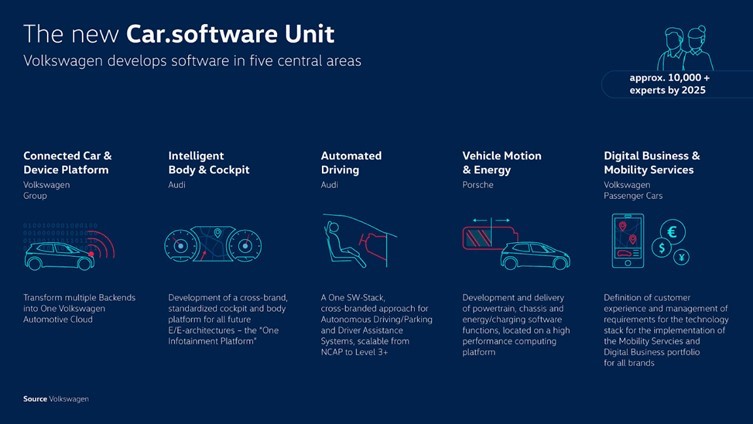
Volkswagen’s Car.Software group is central to this realignment (figure 1, below). The automotive giant is building its own end-to-end software platform with an in-car operating system (VW.OS), and capabilities aimed to enable the next generation of infotainment, vehicle performance, and passenger comfort as well as automated driving.

Figure 1: Volkswagen’s Car.Software organization

Fig 1, VW car software

Source: Volkswagen

In addition, Volkswagen has announced a strategic partnership with Cubic Telecom and Microsoft to develop the Microsoft Connected Vehicle Platform (MCVP).

Together with Microsoft, VW hopes to accelerate the development of one of the largest dedicated automotive industry clouds, known as Volkswagen Automotive Cloud or VW.AC. Designed to provide a smart, scalable foundation for connected vehicles, VW.AC is expected to handle data from millions of vehicles per day, with the goal of delivering connected experiences to customers around the globe starting in 2022 – a key part of the Volkswagen Group strategy to become a leading automotive software innovator.

Volkswagen Group writes less than 10 percent of the software embedded in its vehicles, the rest of which is tied to third party-owned proprietary software. With efforts like the Car.Software Organisation and VW.AC, the Volkswagen Group aims to write 60 percent of the vehicle software by 2025, providing a truly integrated end-to-end software.

Where does the network operator fit in? 

While Volkswagen is focused on in-house capabilities, its work with Microsoft makes clear that this strategy still involves network operators. Microsoft is one of the world’s largest “webscale network operators”, a tech company investing heavily in its own data centers, subsea cables, and related cloud infrastructure. It is possible that other types of operators may play a role in Volkswagen’s strategy over time, including telcos. Apart from providing connectivity, the operator is strongly positioned to offer cloud services, software and hardware solutions to supplement the OEM’s connected car in-house capabilities.

2 – Partnership/Building an Ecosystem

Some automotive OEMs are partnering with other OEMs by building global alliances to develop digital technologies for connected cars and future mobility services. One such global partnership is “The Alliance,” involving three OEM groups – Groupe Renault, Nissan Motor Company and Mitsubishi Motors Corporation –  working together on future mobility technologies and solutions.

Where does the network operator fit in?

With this approach, three big OEMs are working with each other to develop connected car technologies and solutions. Telcos can be helpful partners in such alliances to provide technology software and solutions. As an example, the Renault-Nissan-Mitsubishi alliance is working together with Orange in the field of electric vehicles (EVs). Microsoft also plays a role in The Alliance, as discussed below.

Case Study: Renault-Nissan-Mitsubishi connected car strategy

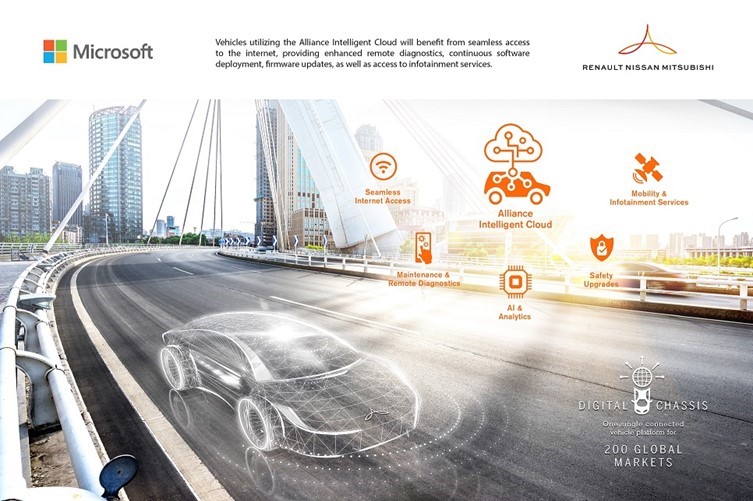
The Alliance connected vehicle team is developing the Alliance Intelligent Cloud. Microsoft supports the Connected Vehicles Platform component of the Alliance Intelligent Cloud (figure 2, below). The Connected Vehicles Platform manages Alliance connectivity across all markets. 

Figure 2: The Alliance Intelligent Cloud

Fig 2, the Alliance Intelligent Cloud

Source: Microsoft

Microsoft is not the only Alliance partner. In September 2018, the Alliance signed a global multiyear agreement to partner with Google to equip Renault, Nissan, and Mitsubishi Motors vehicles with intelligent infotainment systems. The Alliance will utilize Android to offer customers a new array of services including Google Maps, the Google Assistant, and the Google Play Store.

These services will be combined with Alliance Intelligent Cloud-based remote software upgrades and vehicle diagnostics. By combining the latest technologies from the Alliance and Google, the Alliance member companies’ vehicles aim to have the most intelligent infotainment system in the market. Drivers and passengers can leverage Android capabilities to access an ecosystem that includes several existing applications and an expanding array of new apps. Per Microsoft, vehicles utilizing the Alliance Intelligent Cloud “will benefit from seamless access to the internet, providing enhanced remote diagnostics, continuous software deployment, firmware updates and access to infotainment services.”

The Alliance Intelligent Cloud is designed to leverage the combined scale of the three partners and Azure’s vast footprint. The Alliance cloud aims to consolidate multiple legacy connected vehicle solutions with future connected car features and business operations, and support mobility services. Features built into the connected platform include remote services, proactive monitoring, connected navigation, connected assistance, over-the-air software updates and other customer tailored services. As noted, The Alliance does leverage Google’s Android app ecosystem, but relies heavily on Microsoft for the cloud. The goal is for this partnership of OEMs to own, operate, and design their own intelligent cloud platform on Azure.

The Alliance Intelligent Cloud also aims to connect Alliance vehicles with future smart cities infrastructure, simplifying negotiations and technical development by providing a single point of contact.

3 – Influencing Global Industry Standards

Automotive OEMs are not anymore only manufacturing cars but are also new-age software companies which need to comply with standards. The challenge, though, is for OEMs there are hardly any global industry standards for connected cars. This lack of standards also creates an opportunity; those who write the standards often have a strong position in the market to follow. One strategy is ensuring you have a seat at the table when the standards are drafted.

To address the standards issue, OEMs together with other automotive vendors formed a non-profit alliance in 2009 – GENIVI. The alliance develops standard approaches for integrating operating systems and middleware present in the centralized and connected vehicle cockpit. The GENIVI platform consists of Linux-based core services (kernel, libraries), middleware and an open user interface. The goal is for this platform to form the basis upon which automobile manufacturers and their suppliers can establish a wide variety of products and services.

Notably, the alliance currently has no participation from the network operator side. The only exception is that Github has long been a member, and Github was acquired by Microsoft in 2018. Going forward, telcos and webscalers aiming to play a key role in the connected car market may need to participate in GENIVI.

Conclusion

Regardless of which connected car strategy is adopted, the common thread is that OEMs do not want to give away their dominant position to big tech players or new entrants. The three approaches discussed above should not be seen as exclusive. There are opportunities to combine one or more approaches with other innovative strategies. Network operators from both the telco and webscale/cloud world have opportunities to collaborate with OEMs, offering complementary solutions such as cloud services, software and hardware solutions along with the core asset of an operator, network connectivity.

Image source: Baidu

Blog Details

Connected cars: Telco strategies and growth opportunity

Connected Car Emerging Tech Series Part 2

Author: Waseem Haider

In the first part of this series we outlined the role of telcos in the connected car ecosystem. Historically, telcos are well experienced in adding value to adjacent verticals based primarily on their core assets. Some of the verticals where telcos have already made a mark are  Smart Home, Utilities/Smart Energy, Finance, Retail and Public sector, to name a few. Telcos are now making their mark in connected cars.

Telco connected car strategies

Connectivity is the cornerstone of any connected car and telcos have a competitive advantage in providing safe and reliable connectivity. However, with the ever-expanding connected car ecosystem, it is not only connectivity which telcos bring to the table but also other capabilities. In this write-up we will have a look at what different strategies telcos are implementing in the growing connected car market.

Core strategy: connectivity

As part of telcos’ strategies in the connected car space, Figure 1 provides an overview of connectivity categories.

Figure 1: Automobile connectivity categories

cc part 2 fig1

Source: McKinsey & Company

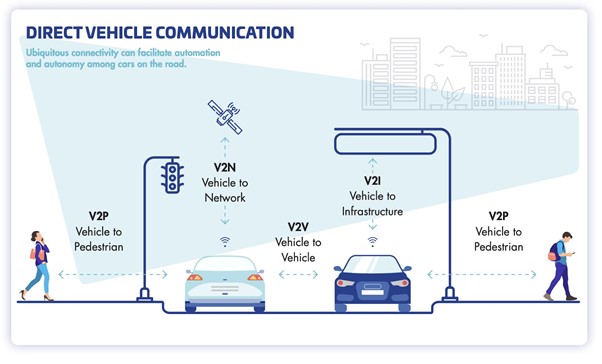
Connectivity is a vital part of the technology stack seen in connected cars being manufactured by OEMs. Some of these cars are capable of exchanging data and information not only in-vehicle but also with the external environment (see Figure 1, above). V2X (vehicle-to-everything) encompasses all the related terms – communication with other vehicles (V2V), networks (V2N), infrastructure (V2I) and pedestrians (V2P). Most of the OEMs already allow car owners to connect, monitor and interact with their vehicles. As we move towards autonomous vehicles in future, cars will rely on connectivity to communicate with one another and the external environment. Broadly, connectivity for any connected car falls into two major types:

  • Cellular & Satellite (Network based communication)
  • Wireless point-to-point (Direct communication)

Network-based Communication is long-range, also known as V2N (vehicle-to-network) communication, where V2N employs telcos’ commercially licensed spectrum. Connected cars also have access to cloud services and other security offerings of telecom networks.

Direct Communication involves short-range wireless communication between nearby vehicles (V2V), infrastructure (V2I) such as traffic lights, and pedestrians (V2P) where vehicles communicate directly with the device carried by pedestrians. In some specific scenarios such as non-line-of-sight (NLOS) objects, cellular network-assisted direct communication is of relevance.

Regardless of the type of communication, telcos are playing a significant role in providing connectivity to today’s connected cars today, and will do so in the future when autonomous cars will be commonplace. The telcos are working with a mix of complementary technologies to enable reliable and safe connectivity to connected cars like 4G/LTE, Satellite, DSRC (dedicated short-range communication) and 5G for autonomous vehicles with low latency and more reliable communication compared to existing technologies.

Adjacent strategy: VAS (value-added services) 

Apart from providing reliable and safe connectivity for the connected cars ecosystem, telcos have an edge in deploying integrated solutions which leverage their experience working with multiple partners. Telcos are uniquely positioned to manage value-added services (VAS), collaborating across consumers and OEMs. There is no “one-size fits all” strategy and strategies can vary across telecom operators, depending upon which area of the connected car value chain they are focusing on and where they want to compete. 

As customer expectations are increasingly high and technology is much more advanced, telcos can be at the forefront of new emerging use cases in the connected car space. Some of the most popular value-added services which are part of telcos’ offerings are:

  • Cloud-based integrated platform
  • Customized billing solutions
  • Telematics and big data analytics platform
  • Other VAS

Some of the specific examples of value-added services provided by Telcos in the connected car space are:

  • Lost/stolen vehicle recovery end-to-end service
  • Usage-based insurance
  • Vehicle location monitoring
  • Pay-per-use billing for in-vehicle services 
  • Cross-device identity management
  • Fleet management services
  • Data management across IoT sensors
  • Vehicle/Infrastructure data integration services
  • Vehicle and device security solutions

Future strategy: end-to-end mobility services

The future of mobility is more connected, intelligent, shared, and autonomous, which creates a plethora of opportunities for telcos. One of the biggest opportunities coming out of the shifting mobility landscape is the leveraging of all the data generated by vehicles. For example: the in-vehicle infotainment data could be analyzed by telcos to track consumer usage to advise content producers, advertisers, and media houses on consumption patterns, and can be monetized by telcos, leveraging consumer data insights. Another example is fleet management services including tracking, dispatching, and scheduling fleets. Telcos can make use of customer profile data and other authentication details to manage vehicle access on behalf of fleet operators. 

However, any opportunity emerging from data monetization in the connected car space is surrounded with challenges. Some of these challenges are – who owns the data? Are consumers willing to pay for data services and/or provide consent to use their personal data? Are automotive OEMs ready to share the pie with telcos and other ecosystem players? What measures are telcos undertaking for data protection and security? Telcos can overcome some of these challenges based on their history of managing sensitive customer data while ensuring personal data protection. This gives the telco an edge to provide data-based products and services, including targeted advertising, pay-as-you-go infotainment, Mobility-as-a-service (MaaS), consumer health monitoring including user-based insurance etc.

Additionally, with the roll-out of autonomous vehicles and 5G, telcos will continue to work on more innovative products and services, to bring a differentiated offering to end-users and other ecosystem partners. The future role of telcos in the a connected car space will be providing  broader mobility solution, going beyond connectivity and value-added-services.

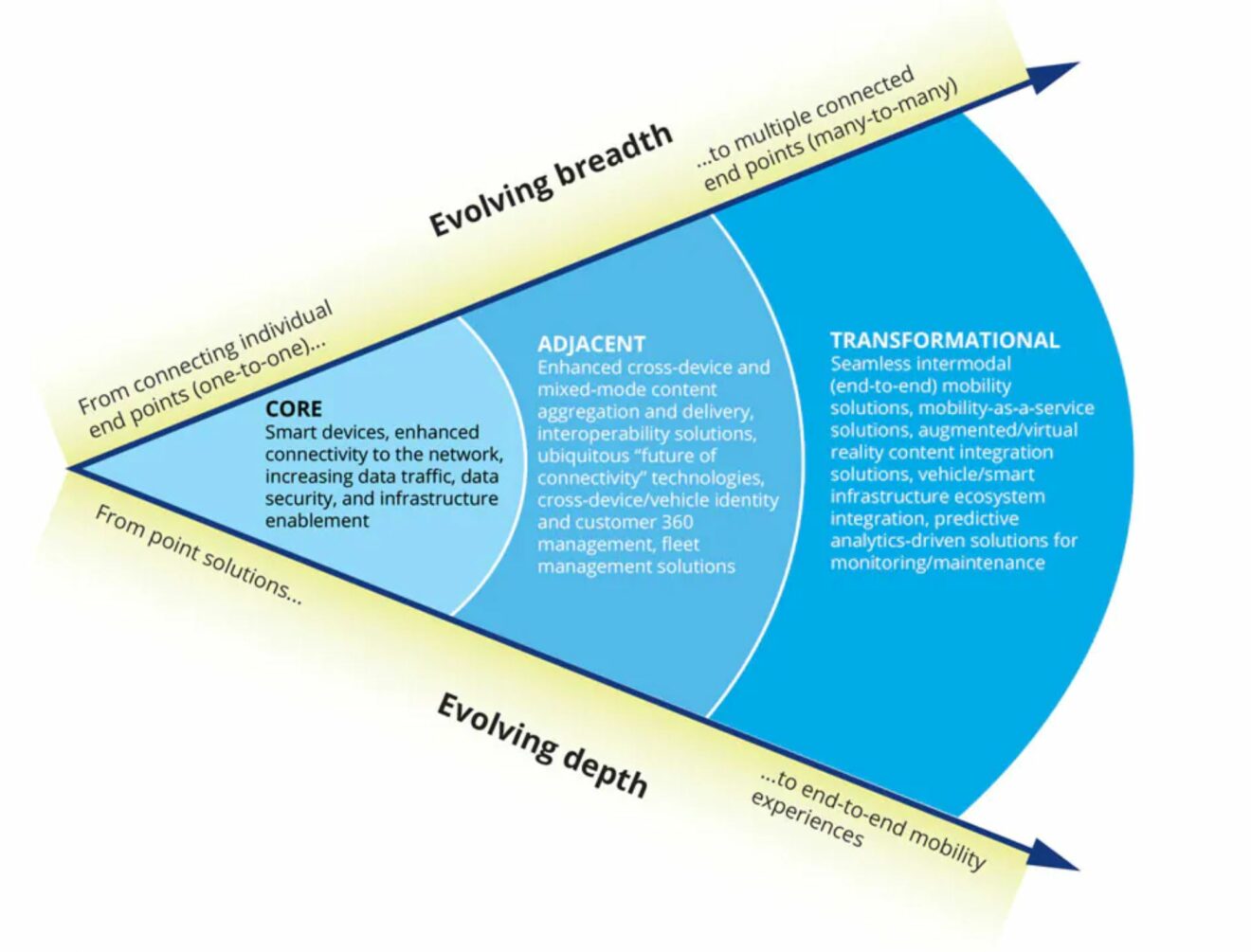
Figure 2 below illustrates how telco strategies in connected cars may evolve, from point solutions to transformational, end-to-end mobility experiences. 

Figure 2: Telco strategy evolution in connected car market

cc part 2 fig2

Source: Deloitte

Case Study: AT&T

AT&T has a dedicated connected car platform called “AT&T Drive”. This is a modular platform which allows auto OEMs to choose from a range of services, from connectivity to revenue management solutions. AT&T is working with various stakeholders – automakers, developers, and other suppliers – to design customized solutions to bring new services to connected cars. Some of the services provided by AT&T in concert with other solution providers in the connected cars ecosystem are:

Amdocs: Customized Billing solution

Ericsson: Global Application delivery platform

Accenture: Telematics and Big Data Analytics

Jasper Wireless: Global cloud-based connected device platform

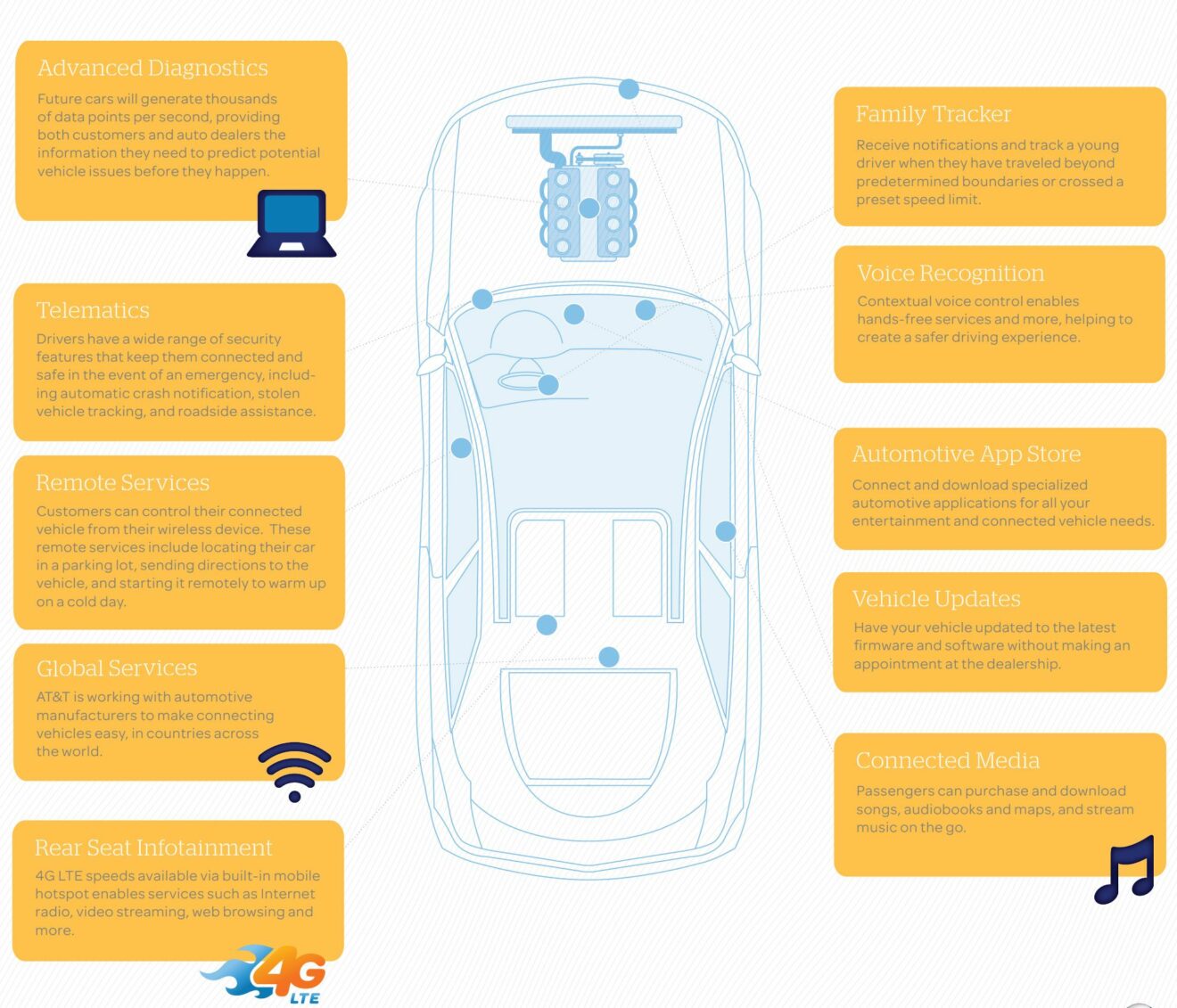
Figure 3 illustrates AT&T’s current proposition in the connected car market.

Figure 3: AT&T’s Connected Car Positioning 

cc part 2, fig3

Source: AT&T

Conclusion

MTN Consulting believes that telcos have real revenue upside opportunities in the connected car space. However, for that to become a reality, there is a need for telcos to think out-of-the-box in terms of future strategies. Telcos should aggressively build capabilities which they do not own traditionally, even if that means new partnerships and alliances to develop service portfolios around the connected car landscape. For instance, they could partner with augmented-reality providers to demonstrate the ability to deliver enhanced multimedia content experiences within the vehicle, and they could partner with fleet management service providers to provide intermodal mobility device tracking, monitoring, and interoperability. 

Image Source: Toyota

Blog Details

Connected cars and telecom

Connected Car Emerging Tech Series Part 1: Role of Telcos

Author: Waseem Haider

Connected Car Ecosystem

Mobility today is changing rapidly, and connected cars are the driving force behind this disruption. The future of mobility is all about autonomous driving, electric vehicles, carsharing and connected cars. The biggest impact of this shift unquestionably is on Automotive OEMs and their suppliers. However, the connected car space is a dynamic ecosystem which includes OEMs and various stakeholders ranging from telcos, software & platform providers, equipment suppliers and consumers.

The connected car ecosystem is evolving extremely fast and many other key stakeholders apart from telcos are trying to establish or have already made a mark in the connected car value chain.

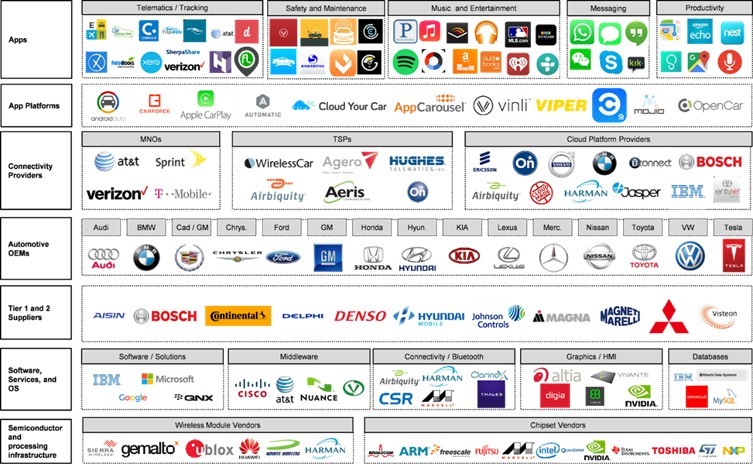
Figure 1 illustrates how complex the connected car ecosystem is becoming.

Figure 1: Connected Car Ecosystem

CC fig1

Source: Red Chalk Group

Some of the key elements in the connected car ecosystem include:

  • Telecom Operators – AT&T, Deutsche Telekom, Telia, Telefonica, Vodafone etc.
  • Technology Vendors – Nokia, Ericsson etc.
  • Cloud Providers – Google, Amazon, Microsoft etc.
  • Original Equipment Manufacturers (OEMs) – VW, Ford, BMW, Audi, Hyundai etc.
  • System Integrators (SIs) – IBM, Accenture etc.
  • Over-the-Top (OTTs) Players – Google, Apple etc.
  • Platform Providers – Jasper, Airbiquity
  • Other Suppliers – OnStar, Continental etc.

The connected car is providing fresh opportunities to traditional players such as TSPs (Telematics Service Providers) e.g., Airbiquity, Tier 1&2 automotive suppliers like Bosch, new players such as webscalers Google, Alibaba, and Apple, as well as traditional telcos. In fact telcos have a crucial role to play as this market evolves.

For instance, Bosch supplies infotainment systems to a majority of OEMs globally but these systems require cellular connections provided by telcos’ 3G/4G networks. Bosch is also involved in pilot projects to test 5G technology for future systems for new innovative services and better connectivity. 

The Role of Telcos in Connected Cars

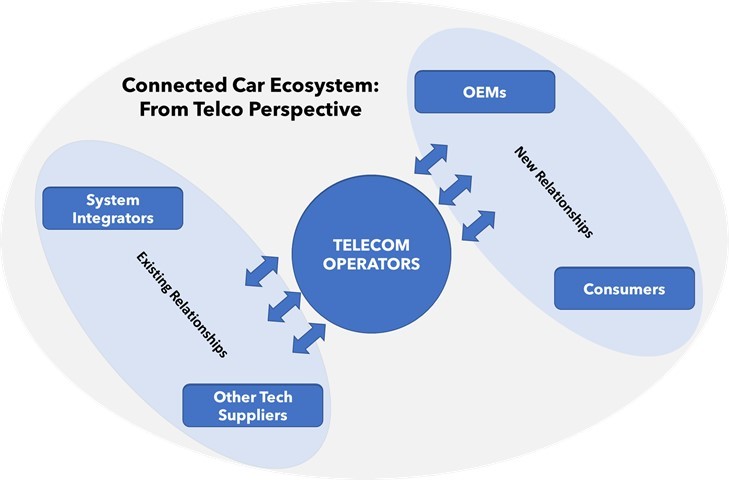
In this first part of the connected car series, we will focus on the role of telecom network operators (telcos) in a connected car ecosystem. Telcos act as the backbone of any connected car by providing the required communication network. 

Figure 2: Telcos play a central role in the connected car ecosystem

CC fig2

Source: MTN Consulting

Telecom operators have a competitive advantage when it comes to providing fast and reliable connectivity for connected cars. Further, the ever-evolving connected car ecosystem offers telcos some interesting new revenue opportunities. That is important as telcos are struggling to attain any top-line revenue growth in their current scope of operations. Even with 5G now emerging around the globe, most telcos continue to see flat to down service revenue trends. Developing new types of services and penetrating new vertical markets is essential for telcos to grow.

There are two basic types of services envisioned for telcos in the connected car space:

  • In(side)-car services: Infotainment (music, weather, social), and Navigation (location/traffic, landmarks, etc.)
  • Out(side)-car services: Telematics/M2M (insurance, repairs, parts, etc.), Remote (stolen vehicle, parking information, etc.).

Telcos are playing a significant role in both types of above services. For in(side)-car services, Telcos and OTTs (aka webscalers) are trying to build a niche in the infotainment/apps space. Apple and Google for example have already launched their connected car offerings – CarPlay and Android Auto respectively – while Telcos provide the SIM cards and Wi-Fi connectivity to access the services offered by OTTs.

However, the big opportunity for telcos in the connected car space, where they have an edge over other ecosystem players are – out(side)-car services. Telcos are uniquely positioned to provide Telematics/M2M and remote services by leveraging their core connectivity assets as well as strong cloud offerings. Depending upon the service provided, Telcos are working on both B2C and B2B business models. Telcos have grabbed this opportunity by launching dedicated connected car offerings and facilitating key partnerships with major OEMs and other ecosystem players.

A few examples of telcos making a huge difference in the connected car space are: 

  • AT&T considers the connected car business as one of the “key growth areas” and it serves over 30 million connected cars on its network. In the US, 31 different car brands are working with AT&T, where the carrier provides cellular connectivity to virtually the entire industry. LTE is the main connectivity technology but AT&T is exploring 5G for next-generation connectivity to future vehicles. 
  • Vodafone goes a step further by providing hardware and software to be fitted in connected cars, as well as the network to connect everything. Vodafone also provides managed services to car customers and is supplying telematics systems to major OEMs like Audi, BMW, Porsche etc. 
  • Orange has taken a slightly different approach by providing the connected car ecosystem with infrastructure services incorporating mobile and information technology. For example, Orange is supplying M2M SIM cards to all the Renault vehicles which are installed with an in-house developed connected tablet equipped with a R-Link system.

Future Development

Apart from the existing use cases for connected cars, telcos are actively involved in pilot projects to benefit from implementation of 5G technology. One of the most talked-about 5G-enabled wireless communication is called URLLC (Ultra-Reliable and Low-Latency Communication). URLLC is aimed at mission critical communications, and ideal for latency sensitive applications such as autonomous driving.  For instance, several URLLC use cases are under research like automated driving, road safety and intelligent navigation systems, to name a few.

Deutsche Telekom and BMW

Deutsche Telekom is an example of a telco that has embraced the connected car market and is actively developing a role in the ecosystem. Key to that role is a partnership with BMW.

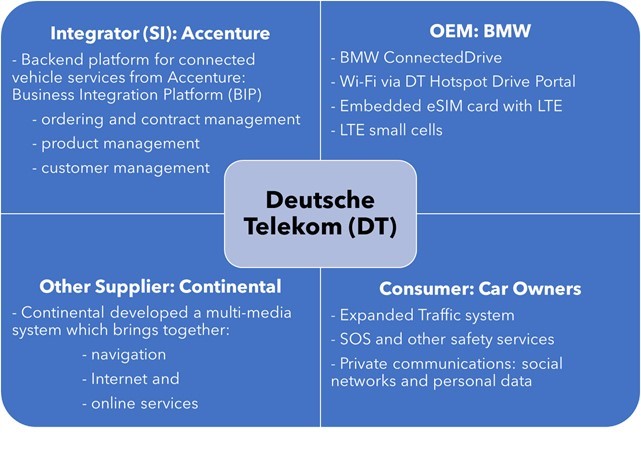
Deutsche Telekom has been part of the BMW connected car journey since 2015. BMW ConnectedDrive is the name of the connected car service provided by BMW together with Deutsche Telekom and other ecosystem partners (see below figure). The Wi-Fi Hotspot within ConnectedDrive vehicles is provided by Deutsche Telekom. The BMW ConnectedDrive system now comes with an LTE eSIM which is permanently embedded into the vehicles.

By partnering with OEMs like BMW, Deutsche Telekom is playing a significant role in providing a seamless customer experience (CX) for car drivers and/or travellers. Together with Continental, a tier 1 automotive supplier, DT has developed a multi-media system to provide car drivers best in-car services: real-time navigation, automatic SOS (eCall) and online infotainment services. 

Figure 3: Case Study —  Deutsche Telekom and BMW ConnectedDrive

CC fig3

Sources: Deutsche Telekom, BMW, and MTN Consulting

The Deutsche Telekom Wi-Fi Hotspot makes it possible to connect 10 Wi-Fi enabled devices to high-speed internet all over Europe. Not only that, but Deutsche Telekom is also fitting BMW ConnectedDrive cars with LTE technology in the form of embedded eSIMs which can be updated via over-the-air (OTA) whenever required from outside.

Another service offering from Deutsche Telekom is the Smart Home app which can be used to control the devices at home via a mobile phone. The Smart Home app has been available for use in the BMW ConnectedDrive system since 2015. Working hand-in-hand with Deutsche Telekom, the system makes it possible, for example, to control the lighting or heating system at home. The remote home control system is plugged into BMW’s vehicle operating system through a feature that allows users to integrate third-party apps via BMW ConnectedDrive.

In Conclusion 

Telcos have a competitive edge in the connected car ecosystem as they already have a proven track record of working together and partnering with related verticals for providing fast and reliable connectivity. The value a telco can bring to the connected car is not only limited to its core assets (networks) but also existing partnerships with system integrators (IBM, Accenture), technology vendors (Nokia, Ericsson) and other tier 1/2  automotive suppliers (Continental, Bosch).

Most of the major telecom players, such as AT&T, DT, Telefonica, Telia, and Vodafone, are ahead of the curve to benefit from this opportunity. Deutsche Telekom has a dedicated connected car division, and most of the telcos mentioned here offer innovative solutions and services to OEMs along with other ecosystem players.  

MTNC believes that moving forward, there are a plethora of opportunities in the connected car space for telcos, especially with the implementation and adoption of 5G technology. The future of mobility will be car-sharing, electric vehicles and autonomous driving, where 5G will be able to enhance the customer experience with innovation such as ultra-reliable low-latency communication (URLLC), putting telcos at the forefront of the connected car ecosystem.

Image source: Samsung Newsroom

Blog Details

Autonomous vehicle and robot highlights from CES 2021

Autonomous vehicles and robots picking up steam and will impact network infrastructure

For the last three years I’ve attended the annual Consumer Electronics Show (CES) in person in Las Vegas, Nevada. That wasn’t possible for last week’s show. CES 2021 was all digital, thanks to COVID-19. That is unfortunate as CES is not a software or idea show; it’s about hardware that you need to touch and feel. As a telecom analyst, the highlight of CES for me these last three years has been cars and robots, nearly all equipped with some network connectivity.

Even without an in-person viewing of all the cool gadgetry, the last few weeks of news makes clear that autonomous vehicles, drones and robots of all kinds are coming in a big way and set to impact how networks will be run and scaled in the coming years and decades.

More Apple car rumors during CES week? Surely a coincidence

Apple has been working on self-driving vehicle technology for many years. The long-term goal has clearly been to break into a large new market with an attractive product that is consistent with Apple’s brand. AI software, user interface, battery technology, optics, and a standardized form factor are the main focal points. The company has been opaque about its efforts, but the level of R&D funding into these efforts has ensured that some secrets have gotten out. The MacRumors site has a good summary available.

Apple doesn’t make product announcements at shows like CES, but news about the Apple car project did steal some of CES’ thunder last week. The latest rumor is that Hyundai is working with Apple to start manufacturing a self-driving electric car in the US as early as 2024. A prototype could be available by 2022. This is much earlier than previously rumored. A commercialization date closer to 2027 may end up being the case, as some analysts predict.   

Recall that Apple’s iPhone launched in 2007, helping to define an entirely new product category. The iPhone was not the first smartphone, and an Apple car would not be the first self-driving electric vehicle. But Apple has deep pockets and is searching for a new killer product. Further, there’s no doubt that network connectivity will play an important role for Apple. That aspect will get more attention as Apple’s plans become more clear over the next 1-2 years.

See also Nikkei’s story on the topic, Apple car expected to shake up auto industry in Asia and world.

Samsung continues evolving its digital cockpit

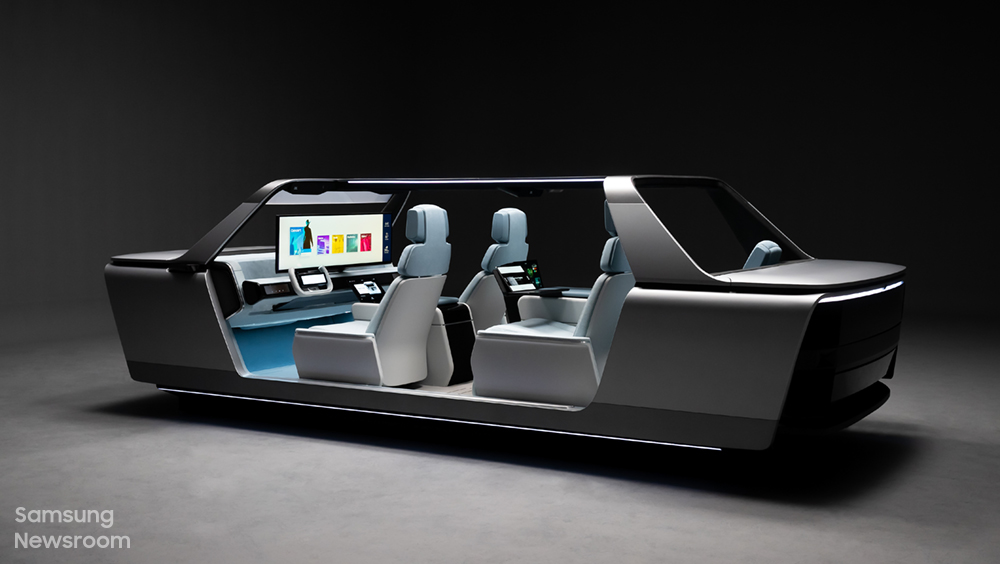
Like Apple, Samsung has no (direct) position in the car market today but is spending heavily on R&D to change that. Samsung introduced the “Digital Cockpit” concept at CES 2018, and has evolved it each year. The aim is to turn the interior of the car into a productive, fun place to be with fancy displays supporting gaming, entertainment, and mobile home office features. Connectivity is crucial, not surprising given Samsung’s strong position in the smartphone market and growing strength in 5G radio infrastructure. As Samsung says, “One of the solution’s greatest strengths is its 5G technology, which enhances users’ experience by allowing them to utilize these features without interruptions.” These experiences are supported by a Samsung-developed chip, the Exynos Auto V9. I would expect Samsung to push for real world use of its cockpit platform in its home market of Korea, where it has a leading position in the 5G radio access market. The company’s recent 5G win at Verizon, though, could also herald some experimentation in the much larger US market.

digitalcockfit2021_main1

Source: Samsung

More electric cars means a need for a better charging infrastructure

The news about climate change gets worse all the time. COVID-19 caused an economic downturn and a widespread shift to working from home, but a dip in road usage can’t reverse decades of damage. Hence interest in electric vehicles picked up in 2020, and CES 2021 saw many announcements related to this trend: new battery technology, the creation of electric versions of existing vehicles, new form factors, new components.

Whether an electric car is autonomous or not, though, at some point it needs to be charged. Range between charges is a key limiting factor in considering whether to buy an electric car. This is improving all the time, but it is still a factor in most markets. Current drivers rely on a combination of home charging and public charging stations. Making the charging process more convenient will increase demand for electric cars, no doubt.

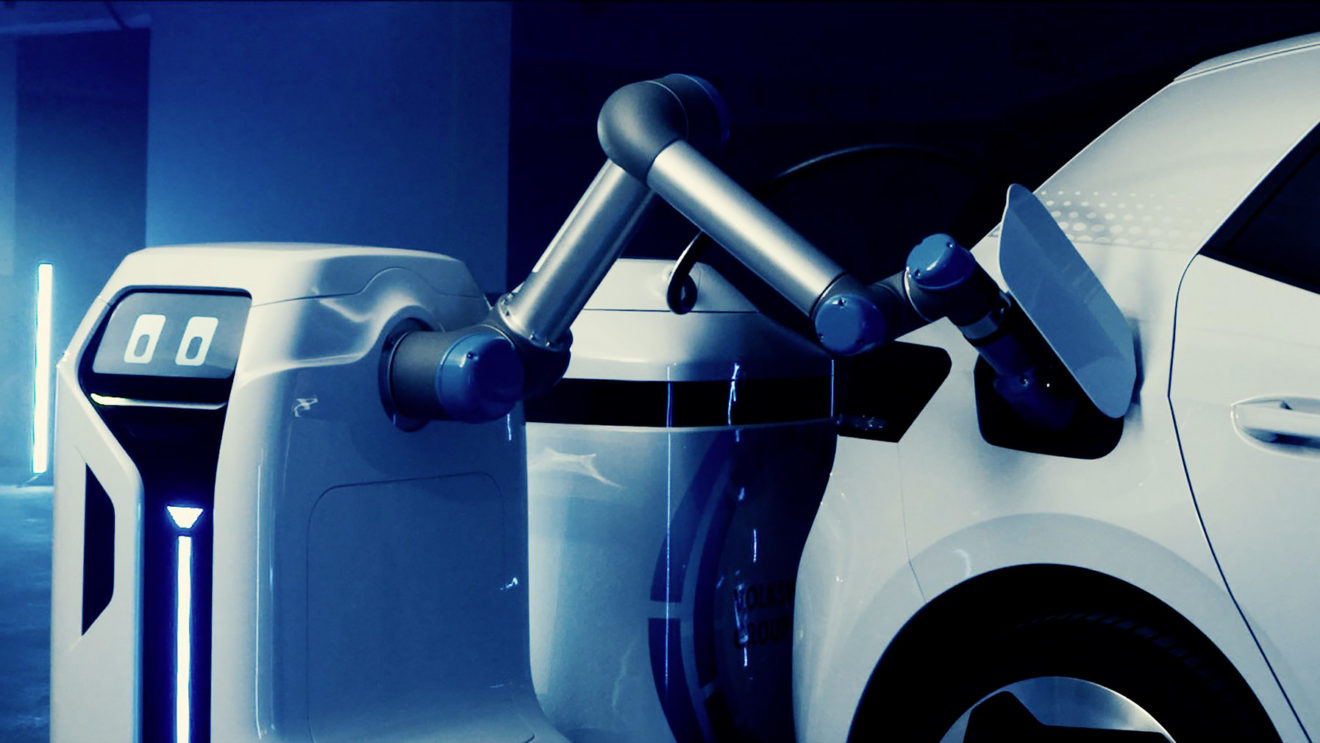
Volkswagen has an interesting solution to this problem, blending robotics with autonomous vehicles. Just in time for CES 2021, the car maker revealed a prototype of its mobile charging robot, designed to provide “fully autonomous charging of vehicles in restricted parking areas, like underground garages.” The robot roams parking lots and charges cars on demand, triggered either via an app or by Car-to-X communication.

PM Laderoboter

Source: Volkswagen

Robots for delivery, diagnosis, game playing, companionship, and household chores

One highlight of my first CES, back in January of 2018, was Omron’s ping-pong playing robot. Restless show attendees could test their paddles against this contraption for a fun few minutes of distraction, and the product was surprisingly skillful. Robots delivering complimentary water bottles to booth visitors were a hit at CES 2019. Both were fairly niche use cases, though, far from appearing to have killer app potential.

Robotics have come a long way in the last 3 years. Most impressive is probably their use for delivery of goods. Ecommerce companies are always looking for ways to cut logistics costs, and this was an obvious place for them to focus their massive R&D budgets. Amazon, Alibaba, JD.Com and a slew of startups have focused energy on this space. That includes everything from flying drones which circle neighborhoods and drop products at the right house, to shorter-range terrestrial robots bringing packages from truck to doorstop, or “walking” from a central distribution point through neighborhoods to the destination.

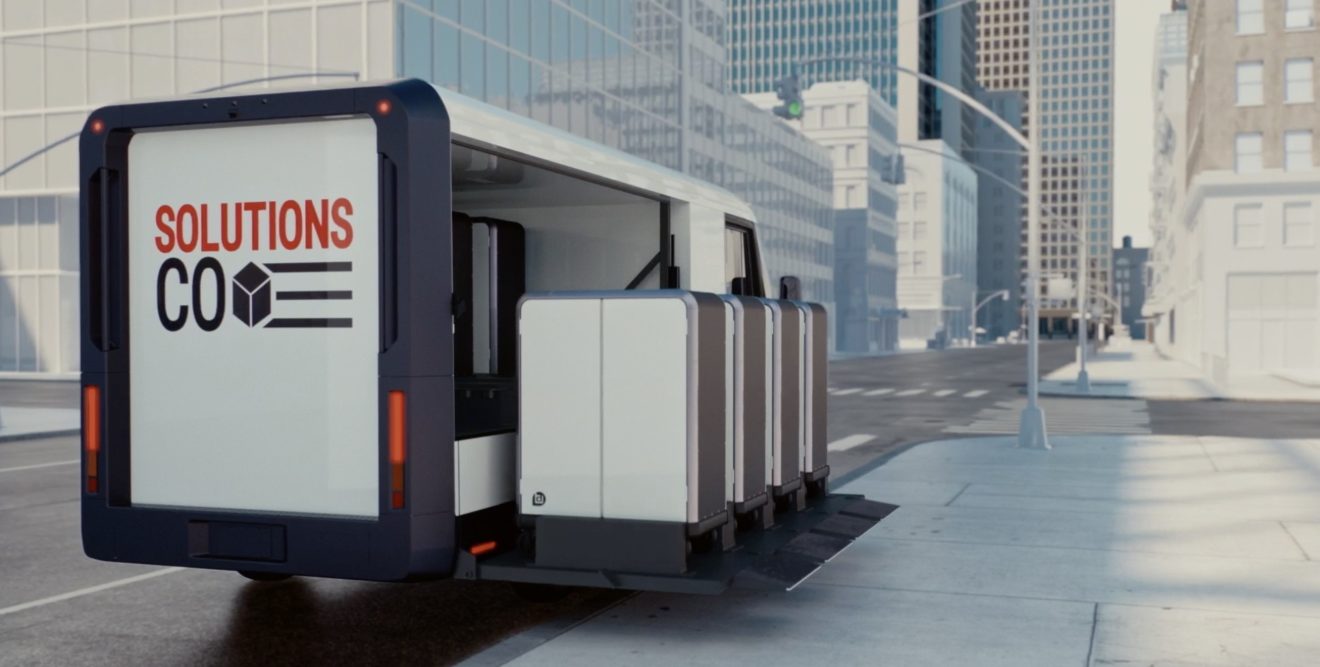
B2B delivery has been an easier case to make for such applications, as they avoid the consumer opposition to freaky looking robots roaming the streets and scaring their children. GM, in fact, announced a new delivery and logistics business at CES 2021 which seems ideal for this market: BrightDrop, an ecosystem of smart connected electric propelled pallets to bring goods from the delivery van to the front door. FedEx is the first announced customer. Form factor matters in the robotics market.

GM Brightdrop 2021-01-12-at-7.39.01-AM

Source: GM 

Ecommerce delivery requirements shot up during the COVID-19 pandemic, so it’s not surprising that this space got attention at CES. Closer to the telecom world, though, is the use of robotic drones to support network operations. Truck rolls are a notoriously expensive part of network operational expenses. Nokia announced recently that the New York Power Authority was using a Nokia-powered private LTE network to, among other things, “monitor the drone camera feed in real-time with dedicated bandwidth” to diagnosis network issues. Softbank has plans to actually use drones to deliver IoT and internet connectivity, from 12 miles above sea level.

There are at least some signs that telcos want a piece of the ecommerce delivery action, as well, based on Verizon’s CES 2021 keynote. The company announced that its Skyward unit was working on connected drone deliveries using 5G to connect in a Florida neighborhood, in concert with UPS’ Flight Forward program. CEO Hans Vestberg claimed that “the only way to effectively coordinate and connect a massive number of drones in the air is through a cellular network, and 5G gives you the necessary capacity.”

And then there is Boston Dynamics. Demos of the physical capabilities of their robots regularly go viral, with nearly universal reactions of fear and trepidation. Military and law enforcement applications are clearly one potential market; Boston Dynamics’ October 2019 soldier robot demo instigated this understandable reaction from podcaster Joe Rogan: “WE ARE F**KED”. The company’s latest viral hit was a video posted on December 31, 2020 featuring incredibly coordinated dance moves. Not quite as scary.

Friendly robots are definitely the way to go. At CES, Samsung got attention out of its wine pouring robot, an extension of the water bottle delivery product from past years. The device is not ready for prime time, but does have a market for events especially in the era of social distancing.